
Single nucleus RNA-seq of cardiomyocytes from neonatal mouse hearts after injury
收藏干细胞与再生医学数据中心2022-02-20 更新2024-03-06 收录
下载链接:
http://data.iscr.ac.cn/Article?id=a031238f73a6b966d178e1916ddf3f66
下载链接
链接失效反馈官方服务:
资源简介:
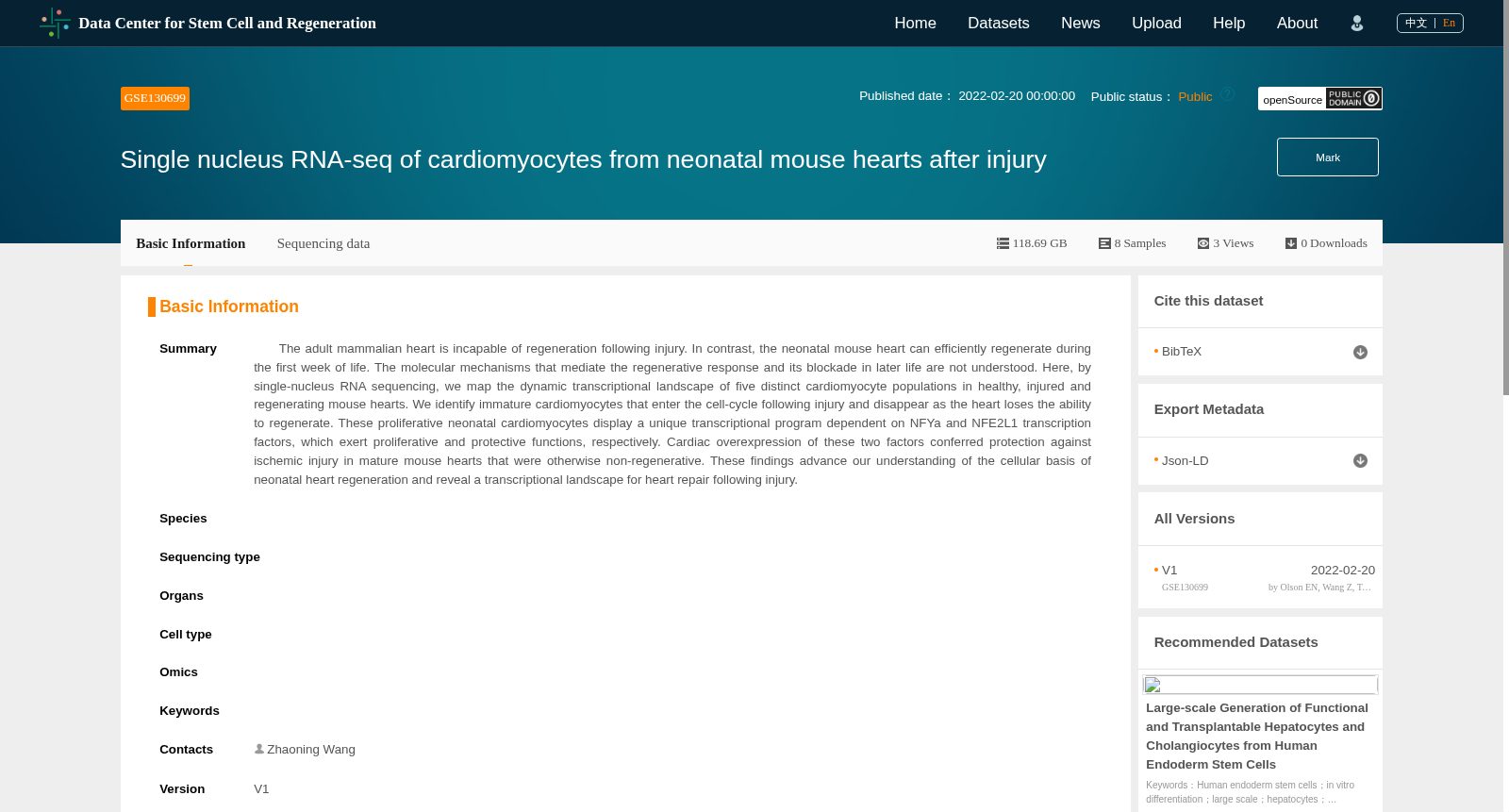
The adult mammalian heart is incapable of regeneration following injury. In contrast, the neonatal mouse heart can efficiently regenerate during the first week of life. The molecular mechanisms that mediate the regenerative response and its blockade in later life are not understood. Here, by single-nucleus RNA sequencing, we map the dynamic transcriptional landscape of five distinct cardiomyocyte populations in healthy, injured and regenerating mouse hearts. We identify immature cardiomyocytes that enter the cell-cycle following injury and disappear as the heart loses the ability to regenerate. These proliferative neonatal cardiomyocytes display a unique transcriptional program dependent on NFYa and NFE2L1 transcription factors, which exert proliferative and protective functions, respectively. Cardiac overexpression of these two factors conferred protection against ischemic injury in mature mouse hearts that were otherwise non-regenerative. These findings advance our understanding of the cellular basis of neonatal heart regeneration and reveal a transcriptional landscape for heart repair following injury.
成年哺乳动物心脏在损伤后无法实现再生。与之相对,新生小鼠心脏在出生后的第一周内可高效完成再生。介导该再生反应及其在生命后期被阻断的分子机制目前尚未阐明。本研究通过单细胞核RNA测序(single-nucleus RNA sequencing),绘制了健康、损伤及再生状态下小鼠心脏中五种不同心肌细胞群的动态转录图谱。我们鉴定出一类可在损伤后进入细胞周期,并随心脏丧失再生能力而逐渐消失的未成熟心肌细胞。这类具有增殖活性的新生心肌细胞呈现出一套独特的转录程序,其功能依赖于NFYa与NFE2L1两种转录因子——二者分别发挥促增殖与保护作用。在原本无法再生的成熟小鼠心脏中过表达这两种因子,可使其免受缺血性损伤。本研究增进了我们对新生心脏再生细胞基础的认知,并揭示了心脏损伤后修复的转录调控图景。
提供机构:
UT Southwestern
创建时间:
2022-02-20
搜集汇总
数据集介绍
背景与挑战
背景概述
该数据集通过单核RNA测序技术,研究了新生小鼠心脏在损伤后的心肌细胞转录组动态变化,旨在揭示心脏再生的分子机制。数据集包含8个样本,对比了健康、受伤和再生状态下的五种心肌细胞群体,并识别了依赖于NFYa和NFE2L1转录因子的增殖性新生儿心肌细胞。这些发现为理解心脏修复提供了关键的转录组学见解。
以上内容由遇见数据集搜集并总结生成


