
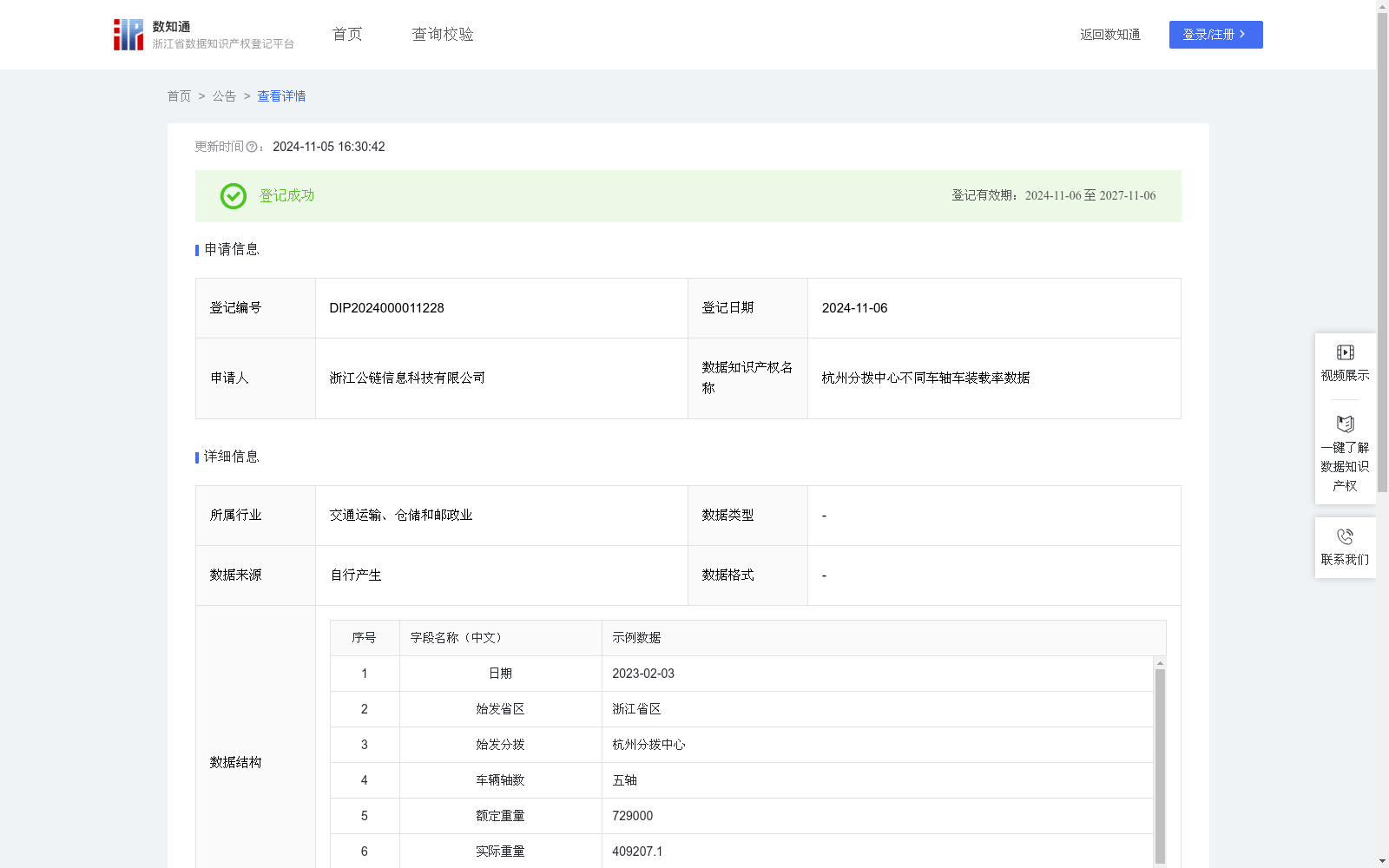
杭州分拨中心不同车轴车装载率数据
收藏浙江省数据知识产权登记平台2024-11-05 更新2024-11-06 收录
下载链接:
https://www.zjip.org.cn/home/announce/trends/81237
下载链接
链接失效反馈官方服务:
资源简介:
通过分析杭州分拨中心不同车轴车的装载率,结果应用到调度系统和在线绩效评估体系中。(1)用于不同省区,不同分拨的内控管理,将车辆装载率是否达到指定值作为内部车辆调度管理的重要的量化依据。(2)合理的规划车辆类型和运输路线,提高单次运输的货物量,减少空驶和空载的情况,降低运输成本,提高整体运输效率。(3)通过对车辆装载率的监控和分析,可以发现运输过程中的浪费现象,并采取措施进行改进。(4)根据历史数据分析,预测未来的运输需求,合理调配车辆资源,避免资源闲置。(5)通过提高装载率提高运输效率,可以减少碳排放和其他污染物的排放,有助于实现绿色物流的目标。1、数据来源采集中通快运-汽运系统,数据驾驶舱平台,聚焦杭州分拨中心不同车轴数的重量装载率信息。包括车辆轴数,额定重量,实际重量,始发省区,始发分拨等核心字段。2、数据处理 (1)实际装载重量:对车辆状态进行筛查,区分在途运输和非运输。对车辆上货物称重获取每台车辆的实际装载重量。(2)额定装载重量:根据不同省区的车轴的车辆评估出额定装载重量。(3)实际装载率=实际装载重量/额定装载重量 (4)目标重量装载率:根据不同省区历史的运输情况,车辆安排情况采用分位算法确定不同省区车辆的目标装载率,从而降低运输成本,减少空驶和空载情况,辅助优化仓库的存储布局和货物出库安排。(5)对比实际重量装载率和目标装载率,分析偏差原因,制定改进方案,如调整装载方案和装载策略,调整运输路线,合并订单,与第三方物流合作,共享运输资源等,改进后持续对比分析。
By analyzing the loading rates of vehicles with different axle counts at the Hangzhou Distribution Center, the analysis results are applied to the scheduling system and online performance evaluation system:
(1) Internal control management for different provinces and distribution centers: taking whether the vehicle loading rate reaches the specified value as an important quantitative basis for internal vehicle scheduling management.
(2) Rational planning of vehicle types and transportation routes to increase the cargo volume per trip, reduce empty driving and no-load conditions, lower transportation costs, and improve overall transportation efficiency.
(3) By monitoring and analyzing vehicle loading rates, waste during transportation can be identified and targeted improvement measures can be taken.
(4) Analyzing historical data to forecast future transportation demand, rationally allocate vehicle resources, and avoid resource idleness.
(5) Improving transportation efficiency by increasing loading rates can reduce carbon and other pollutant emissions, contributing to the achievement of green logistics goals.
1. Data Source: Collected from the Zhongtong Express - Motor Transport System and Data Cockpit Platform, focusing on the weight loading rate information of vehicles with different axle counts at the Hangzhou Distribution Center. Core fields include number of vehicle axles, rated weight, actual weight, origin province, origin distribution center, etc.
2. Data Processing
(1) Actual Loading Weight: Screen vehicle status to distinguish between in-transit and non-transport vehicles. Weigh the cargo on each vehicle to obtain the actual loading weight of the vehicle.
(2) Rated Loading Weight: Assess the rated loading weight for vehicles with different axle counts based on local transportation standards and historical data of each province.
(3) Actual Loading Rate = Actual Loading Weight / Rated Loading Weight
(4) Target Weight Loading Rate: Determine the target loading rate for vehicles in each province using quantile algorithms based on the historical transportation conditions and vehicle scheduling arrangements of the province, so as to reduce transportation costs and empty driving/no-load conditions, and assist in optimizing warehouse storage layout and cargo outbound arrangements.
(5) Compare the actual weight loading rate with the target loading rate, analyze the causes of deviations, and formulate improvement plans, such as adjusting loading plans and strategies, modifying transportation routes, consolidating orders, cooperating with third-party logistics, sharing transportation resources, etc. Conduct continuous comparative analysis after implementing improvements.
提供机构:
浙江公链信息科技有限公司
创建时间:
2024-10-12
搜集汇总
数据集介绍
特点
该数据集记录了杭州分拨中心不同车轴车辆的装载率信息,包括车辆轴数、额定重量、实际重量等关键数据,每日更新,用于优化车辆调度和运输效率,支持绿色物流目标的实现。
以上内容由遇见数据集搜集并总结生成


