
Linked networks for learning and expressing location-specific threat: Threat learning versus object learning during approach periods
收藏neurovault.org2018-06-30 更新2025-01-22 收录
下载链接:
https://neurovault.org/images/58788
下载链接
链接失效反馈官方服务:
资源简介:
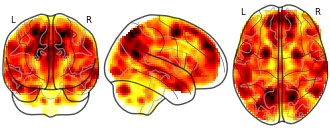
<p>Activity differences between approaching flowers versus objects during threat and spatial memory aspects of the task. Greater activity was seen when approaching flowers compared with objects in a range of areas, including the insula, medial parietal cortex, PCC, vmPFC, bilateral anterior hippocampus, and amygdala.When approaching objects, a different network was observed with greater activity in the left middle frontal gyrus, middle temporal gyrus, inferior parietal lobule and inferior frontal gyrus, right precentral gyrus, inferior frontal gyrus, and an area extending across lingual and parahippocampal gyri.</p>
[](https://neurovault.org/images/58788)
### Collection description
<p>Statistical images from the study in: <br>Suarez-Jimenez B, Bisby JA, Horner AJ, King JA, Pine DS, Burgess N (2018) Linked networks for learning and expressing location-specific threat. PNAS. In press.</p>
###Subject species
homo sapiens
###Modality
fMRI-BOLD
### Analysis level
group
### Cognitive paradigm (task)
navigation task
### Map type
T
<p>在任务中的威胁和空间记忆方面,接近花朵与接近物体之间的活动差异。在岛叶、内侧顶叶皮层、后扣带回皮层、背内侧前额叶皮层、双侧前海马体和杏仁核等广泛脑区,接近花朵时的活动水平显著高于接近物体时的水平。当接近物体时,观察到不同的神经网络活动,其中左侧中间额叶回、中间颞叶回、下顶叶叶间、下额叶回、右侧前中央回、下额叶回以及横跨舌叶和海马旁回的区域活动水平较高。</p>
提供机构:
NeuroVault


