africa-egov-public-sector-breaches
收藏资源简介:
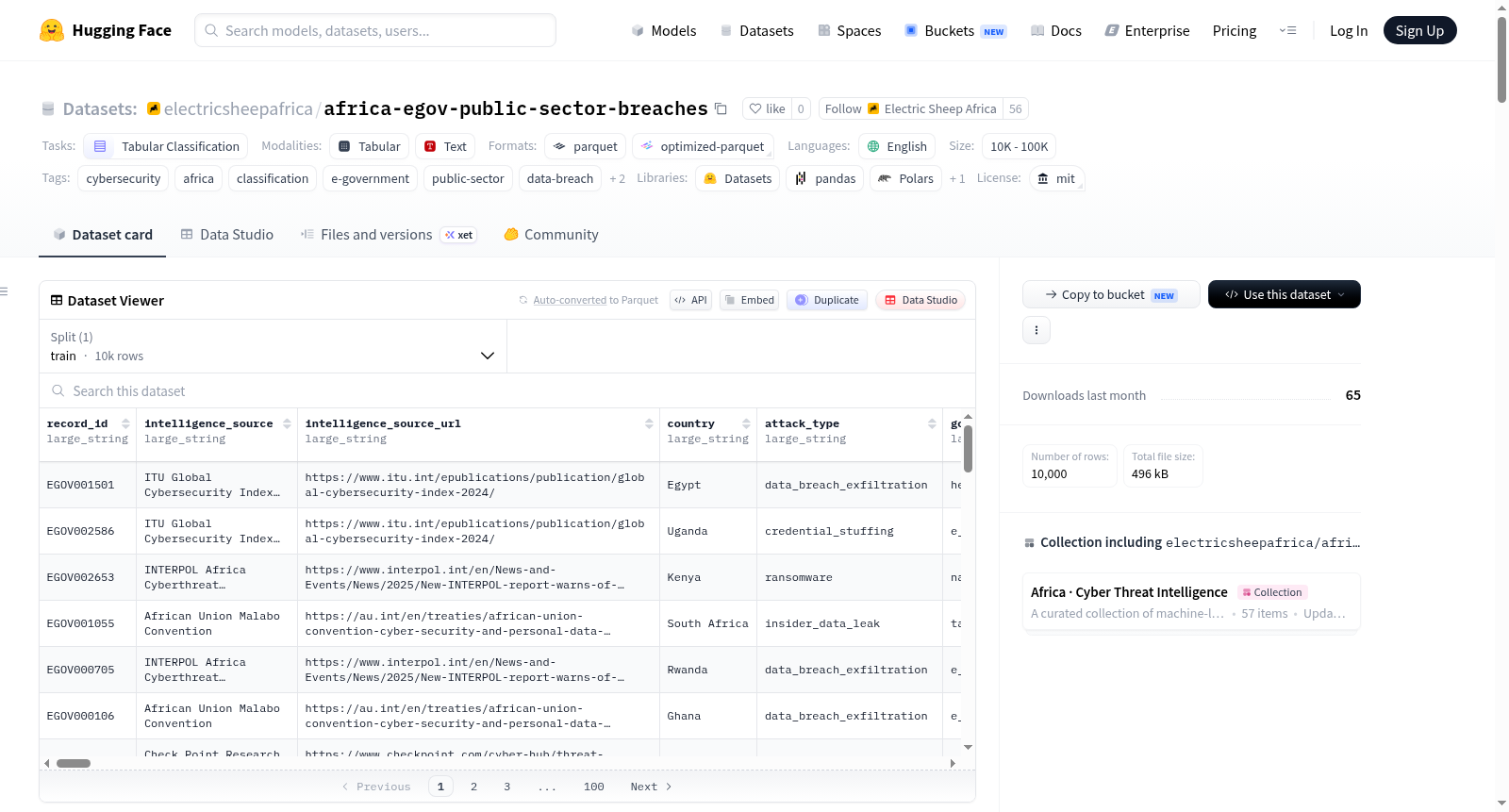
该数据集是一个合成的表格分类数据集,专注于模拟和分析针对非洲地区电子政务平台及公共部门数字系统的网络攻击与数据泄露事件。随着非洲各国政府加速数字化转型(如国民身份证系统、数字税务门户、电子采购、选民登记),其数字系统面临巨大的安全攻击面,但安全投入普遍不足。数据集旨在捕捉非洲特有的网络威胁模式,涵盖了南非、尼日利亚、肯尼亚、埃塞俄比亚、加纳、卢旺达等多个国家的具体攻击案例,例如针对司法部门、医疗实验室、税务系统、选民数据库等关键基础设施的攻击。数据集包含10,000条记录,正负样本平衡(50/50),所有记录均为基于真实世界研究报告生成的合成数据(is_synthetic=1)。每条记录代表一个可能的事件,并通过一个二分类标签(`label`)标识是否为攻击事件(1表示攻击,0表示合法)。数据特征非常丰富,涵盖了攻击事件的多个维度:基本事件信息(如记录ID、国家、攻击类型、受攻击的政府系统、政府层级)、攻击详情(如威胁行为者类型、暴露的数据类型、受影响公民数量、暴露记录数、数据大小、是否利用了已知漏洞、是否涉及社会工程或内部人员等)、系统安全状况(如被攻击系统在事件前是否具备加密、多因素认证、Web应用防火墙、补丁策略、备份、事件响应计划、安全审计等安全控制措施,以及是否存在首席信息安全官角色、是否遵守数据保护法规)、攻击影响与后果(如服务停机时间、经济损失、公民服务是否中断、是否影响选举进程、是否构成国家安全风险、是否导致身份盗用风险、公众信任是否受损等)、事件响应与恢复(如是否被检测到、检测来源、检测时间、是否启动事件响应、是否聘请外部取证、执法部门是否介入、是否通知数据保护机构和公民、系统是否恢复、恢复时间等)。此外,README还提及了从这些原始特征中可能提取出的高级特征,例如安全态势评分、攻击复杂程度、影响严重性评分、响应成熟度评分、电子政务威胁评分、治理差距评分等。该数据集适用于网络安全研究、威胁情报分析、机器学习模型训练(如攻击检测、风险预测、影响评估),特别有助于理解非洲公共部门在数字治理背景下面临的独特安全挑战和防御缺口。数据生成参考了国际电信联盟(ITU)、世界银行、国际刑警组织(INTERPOL)、非洲联盟等多个权威机构发布的最新研究报告。
This dataset is a synthetic tabular classification dataset focused on simulating and analyzing cyber attacks and data breach incidents targeting e-government platforms and public sector digital systems in Africa. With African governments accelerating digital transformation (e.g., national ID systems, digital tax portals, e-procurement, voter registration), their digital systems face significant security attack surfaces, but security investments are generally insufficient. The dataset aims to capture Africa-specific cyber threat patterns, covering specific attack cases in multiple countries such as South Africa, Nigeria, Kenya, Ethiopia, Ghana, and Rwanda, including attacks on critical infrastructure like judicial departments, medical laboratories, tax systems, and voter databases. The dataset contains 10,000 records with balanced positive and negative samples (50/50), all of which are synthetic data generated based on real-world research reports (is_synthetic=1). Each record represents a potential event and is labeled with a binary classification (`label`) indicating whether it is an attack event (1 for attack, 0 for legitimate). The data features are very rich, covering multiple dimensions of attack events: basic event information (e.g., record ID, country, attack type, attacked government system, government level), attack details (e.g., threat actor type, exposed data type, number of affected citizens, number of exposed records, data size, whether known vulnerabilities were exploited, whether social engineering or insiders were involved), system security status (e.g., whether the attacked system had security controls such as encryption, multi-factor authentication, web application firewall, patch policy, backups, incident response plan, security audits before the event, as well as the presence of a Chief Information Security Officer role and compliance with data protection regulations), attack impact and consequences (e.g., service downtime, economic loss, whether citizen services were disrupted, whether election processes were affected, whether it posed a national security risk, whether it led to identity theft risks, whether public trust was damaged), and incident response and recovery (e.g., whether detected, detection source, detection time, whether incident response was initiated, whether external forensics were hired, whether law enforcement was involved, whether data protection agencies and citizens were notified, whether the system was restored, recovery time). Additionally, the README mentions potential advanced features that can be extracted from these raw features, such as security posture score, attack complexity level, impact severity score, response maturity score, e-government threat score, and governance gap score. This dataset is suitable for cybersecurity research, threat intelligence analysis, and machine learning model training (e.g., attack detection, risk prediction, impact assessment), particularly helpful for understanding the unique security challenges and defense gaps faced by African public sectors in the context of digital governance. The data generation references the latest research reports from multiple authoritative organizations such as the International Telecommunication Union (ITU), the World Bank, INTERPOL, and the African Union.