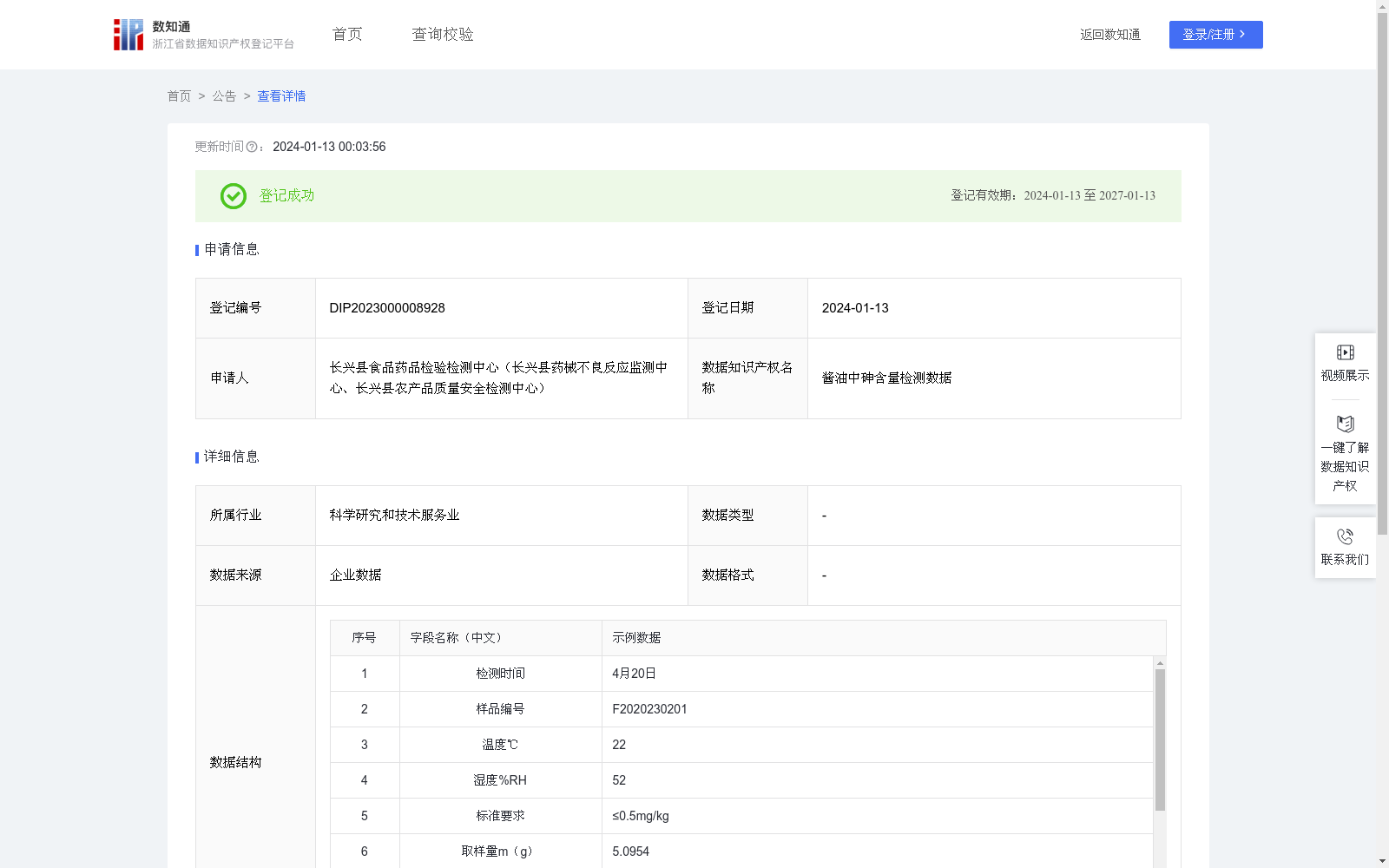
酱油中砷含量检测数据
收藏资源简介:
通过对酱油中的砷含量进行检测,可以帮助企业判断生产过程中是否严格控制了原材料和工艺条件,及时发现并解决潜在问题,提高产品品质,确保产品安全性,本数据对酱油中砷含量作出检测,为企业生产及政府监管做出参考,为消费者选择提供依据,提前减少食品安全隐患。1、产品检测:对酱油进行抽样检测,每次检测样本质量约5g左右,记录每次检测的取样量、定容体积、浓度等相关数据;2、数据处理:通过检测所得数据计算样本中砷含量,砷含量=(浓度-空白)*定容体积/(样品量*1000);3、根据GB5009.11-2014(食品安全国家标准食品中总砷及无机砷的测定)标准,判断样品中砷含量是否符合国家标准,对不达标产品进行安全提示;4、对酱油中砷含量的检验检测,为企业生产提供重要参考,为政府质量监督提供依据,提前避免食品安全隐患。
Testing arsenic content in soy sauce enables enterprises to verify whether raw materials and process conditions are strictly controlled during production, detect and resolve potential issues in a timely manner, improve product quality, and ensure product safety. This dataset focuses on arsenic content detection in soy sauce, providing references for enterprise production and government supervision, offering a basis for consumers' purchasing decisions, and reducing food safety hazards in advance. 1. Product Testing: Conduct sampling tests on soy sauce, with each test sample having a mass of approximately 5 g. Record relevant data including sampling amount, constant volume, and detected concentration for each test. 2. Data Processing: Calculate the arsenic content of the sample using the test data, following the formula: Arsenic Content = (Concentration - Blank Value) × Constant Volume / (Sample Mass × 1000) 3. According to the national food safety standard GB 5009.11-2014 (Determination of Total Arsenic and Inorganic Arsenic in Foods), judge whether the arsenic content of the sample complies with the national standard, and issue safety alerts for non-compliant products. 4. The arsenic content testing of soy sauce provides important references for enterprise production, offers a basis for government quality supervision, and helps avoid food safety hazards in advance.