TSTD
收藏资源简介:
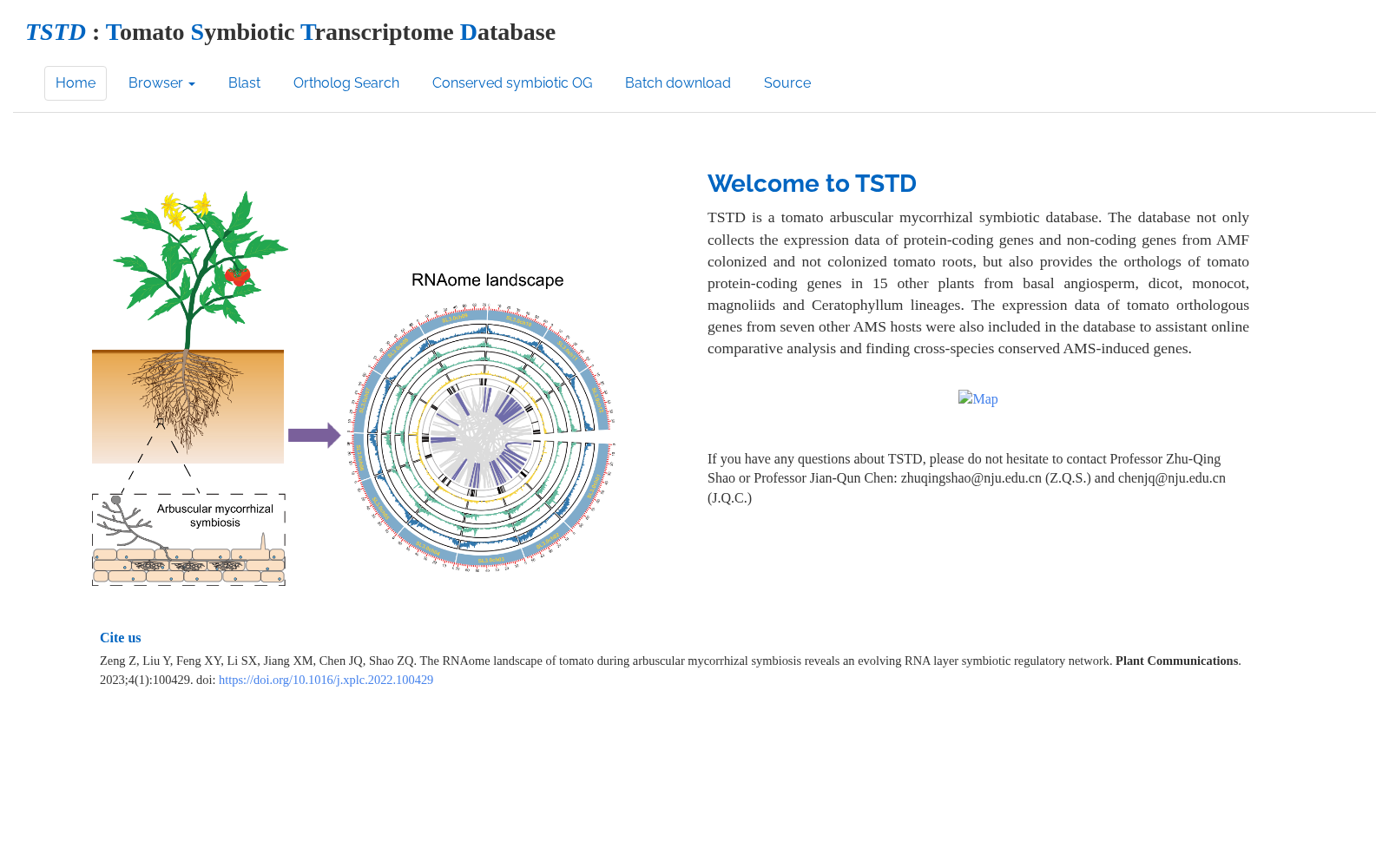
The annotation of the tomato genome was improved by a multiple-platform sequencing strategy. A total of 3,174 protein-coding genes were upregulated during AMS, 42% of which were alternatively spliced. Comparative-transcriptome analysis revealed that genes from 24 orthogroups were consistently induced by AMS in eight phylogenetically distant angiosperms. Seven additional orthogroups were specifically induced by AMS in all surveyed dicot AMS host plants. However, these orthogroups were absent or not induced in monocots and/or non-AMS hosts, suggesting a continuously evolving AMS-responsive network in addition to a conserved core regulatory module. Additionally, we detected 587 lncRNAs, ten miRNAs, and 146 circRNAs that responded to AMS, which were incorporated to establish a tomato AMS-responsive, competing RNA-responsive endogenous RNA (ceRNA) network.
本研究采用多平台测序策略对番茄基因组注释进行了优化。共计3174个蛋白质编码基因在AMS进程中发生上调表达,其中42%存在可变剪接现象。比较转录组分析表明,在8个系统发育关系较远的被子植物中,来自24个正交组的基因均被AMS持续诱导。另有7个正交组仅在所有被调研的双子叶AMS宿主植物中被AMS特异性诱导。然而,这些正交组在单子叶植物及/或非AMS宿主中要么不存在,要么未被AMS诱导,这意味着除保守的核心调控模块外,植物响应AMS的调控网络处于持续演化状态。此外,本研究共检测到587个长链非编码RNA(lncRNAs)、10个微小RNA(miRNAs)、146个环状RNA(circRNAs)响应AMS调控,并将这些非编码RNA整合用于构建番茄AMS响应内源竞争RNA(ceRNA)网络。