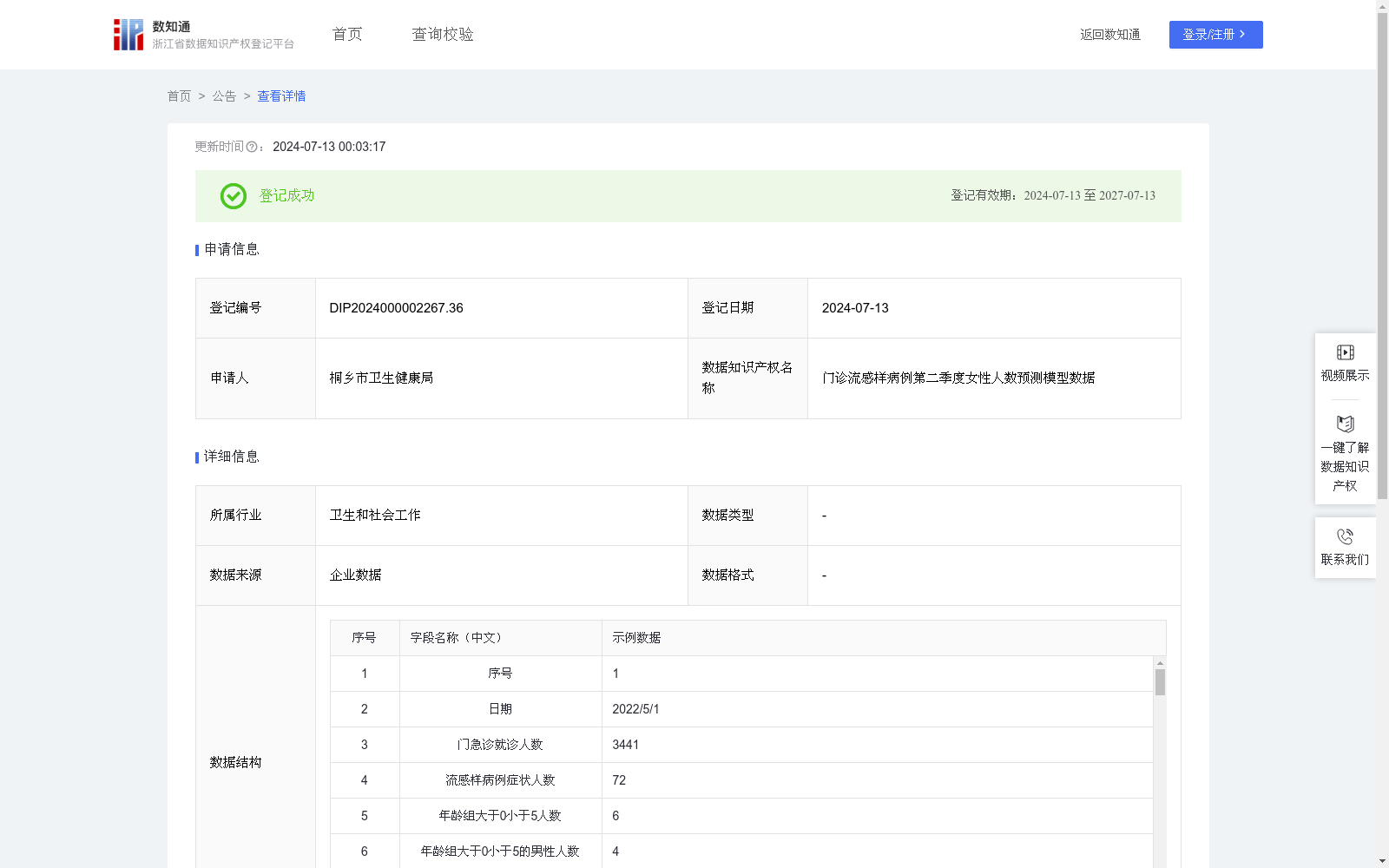
门诊流感样病例第二季度女性人数预测模型数据
收藏资源简介:
针对流感样病例监测,基于桐乡各医疗机构门诊就诊记录,获取全年门急诊就诊人数、流感样病例确诊人数、年龄组及性别分布,对门诊流感样病例第二季度女性人数进行预测,为第二季度流感防控工作及哨点医院监测工作提供新的思路和方法。流感样病例的性别数据有助于医疗资源的合理调配。根据男性女性患者的比例,可以调整医护人员、床位、药物等资源的配置,确保医疗服务的及时性和有效性。数据采集:从桐乡市各医疗机构获取匿名化样本统计数据,包括每日门急诊就诊人数、流感样病例症状人数、年龄组及性别分布。 对流感样病例数据进行预处理。特征工程:生成年龄组特征 AGW(t),计算公式为AGW(t)=α1×age_0_5(t)+ α2×age_5_15(t)+α3×age_15_25(t)+α4×age_25_60(t) + α5×age_60_plus(t),α1-α5为模型权重。 生成性别特征 GW(t),但仅考虑女性病例数,计算公式为 GW(t) = γ1×female_cases(t),γ1 为模型权重。 模型构建:构建预测模型,用以预测某天的女性流感样病例人数 F(t)。预测公式为 F(t)= w1×C(t−1)+w2×C(t−2)+...+ wn×C(t−n)+β1AGW(t)+β2GW(t),其中: C(t)代表当天的流感样病例症状人数; C(t−n)为t−n日的流感样病例症状人数; wn为C(t−n)的权重; β1和β2 是衍生特征的权重。 构建一个预测女性的流感样病例人数的模型: sum_young_se1 = ∑C_young(t),时间t在第二季度内。
For influenza-like illness (ILI) surveillance, based on outpatient visit records from medical institutions across Tongxiang, this study collects annual outpatient and emergency visit volumes, confirmed ILI case counts, age group and gender distributions, to predict the number of female outpatient ILI cases during the second quarter, providing novel insights and approaches for influenza prevention and control efforts and sentinel hospital surveillance during the second quarter. Gender data of ILI cases helps facilitate the rational allocation of medical resources. By analyzing the male-to-female patient ratio, the allocation of resources such as medical staff, hospital beds and medications can be adjusted to guarantee the timeliness and efficacy of medical services. Data Collection: Anonymous sample statistical data is acquired from medical institutions across Tongxiang, encompassing daily outpatient and emergency visit volumes, counts of patients presenting with ILI symptoms, age group distributions and gender distributions. Preprocessing is conducted on the ILI dataset. Feature engineering: The age group feature AGW(t) is generated, with the calculation formula: AGW(t) = α₁×age_0_5(t) + α₂×age_5_15(t) + α₃×age_15_25(t) + α₄×age_25_60(t) + α₅×age_60_plus(t), where α₁ to α₅ represent model weights. The gender feature GW(t) is generated, which only considers the number of female cases, with the formula: GW(t) = γ₁×female_cases(t), where γ₁ is the model weight. Model Construction: A predictive model is developed to forecast the daily number of female ILI cases F(t). The prediction formula is: F(t) = w₁×C(t−1) + w₂×C(t−2) + ... + wₙ×C(t−n) + β₁AGW(t) + β₂GW(t), where: - C(t) represents the number of ILI symptom cases on the same day; - C(t−n) refers to the number of ILI symptom cases on day t−n; - wₙ is the weight of C(t−n); - β₁ and β₂ are the weights of the derived features. Construct a predictive model for female ILI case counts: sum_young_se1 = ∑C_young(t), where time t falls within the second quarter.