
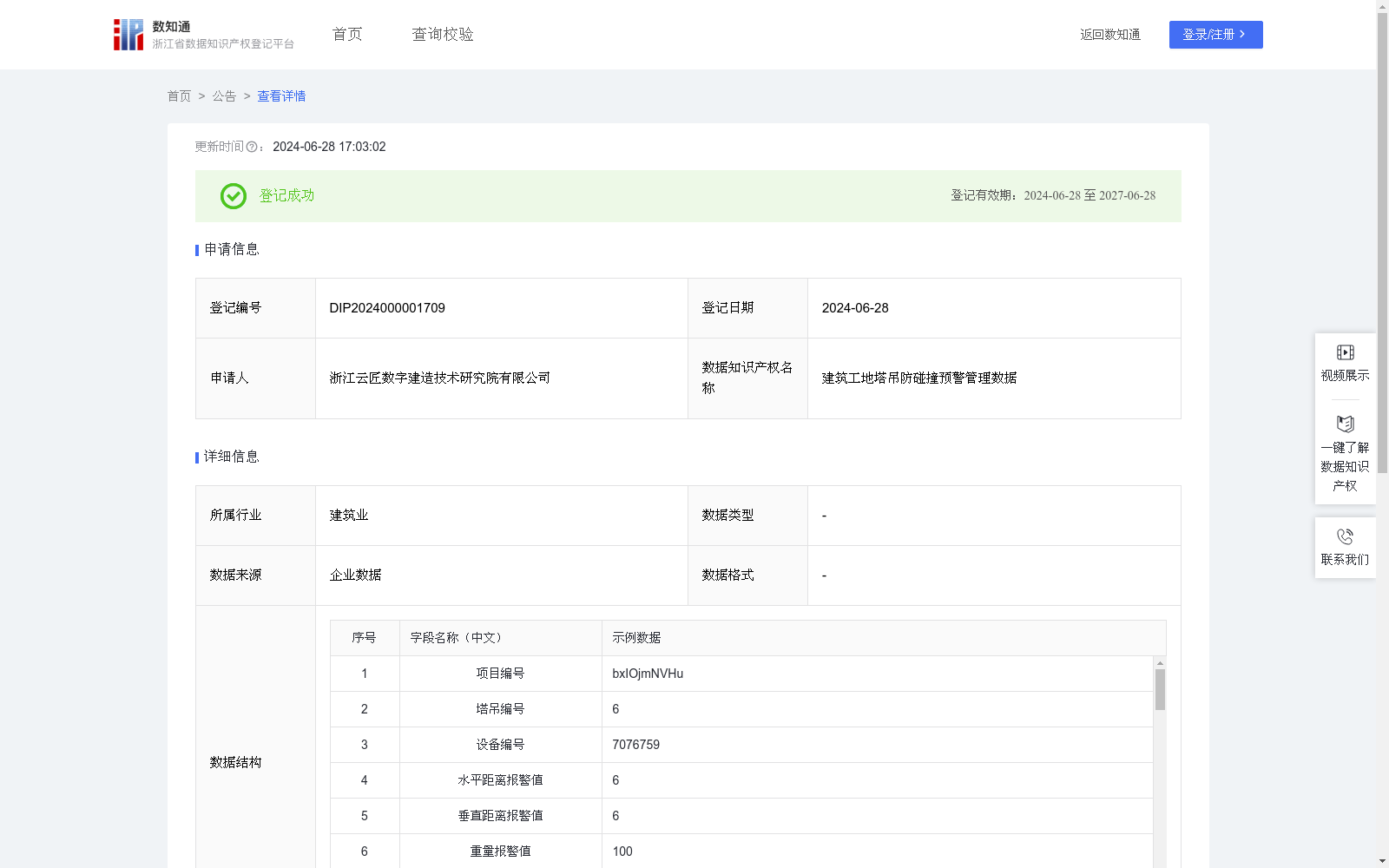
建筑工地塔吊防碰撞预警管理数据
收藏浙江省数据知识产权登记平台2024-06-28 更新2024-06-29 收录
下载链接:
https://www.zjip.org.cn/home/announce/trends/35647
下载链接
链接失效反馈官方服务:
资源简介:
这些数据的及时分析可以帮助识别潜在的碰撞风险,并有效预警可能导致事故的情况。一旦发生事故,这些数据可作为关键线索,有助于深入分析事故原因并找出问题所在。目前,该数据主要应用于塔吊的运行过程监测以及塔吊碰撞事故后的详细分析。通过对这些数据的收集和应用,可以显著提升工地的安全性,并提高事故处理的效率,为塔吊操作提供更加可靠的支持。这些数据不仅可以帮助预防事故,还能够为塔吊操作人员提供实时支持和指导,从而最大限度地降低潜在风险,并确保工地安全稳定运行。针对防碰撞预警数据的算法分析,可以采用以下方法来识别潜在的碰撞风险和进行事件分析: 空间碰撞检测算法:基于传感器数据和塔吊位置信息,利用空间碰撞检测算法来判断各个移动物体(如塔吊臂、建筑物、其他设备等)之间是否存在潜在的碰撞风险。通过实时监测对象的位置、速度和方向等信息,计算物体之间的最小距离,并与预设的安全距离进行比较,判断是否触发预警。 动作行为识别算法:利用传感器数据和图像分析技术,对工地工人的动作行为进行监测和识别,例如工人的行走、装卸物料的动作等。通过分析和模型训练,识别出可能导致碰撞的危险动作,如行走路径交叉、物料搬运过程中的不规范动作等。 预警触发算法:设定预警规则和阈值,例如距离阈值、速度阈值等,当监测到潜在的碰撞风险时,触发预警。预警可以通过声音报警、震动提示等方式提醒相关工人和操作人员及时采取避免碰撞的措施。 数据分析和事件还原算法:将防碰撞预警数据进行记录和分析,整合其他环境数据和工地实际情况,对事件进行还原和分析。通过数据分析,找出导致碰撞事故的原因和问题,并识别出改进工作流程和安全管理策略的关键点。
Timely analysis of this data can help identify potential collision risks and effectively warn of accident-prone situations. In the event of an accident, this data can serve as critical clues to facilitate in-depth analysis of accident causes and pinpoint underlying issues. Currently, this data is primarily applied to two scenarios: real-time monitoring of tower crane operation processes and detailed post-accident analysis of tower crane collision incidents. Through the collection and application of this data, site safety can be significantly enhanced, accident handling efficiency can be improved, and more reliable support can be provided for tower crane operations. This data not only aids in accident prevention but also offers real-time support and guidance for tower crane operators, thereby minimizing potential risks and ensuring safe and stable site operations.
Algorithm analysis targeting anti-collision early warning data can adopt the following methods to identify potential collision risks and conduct event analysis:
1. Spatial collision detection algorithm: Based on sensor data and tower crane position information, spatial collision detection algorithms are utilized to determine whether potential collision risks exist between various moving objects (such as tower crane booms, buildings, other equipment, etc.). By real-time monitoring of information such as the position, speed, and direction of objects, the minimum distance between objects is calculated and compared with a preset safe distance to determine whether to trigger an early warning.
2. Action recognition algorithm: Using sensor data and image analysis technology, the actions and behaviors of construction site workers are monitored and recognized, such as workers' walking, material loading and unloading actions, etc. Through analysis and model training, dangerous actions that may lead to collisions are identified, such as crossing walking paths, non-standard actions during material handling, and the like.
3. Early warning triggering algorithm: Early warning rules and thresholds (such as distance thresholds, speed thresholds, etc.) are set. When potential collision risks are detected, an early warning is triggered. The early warning can remind relevant workers and operators to take timely measures to avoid collisions through means such as audible alarms and vibration prompts.
4. Data analysis and event reconstruction algorithm: Anti-collision early warning data is recorded and analyzed, and other environmental data and actual site conditions are integrated to reconstruct and analyze events. Through data analysis, the causes and underlying issues leading to collision accidents are identified, as well as key points for improving work processes and safety management strategies.
提供机构:
浙江云匠数字建造技术研究院有限公司
创建时间:
2024-06-07
搜集汇总
数据集介绍
特点
该数据集为建筑工地塔吊防碰撞预警管理数据,包含塔吊的各类报警和预警值,数据规模为50001条,每日更新,主要用于塔吊运行监测和事故分析,以提升工地安全性和事故处理效率。
以上内容由遇见数据集搜集并总结生成



