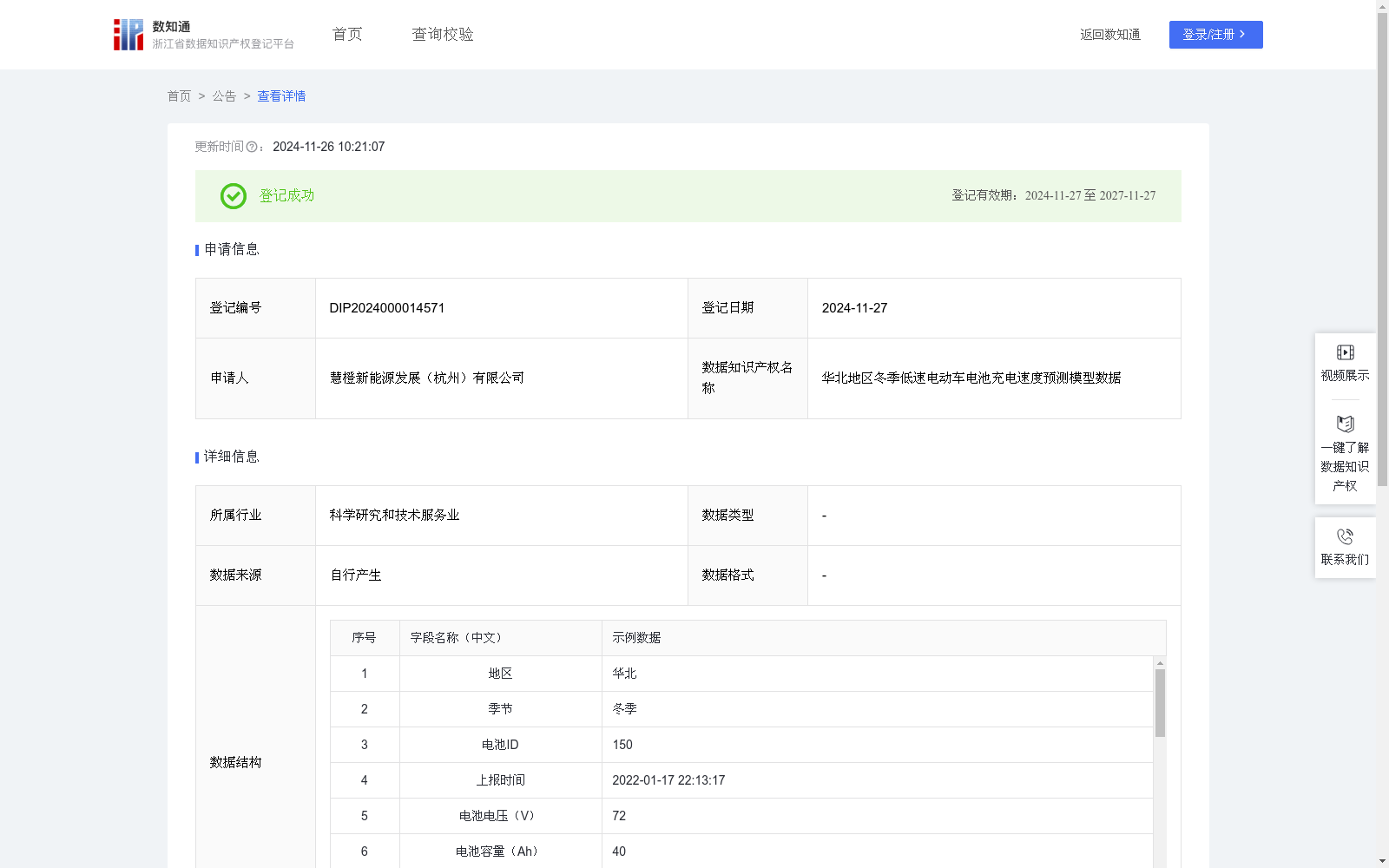
华北地区冬季低速电动车电池充电速度预测模型数据
收藏资源简介:
通过建立华北地区冬季低速电动车电池充电速度预测模型,能够清晰了解各地区电池的充电效率,从而制定不同的策略,提升低速电动车电池系统的运行效率。通过低速电动车电池充电速度预测模型,可以准确预测不同地区在冬季的充电需求与充电速度。高效的充电设施布局能够满足用户的充电需求,减少等待时间,提高用户满意度。同时,了解不同地区充电速度的差异,有助于优化充电设备的功率配置,确保充电设施的高效运行。数据有助于科学化电池管理与维护,及时识别异常充电状态,延长电池寿命,降低维护成本。分析不同地区不同季节的充电速度数据还可以制定针对性的用户服务策略,提升用户体验并增加管理收入。一、数据采集:原始数据来自公司业务采集数据,包含电池电压(V)、电池容量(Ah)、健康状态(SOH,%)、初始SOC(%)、目标SOC(%)、理想工作电压(V)、实际工作电压(V) 、理想充电电流(A)、实际充电电流(A)等原始数据字段。 二、算法规则:通建立华北地区冬季低速电动车电池充电速度预测模型,综合考虑了电池的基本性能参数、实际工作条件以及地区和季节的影响。1)SOH因子=0.95−0.005×(100−SOH);2)额定能量(kWh)=(电池电压(V)×电池容量(Ah)/1000;3)实际能量(kWh)=额定能量×SOH因子;4)待充电能量=实际能量× (目标SOC/100 - 初始SOC/100);;5)实际充电功率 = 实际工作电压 × 实际充电电流 / 1000;6)基础充电时间(小时)= 待充电能量/ 实际充电功率;7)电压因子(ηV)=1−0.001×∣实际工作电压−理想工作电压∣;8)电流因子(ηI)=理想充电电流/实际充电电流;9)实际充电时间采用函数映射模型:实际充电时间=f(基础充电时间,ηV,ηI,SOH因子,地区,季节)。
Building a battery charging speed prediction model for low-speed electric vehicles in North China during winter enables clear understanding of regional battery charging efficiency, thereby formulating differentiated strategies to improve the operating efficiency of low-speed electric vehicle battery systems. This model can accurately predict regional charging demand and charging speed during winter. Efficient charging facility layout can meet users' charging needs, reduce waiting time, and improve user satisfaction. Additionally, understanding differences in charging speed across regions helps optimize power configuration of charging equipment to ensure efficient operation of charging facilities. The data facilitates scientific battery management and maintenance, timely identification of abnormal charging states, extension of battery lifespan, and reduction of maintenance costs. Analyzing charging speed data across regions and seasons also allows development of targeted user service strategies to enhance user experience and increase management revenue. 1. Data Collection: The original data comes from the company's business collection data, including original data fields such as battery voltage (V), battery capacity (Ah), State of Health (SOH, %), initial State of Charge (SOC, %), target SOC (%), ideal operating voltage (V), actual operating voltage (V), ideal charging current (A), actual charging current (A), etc. 2. Algorithm Rules: By establishing the battery charging speed prediction model for low-speed electric vehicles in North China during winter, the basic performance parameters of the battery, actual operating conditions, as well as the impacts of region and season are comprehensively considered. 1) SOH factor = 0.95 − 0.005 × (100 − SOH); 2) Rated energy (kWh) = (battery voltage (V) × battery capacity (Ah)) / 1000; 3) Actual energy (kWh) = rated energy × SOH factor; 4) Energy to be charged = actual energy × (target SOC/100 − initial SOC/100); 5) Actual charging power = actual operating voltage × actual charging current / 1000; 6) Basic charging time (hours) = energy to be charged / actual charging power; 7) Voltage factor (η_V) = 1 − 0.001 × |actual operating voltage − ideal operating voltage|; 8) Current factor (η_I) = ideal charging current / actual charging current; 9) The actual charging time adopts a function mapping model: actual charging time = f(basic charging time, η_V, η_I, SOH factor, region, season).