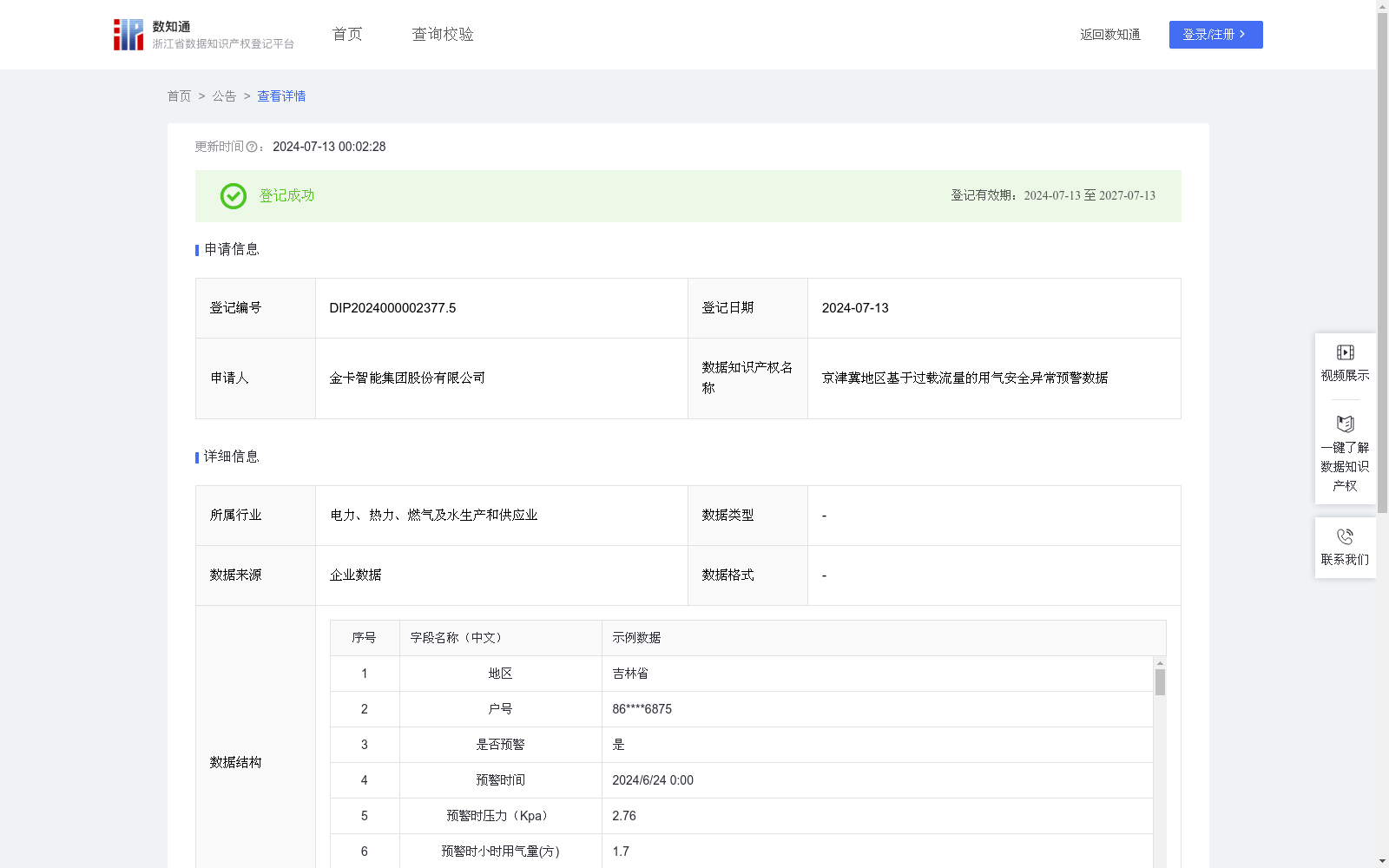
京津冀地区基于过载流量的用气安全异常预警数据
收藏资源简介:
通过大数据分析燃气用户的实际用气量使用情况,结合历史用气数据和用气设备信息,计算过载流量风险区间值,对实际使用中的风险及时预警,预防燃气事故。1、获取地区、表具型号、口径、预警时间、是否安装壁挂炉、是否安装热水器、户号、预警时小时用气量等数据项,计算同时期地区最大用气量、同时期地区最小用气量、同时期地区平均用气量 2、分析过载时间点所发生的用气的时间段、识别用户用气高峰和低峰期关联规律,根据用气量数据获取平均值、峰值、波动率,结合用户用气环境是否安装壁挂炉、热水器情况和季节变化给出过载发生与用气行为特征的关联规律 3、使用机器学习算法(随机森林、支持向量机、神经网络等)进行分类或回归分析识别用户异常用气行为、计算出用气安全系数、划分风险区间进行精准预警。 4、根据计算的过载流量风险区间值,及时向用户和燃气公司发出预警信息,防止潜在的燃气事故。
This dataset conducts big data analysis on the actual gas consumption patterns of gas users, combines historical gas consumption data and gas appliance information to calculate overload flow risk interval values, and issues timely early warnings for risks in actual use to prevent gas accidents. 1. Collect data items including region, gas meter model, nominal diameter, early warning time, whether a gas boiler is installed, whether a water heater is installed, household ID, and hourly gas consumption at the time of early warning, and calculate the regional maximum, minimum, and average gas consumption in the same period. 2. Analyze the gas consumption time slots corresponding to overload time points, identify the correlation rules between users' peak and off-peak gas consumption periods, obtain the average value, peak value and volatility based on gas consumption data, and derive the correlation rules between overload occurrence and gas consumption behavior characteristics by combining the installation status of gas boilers and water heaters in users' gas environments and seasonal changes. 3. Use machine learning algorithms (Random Forest, Support Vector Machine, Neural Network, etc.) for classification or regression analysis to identify users' abnormal gas consumption behaviors, calculate the gas safety coefficient, and divide risk intervals to conduct precise early warnings. 4. Issue early warning information to users and gas companies in a timely manner based on the calculated overload flow risk interval values, so as to prevent potential gas accidents.