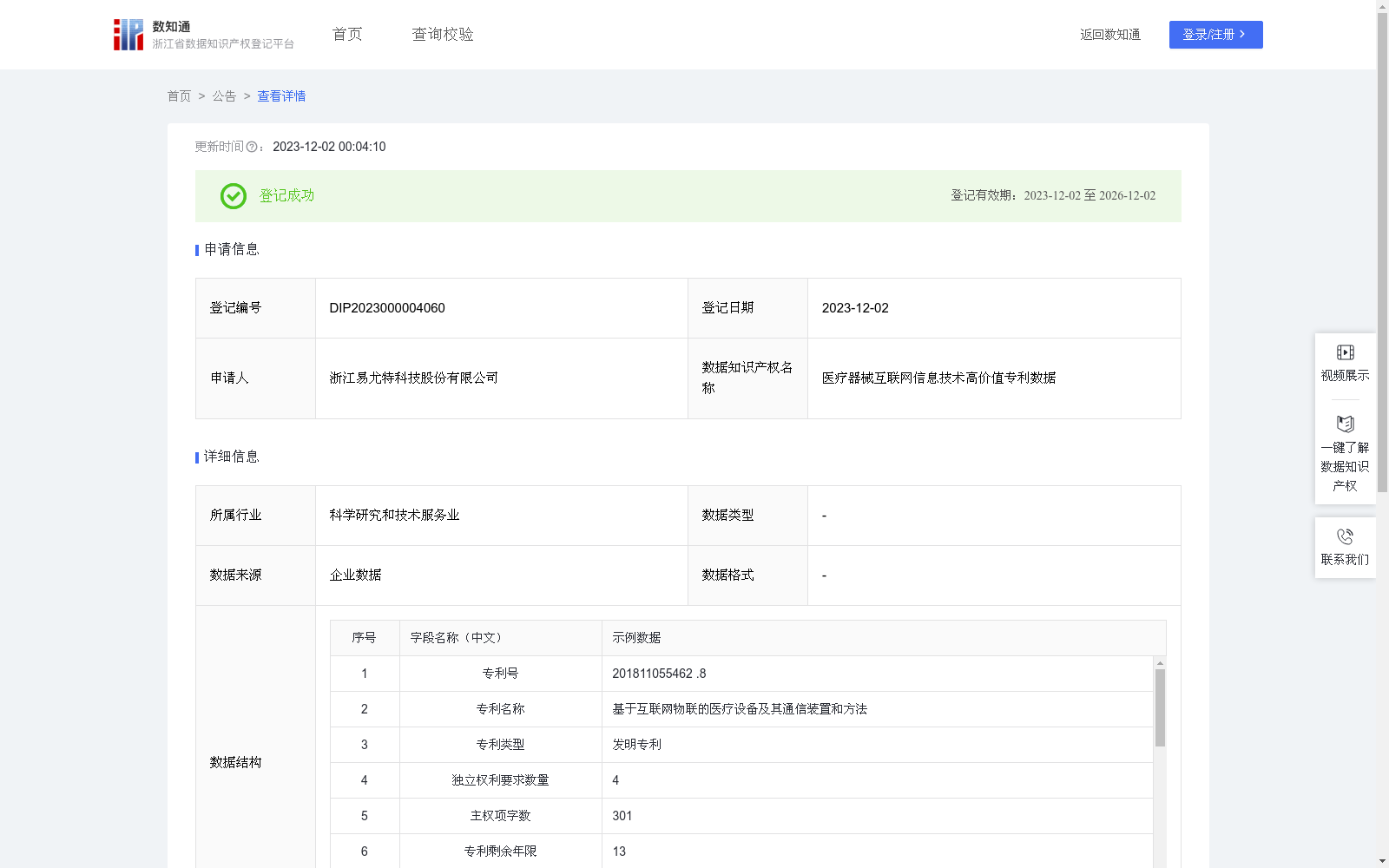
医疗器械互联网信息技术高价值专利数据
收藏资源简介:
医疗器械互联网信息技术高价值专利数据库中主要包括了全球专利数据库中有医疗器械互联网信息技术的发明专利和实用新型专利数据,并根据自有算法对专利数据进行了检索、评价打分,有助于了解医疗器械互联网信息技术知识产权申请情况及地域布局;通过对各企业医疗器械互联网信息技术专利数据的对比,可了解各企业的技术创新能力;了解医疗器械互联网信息技术发展趋势及核心技术,有助于企业避免重复研发及侵犯他人的知识产权。本数据基于AHP层次法,采用定量与定性相结合,从专利价值度法出发,指标层将专利价值指标体系分为技术、法律、经济3项一级指标,一级指标层向下为二级指标,包括技术价值指标:独立权利要求数量、主权项字数、专利剩余年限、同族专利数、引证其它专利数、被其他专利引证数、申请人类型得分、发明人投入人数、涉及领域数;法律价值指标:专利类型、文献页数、被无效请求次数;经济价值指标:转让次数、许可次数、质押融资次数、专利奖得分、海关备案得分;根据一级、二级指标建立3个维度的矩阵,根据专利名称和专利号通过专利接口数据获取专利评价对应的数据指标,采用1-9分标度法(最低为1分,最高为9分),求得相应的指标权重,用权重技术各个指标的分值,所有指标分值的和即为专利得分,根据分值的区间段对专利进行划分,为医疗器械互联网信息技术企业研发人员提供技术参考及指引,为公司提供研发决策指导。
The High-Value Patent Database for Internet Information Technology in Medical Devices primarily includes invention and utility model patents related to Internet information technology for medical devices sourced from global patent databases. It retrieves and evaluates the patent data using its proprietary algorithms, enabling stakeholders to understand the intellectual property (IP) application status and regional deployment of this field. By comparing the patent datasets of different enterprises, users can assess the technological innovation capabilities of each enterprise. Grasping the development trends and core technologies of Internet information technology for medical devices also helps enterprises avoid redundant R&D and intellectual property infringement. This database is developed based on the Analytic Hierarchy Process (AHP), combining quantitative and qualitative research methods. Starting from the patent value evaluation framework, the index layer divides the patent value index system into three first-level indicators: technological, legal, and economic values. Each first-level indicator is further decomposed into second-level indicators: 1. Technological value indicators: number of independent claims, word count of the sovereign independent claim, remaining patent term, number of patent family members, number of other patents cited by the patent, number of citations received by the patent from other patents, applicant type score, number of involved inventors, number of technical fields involved; 2. Legal value indicators: patent type, number of document pages, number of invalidation requests received; 3. Economic value indicators: number of transfer transactions, number of license agreements, number of pledge financing cases, patent award score, customs recordation score. A three-dimensional matrix is established based on the first-level and second-level indicators. The data corresponding to each evaluation indicator is obtained through patent interface data using patent titles and patent numbers. The 1-9 scaling method, where 1 is the lowest score and 9 is the highest, is adopted to calculate the weight of each indicator. The score of each indicator is multiplied by its corresponding weight, and the sum of all weighted scores constitutes the total patent score. Patents are classified into different categories based on their total score intervals. This database provides technical references and guidance for R&D personnel of enterprises engaged in Internet information technology for medical devices, and offers support for corporate R&D decision-making.