眼科疾病数据集
收藏资源简介:
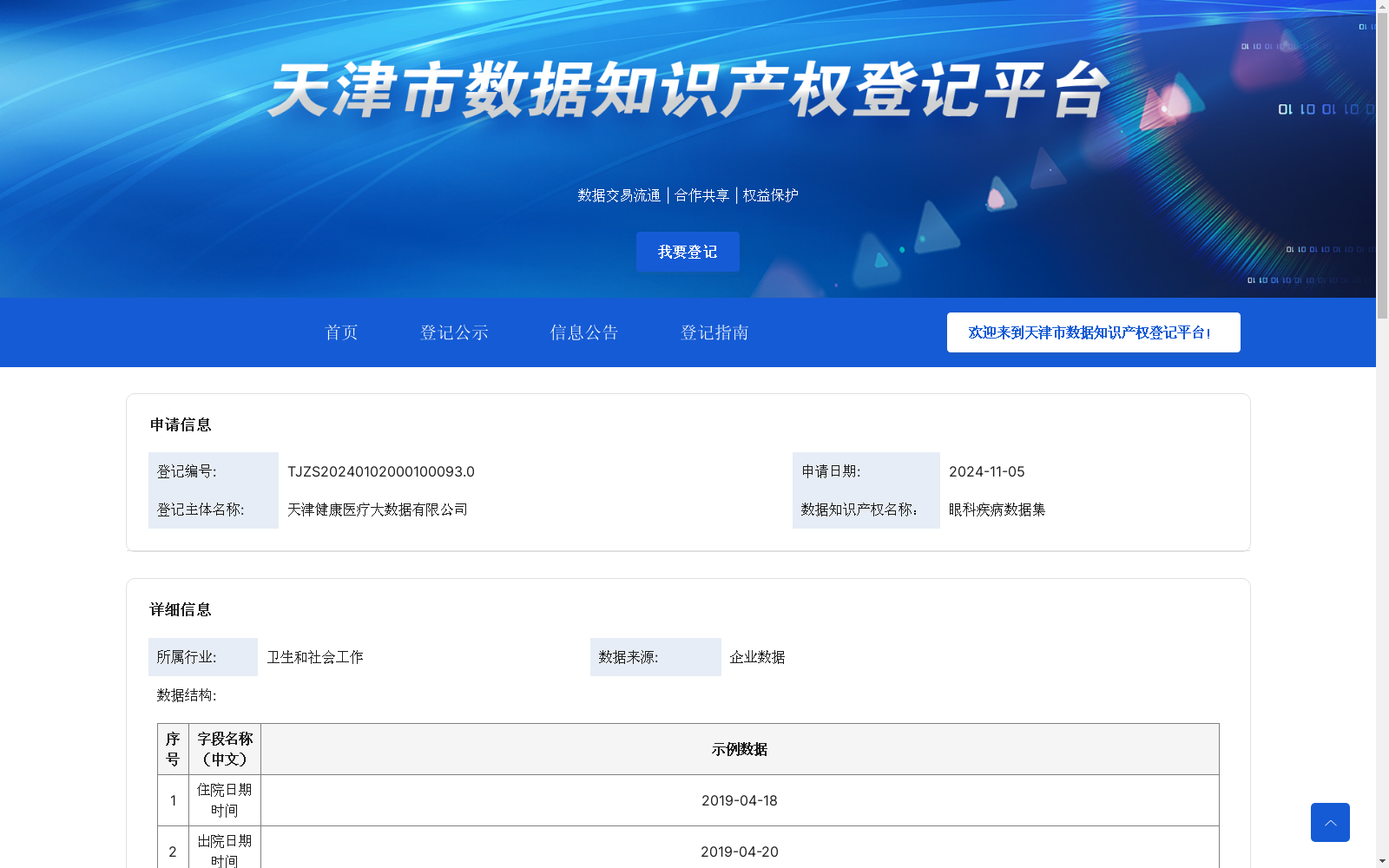
多维诊疗数据构建患者主索引:将患者数据特征向量定义为患者性别、住址、家族遗传病、过敏原等信息,使用DBSCAN算法,基于特征向量的密度,将密度相近的数据点划为同一个簇,将患者数据点进行聚类,每个聚类可以视为一个患者群体,作为主索引的标识。 专病诊断名称分类模型:通过分析医学文献、临床数据和专家知识,建立一个诊断数据库。经过分词和打乱顺序的预处理后,使用 train_supervised 函数进行训练(迭代200次,学习率0.1,词N-grams长度为1,损失函数为"hs")。模型性能通过 classification_report 方法评估,表现良好。参数更新通过命令同步模型、标签和标签名,从而快速、准确地诊断专病类型。
Patient Master Index Construction with Multi-dimensional Medical and Treatment Data: Define the feature vector of patient data as information including patient's gender, address, family genetic diseases, allergens and other relevant details. Apply the DBSCAN algorithm to cluster patient data points by grouping those with similar feature vector densities into the same cluster. Each cluster can be regarded as a patient group, serving as the identifier of the patient master index. Specialized Disease Diagnosis Name Classification Model: Establish a diagnostic database by analyzing medical literature, clinical data and expert knowledge. After preprocessing steps including word segmentation and data shuffling, train the model using the train_supervised function with the following parameters: 200 training iterations, learning rate of 0.1, word N-grams length of 1, and loss function set to "hs". The model performance is evaluated via the classification_report method and yields satisfactory results. Parameters are updated by synchronizing the model, labels and label names through commands, enabling rapid and accurate diagnosis of specialized disease types.