
Instructed knowledge shapes feedback-driven aversive learning in striatum and orbitofrontal cortex, but not the amygdala: Immediate reversals with instructions: Instructed Group (all participants)
收藏neurovault.org2018-06-30 更新2025-03-25 收录
下载链接:
https://neurovault.org/images/60324
下载链接
链接失效反馈官方服务:
资源简介:
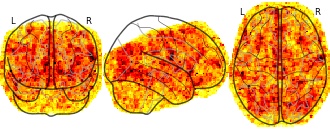
<p>This analysis identifies regions that show immediate reversals with instructions (CS [previous CS+ > previous CS-] x Phase [Pre - Post] interaction) in the Instructed Group, based on the window surrounding the delivery of instructions. Regions in warm colors showed greater activation to the current CS+ relative to the current CS-, while regions in cool colors show relatively greater activation to the CS- (or deactivation to the CS+). This analysis was included all Instructed Group participants (n=30), irrespective of whether they showed differential SCR prior to the first reversal.</p>
[](https://neurovault.org/images/60324)
### Collection description
<p>This includes all maps from Atlas et al., 2016. The experiment was an aversive reversal learning task (fear conditioning with reversals) in which participants viewed images (angry faces from the Ekman set) and one stimulus was paired with a shock on 30% of trials. There were 3 reversals across the task. One group (n = 30, Instructed Group) was informed about contingencies before learning & prior to each reversal, whereas a second group (n = 40, Uninstructed Group) learned only through experience. Neuroimaging analyses focused on correlations with dynamic expected value (EV) calculated based on an adapted Rescorla-Wagner learning model with an additional parameter to measure the effects of instructed reversals (see Atlas et al). This model was fit to skin conductance from learners in either the Instructed group (n=20) or the Uninstructed Group (n = 20) to generate Instructed and Feedback-driven EV. We used the best fits from the models fit to each group to generate parametric modulators for fMRI analyses and modeled EV on unreinforced (no shock) trials in our first level analyses and compared within and across groups at second level. We also used task-based fMRI to look at trials surrounding reversal within the Instructed Group to identify regions that update immediately with instruction and those that continue to respond to previous contingencies, and how well reversals correlated with responses to instructions in the DLPFC region that showed greater activation in the Instructed Group across all trials. </p>
###Subject species
homo sapiens
###Modality
fMRI-BOLD
### Analysis level
group
### Cognitive paradigm (task)
reversal learning task
### Map type
T
<p>本研究旨在识别在指令组中,围绕指令交付窗口出现即刻逆转(CS [先前CS+ > 先前CS-] 与阶段 [前 - 后] 交互作用)的脑区。暖色调区域相较于当前CS-显示出对当前CS+的更高激活,而冷色调区域则显示出对CS-(或对CS+的去激活)的相对较高激活。分析纳入了所有指令组参与者(n=30),无论他们在首次逆转前是否表现出差异性的皮肤电反应。</p>
[](https://neurovault.org/images/60324)
### 数据集描述
<p>本数据集包含Atlas等人在2016年的所有地图。实验是一项厌恶性逆转学习任务(恐惧条件反射逆转),参与者观看图像(Ekman集的愤怒面孔),在30%的试验中,一个刺激与电击配对。整个任务中存在3次逆转。一个组(n = 30,指令组)在学习和每次逆转前被告知关于偶然性的信息,而另一个组(n = 40,未指令组)仅通过经验进行学习。神经影像学分析集中于与基于改进的Rescorla-Wagner学习模型计算的动态预期价值(EV)的相关性,该模型增加了一个参数以测量指令逆转的效果(见Atlas等人)。此模型拟合到指令组(n=20)或未指令组(n = 20)的学习者的皮肤电导,以生成指令驱动的和反馈驱动的EV。我们使用每个组拟合模型的最佳拟合值来生成fMRI分析的参数调节器,并在第一级分析中对未受强化(无电击)试验中的EV进行建模,并在第二级中比较组和组间。我们还使用基于任务的fMRI来查看指令组中逆转周围的试验,以识别即时响应指令的脑区和继续对先前偶然性做出反应的脑区,并研究逆转与在所有试验中均显示出更高激活的DLPFC区域对指令的反应之间的相关性。</p>
### 受试者物种
homo sapiens
### 模式
fMRI-BOLD
### 分析层级
组
### 认知范式(任务)
逆转学习任务
### 地图类型
T
提供机构:
neurovault.org


