水产品镉风险监测数据
收藏资源简介:
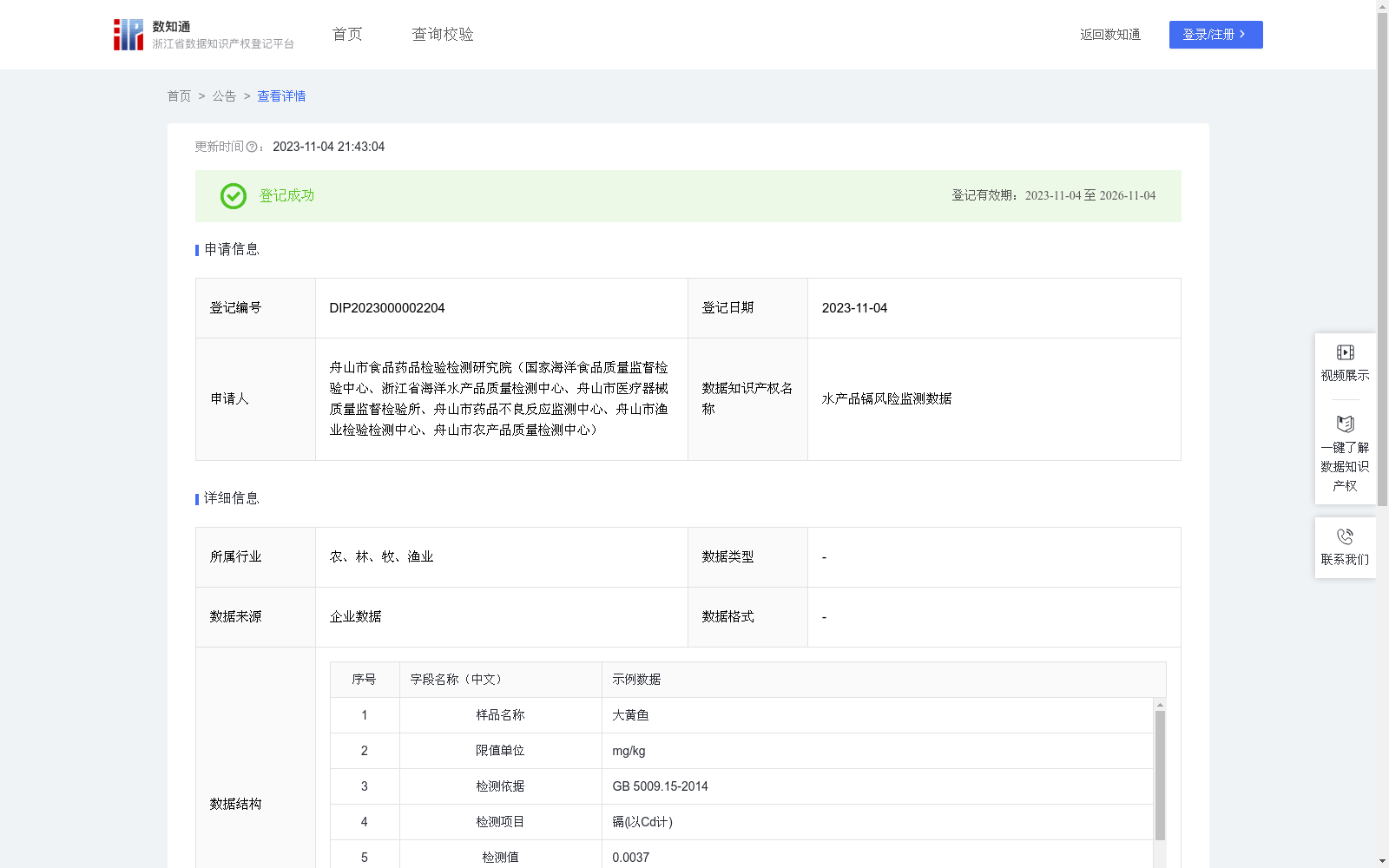
本数据主要用于监测舟山市市售水产品镉指标的变化情况,通过检测数据,可以判断水产品中镉含量是否符合食品安全生产标准,为监管部门提供监管依据,进一步保障消费者的食品安全。1.样品来源:本项目抽检的水产品全部来源于舟山市流通环节市场主体经营的水产品,检测部位是可食用部分。2.数据采集:采集水产品样品名称、检测方法、检测结果等信息;3.数据处理:筛选出水产品中镉含量问题检测结果(GB2762-2022中规定各类水产品的限值为:鱼类≤0.1mg/kg;甲壳类(海蟹、虾蛄除外)≤0.5mg/kg;双壳贝类、腹足类、头足类、棘皮类≤2.0mg/kg,超出限值即为问题项),用于评估其食用安全性,水产品中镉问题发现率=检出镉问题项批次数/进行镉监测的水产品总数;4、数据应用:水产品镉问题项检测结果可以作为食用安全性评价依据,为监管部门靶向监管提供技术支撑。
This dataset is primarily used to monitor the changes in cadmium content of commercially available aquatic products in Zhoushan. Based on the test data, it can be determined whether the cadmium content in aquatic products complies with food safety production standards, providing regulatory basis for relevant authorities and further safeguarding consumer food safety. 1. Sample source: All randomly sampled aquatic products in this project are sourced from aquatic products operated by market entities in the circulation sector of Zhoushan, with the tested parts being the edible portions. 2. Data collection: Information including the names of aquatic product samples, detection methods, and test results is collected. 3. Data processing: Test results with non-compliant cadmium content in aquatic products are screened out (as stipulated in GB 2762-2022: the limit values for various aquatic products are fish ≤ 0.1 mg/kg; crustaceans (excluding sea crabs and mantis shrimps) ≤ 0.5 mg/kg; bivalves, gastropods, cephalopods, and echinoderms ≤ 2.0 mg/kg; items exceeding the limits are classified as non-compliant items). The edible safety of aquatic products is evaluated, and the detection rate of cadmium non-compliant aquatic products is calculated as: number of non-compliant batches / total number of aquatic products monitored for cadmium. 4. Data application: The test results of cadmium non-compliant aquatic products can serve as a basis for edible safety assessment, providing technical support for targeted supervision by regulatory authorities.