用户租车/购车需求热力分析数据
收藏资源简介:
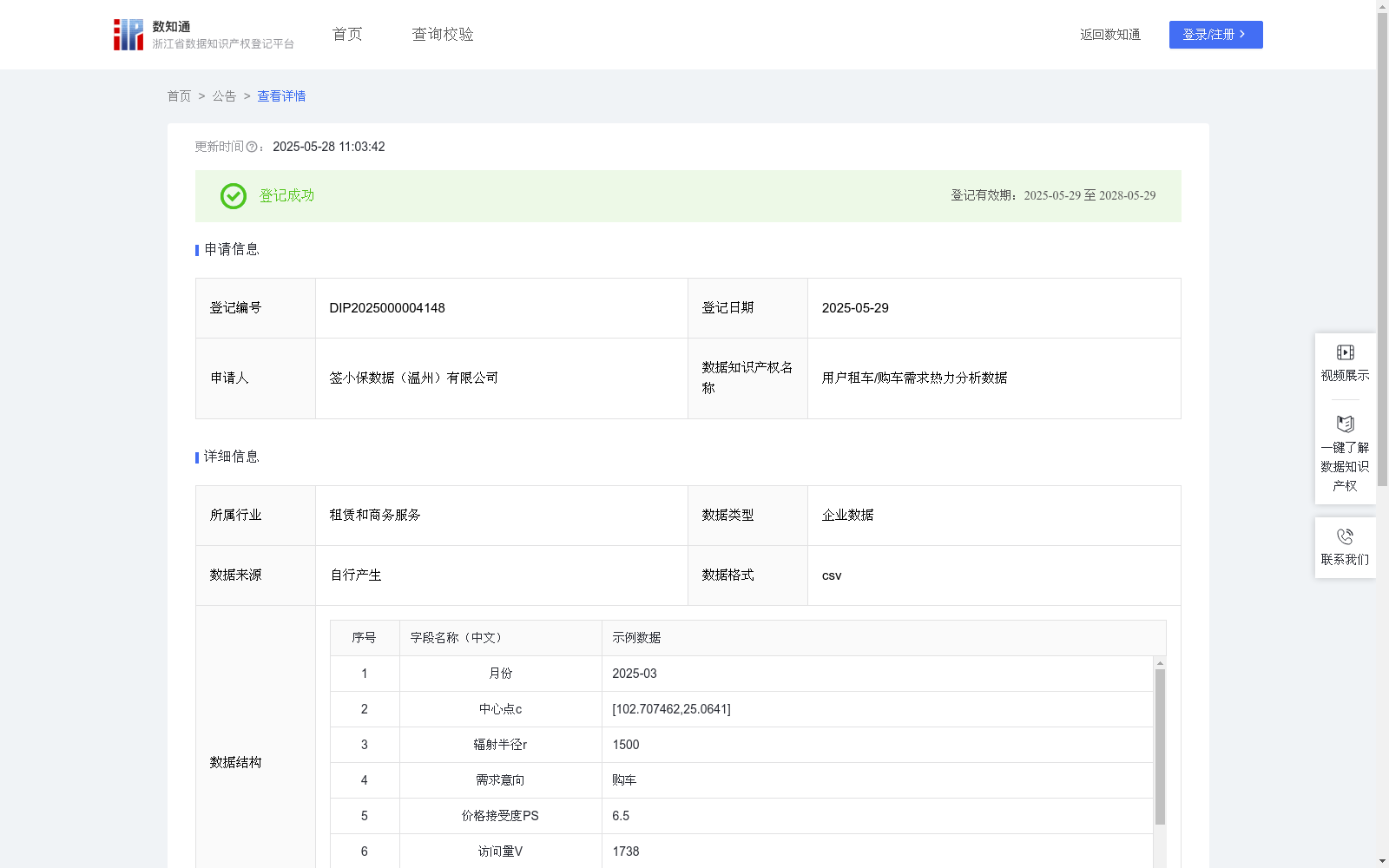
基于密度聚类算法解析用户搜索热区与转化路径,并结合价格敏感度分级(如比价超3次的用户标记为高敏感群体),生成动态的用车需求热力值,旨在预判市场波动并辅助商户更快的做出运营决策。 场景A:当系统探测到某地区周边访问量月环比激增,向订阅客户告知附近用车需求的增长情况,及时调整区域定价策略,实现"需求感知-资源预置-价值捕获"的运营模式升级。 场景B:对于(计划开设经销商门店的)非订阅客户,可通过购买指定区域的"租车/购车需求热力数据",帮助其找到最佳的商业网点位置。1.数据采集 从“签小保租售平台”的后台数据库中提取用户线上搜索行为数据(如关键词查阅频次)、线下门店客流(到店扫码),通过地理网格化映射(例如圈定1000米范围)、密度聚类算法识别需求聚集区、分级标注价格敏感用户群,输出区域需求热力值。 2.算法规则 HV=ln(1+CR)×V×79.64/r + PS×3.6 (动态调整:当 AP > μAP×1.15时, HV:=HV × 0.9) 其中 `V`代表区域访问量; `r`代表区域范围的半径; `CR`代表转化率,从访问到下单的比例; `PS`代表价格接受度(范围为0~10); `μAP`为区域历史平均单价; 3.数据分析 根据热度值可分析该地区在某个时期用户的租车/购车需求强度,辅助商家运营决策。热力评级规则如下: (1) 高热度(HV≥90): 说明在该场景中刚性供给短缺,此时可进行溢价或增投车辆; (2) 中等热度(70≤HV<90): 说明用户对价格敏感,此时需要采取梯度折扣或精准营销; (3) 低热度(HV<70): 说明需求过低,需要考虑降价、或捆绑套餐等动作,刺激用户进行消费;
This dataset analyzes user search hotspots and conversion paths via density clustering algorithms, combines price sensitivity grading (e.g., users who compare prices more than 3 times are labeled as high-sensitivity groups), and generates dynamic vehicle demand heat values, aiming to predict market fluctuations and assist merchants in making operational decisions more quickly. Scenario A: When the system detects a month-on-month surge in visitation volume around a certain region, it notifies subscribed customers of the growth of nearby vehicle demand, and timely adjusts regional pricing strategies to realize the upgrade of the operational model of "demand perception - resource provision - value capture". Scenario B: For non-subscribed customers who plan to open dealer stores, they can purchase "rental car/vehicle purchase demand heat data" of a designated area to help them find the optimal location for their business outlets. 1. Data Collection Extract users' online search behavior data (e.g., keyword search frequency) and offline store passenger flow (in-store scan-in) from the backend database of "Qianxiaobao Rental and Sales Platform". Through geographic grid mapping (e.g., defining a 1000-meter range), density clustering algorithms are used to identify demand aggregation areas, grade and label price-sensitive user groups, and output regional demand heat values. 2. Algorithm Rules HV = ln(1+CR) × V × 79.64 / r + PS × 3.6 (Dynamic adjustment: When AP > μ_AP × 1.15, HV := HV × 0.9) Where: - V: Regional visitation volume; - r: Radius of the regional scope; - CR: Conversion rate, the ratio of visits to placed orders; - PS: Price acceptance (ranging from 0 to 10); - μ_AP: Regional historical average unit price; 3. Data Analysis The heat value can be used to analyze the intensity of users' rental car/vehicle purchase demand in the region during a specific period, assisting merchants in operational decision-making. The heat rating rules are as follows: (1) High heat (HV ≥ 90): Indicates rigid supply shortage in this scenario, and premium pricing or vehicle fleet expansion can be implemented at this time; (2) Medium heat (70 ≤ HV < 90): Indicates that users are price-sensitive, and gradient discounts or precision marketing should be adopted at this time; (3) Low heat (HV < 70): Indicates insufficient demand, and measures such as price reduction or bundled packages should be considered to stimulate user consumption.