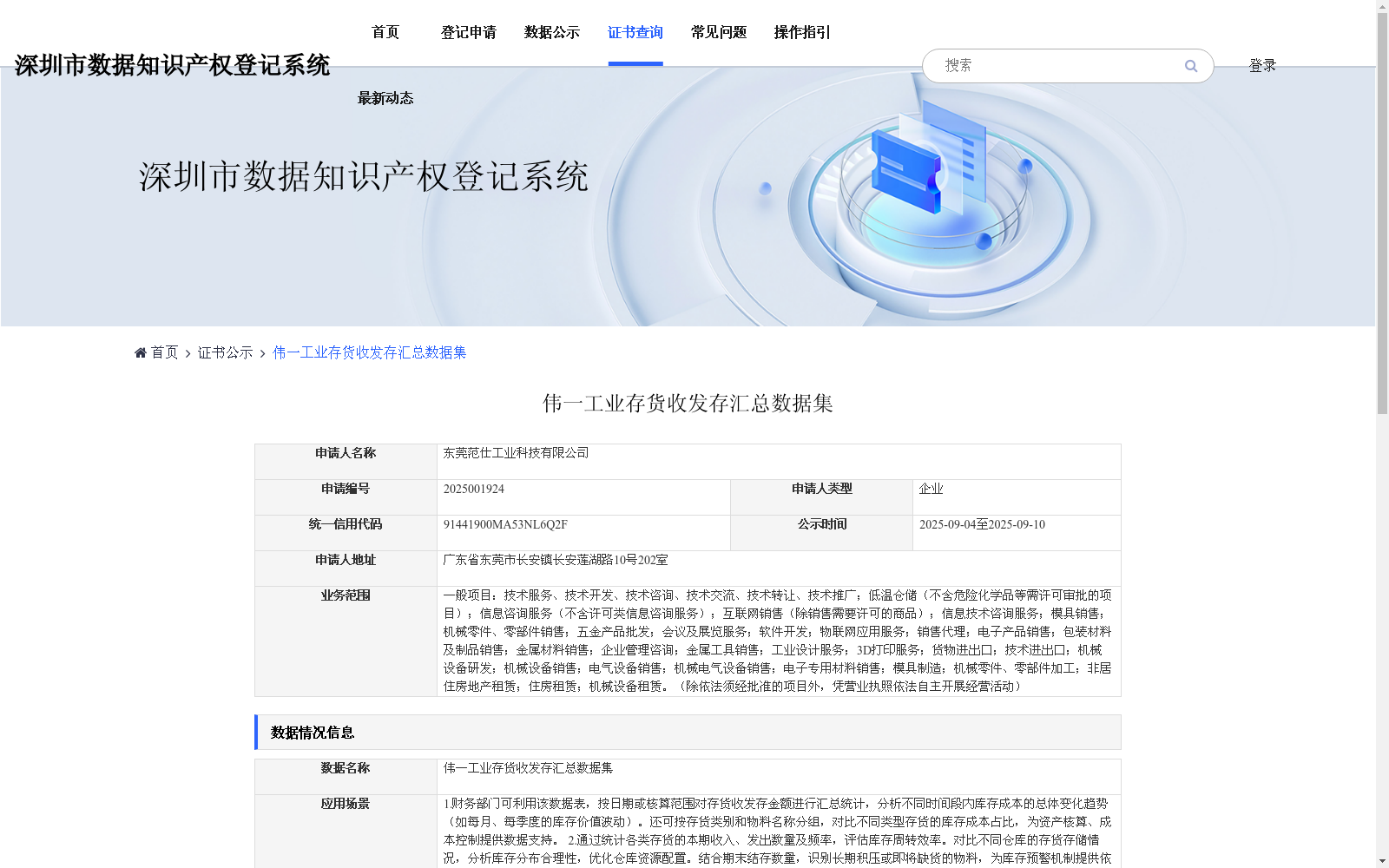
伟一工业存货收发存汇总数据集
收藏资源简介:
1.财务部门可利用该数据表,按日期或核算范围对存货收发存金额进行汇总统计,分析不同时间段内库存成本的总体变化趋势(如每月、每季度的库存价值波动)。还可按存货类别和物料名称分组,对比不同类型存货的库存成本占比,为资产核算、成本控制提供数据支持。 2.通过统计各类存货的本期收入、发出数量及频率,评估库存周转效率。对比不同仓库的存货存储情况,分析库存分布合理性,优化仓库资源配置。结合期末结存数量,识别长期积压或即将缺货的物料,为库存预警机制提供依据。 3.分析不同存货类别在不同时间段的收发存趋势,可了解各类物料的需求动态。对于库存积压的物料(如部分长期未发出的塑胶模具),可调整生产计划或促销策略;对于高频周转的物料(如金属零部件、五金产品),可提前规划采购与生产,避免缺货影响生产进度,为企业的库存管理和供应链优化提供决策支持。
1. The finance department can use this data table to conduct aggregated statistics on the amount of inventory receiving, issuing and holding by date or accounting scope, and analyze the overall trend of inventory cost changes over different time periods (such as monthly and quarterly inventory value fluctuations). It can also group by inventory categories and material names to compare the proportion of inventory costs for different types of inventories, providing data support for asset accounting and cost control. 2. By conducting statistics on the current-period receipts, issuance quantities and frequencies of various inventories, the inventory turnover efficiency can be evaluated. By comparing the inventory storage status of different warehouses, the rationality of inventory distribution can be analyzed, and warehouse resource allocation can be optimized. Combined with the ending inventory quantity, materials that are long-term overstocked or facing impending stockout can be identified, providing a basis for the inventory early warning mechanism. 3. By analyzing the trends of inventory receiving, issuing and holding for different inventory categories over different time periods, the demand dynamics of various materials can be understood. For overstocked materials (such as some long-term unissued plastic molds), production plans or promotion strategies can be adjusted; for high-frequency turnover materials (such as metal parts and hardware products), procurement and production can be planned in advance to avoid stockouts disrupting production schedules, providing decision support for enterprise inventory management and supply chain optimization.