
GDP and manufacturing output growth in Western European countries 1950-1970
收藏www.statista.com2025-01-15 收录
下载链接:
https://www.statista.com/statistics/730758/western-europe-economic-manufacturing-output-growth-golden-age/
下载链接
链接失效反馈官方服务:
资源简介:
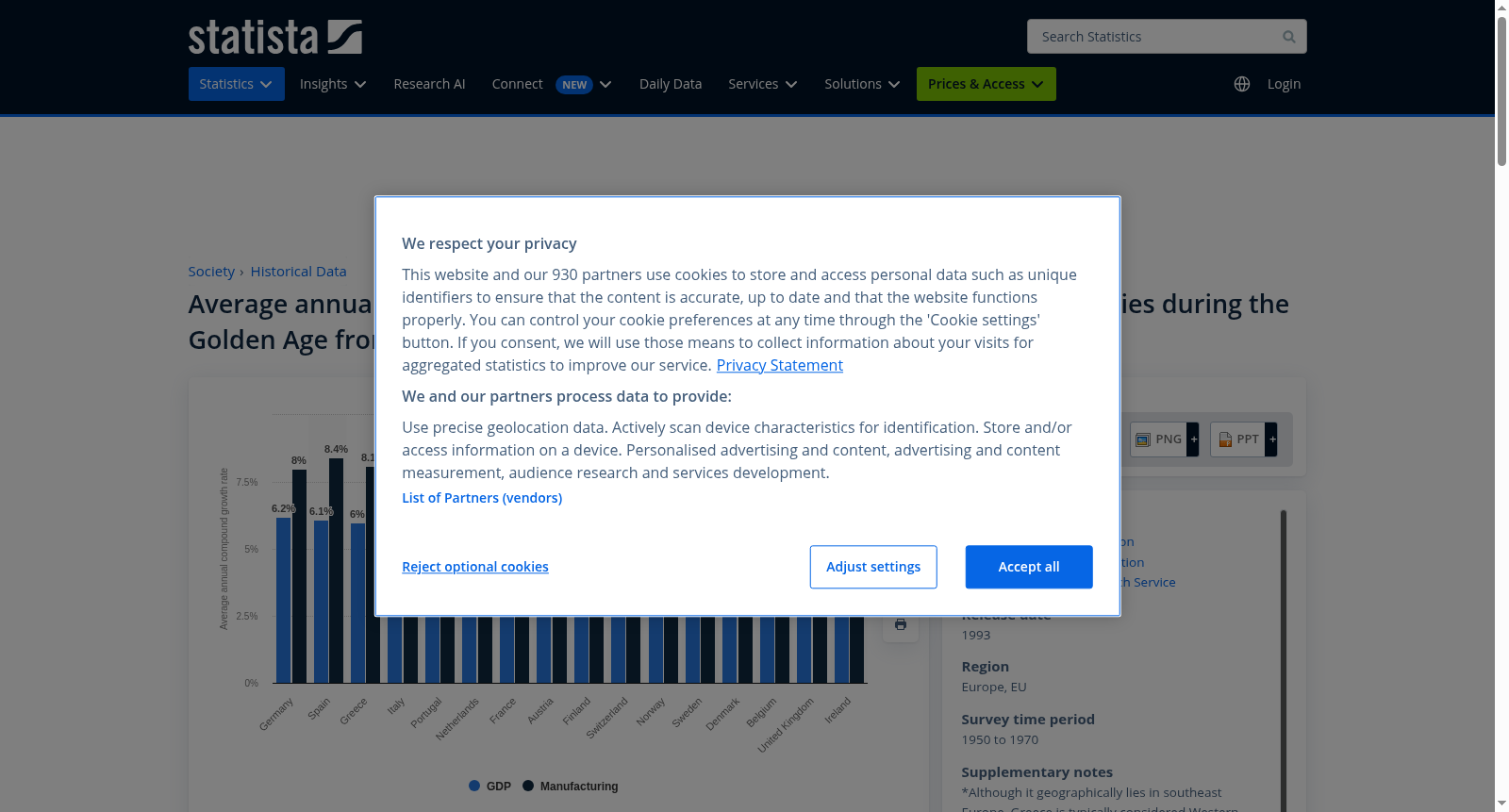
During the "Golden Age of Capitalism", between 1950 and 1969, economic growth and output grew across virtually all countries in Europe. Growth in Western Europe was the fastest of any region in the world; Japan was the only individual, major economic power to experience faster growth during this time. In Western Europe, the fastest growth rates were across the southern states*, and in the founding countries of the European Coal and Steel Community (Benelux, France, Italy, and West Germany). Not only was West Germany the largest economy in post-WWII Western Europe, but it also had the highest growth rate of economic output, at an average of 6.2 percent each year.CausesIncreased European integration removed many trade barriers and incentivized cooperation; for the countries who were reluctant to integrate, most notably the United Kingdom, economic growth was still achieved but at a much lower rate. Generally, there was also a correlation between social spending and economic growth, as countries who invested the most in public services and welfare also saw the largest rises in GDP throughout this period. American influence was also fundamental, particularly in private investment from American companies and the Americanization of business practices and corporate structures.ManufacturingIn terms of manufacturing, West Germany and the southern countries saw the sharpest increases in annual output. West Germany already had a relatively industrialized economy, but greatly expanded these industries in the post-war period. For those states along the Mediterranean, there was a much stronger emphasis on agriculture than industrialization during the interwar period, which meant that when industrialization began in the late 1940s and 1950s it grew significantly. For example, Italy sought to strengthen its agricultural sector in the 1930s by restricting urbanization and migration abroad; after the war, the reversal of these policies saw manufacturing industries boom and employment reached record highs.
在所谓的“资本主义黄金时代”,即1950年至1969年期间,欧洲几乎所有国家的经济增长和产出均实现了增长。西欧的增长速度位居全球所有区域之首;日本是唯一在此期间经济增长速度更快的单个主要经济体。在西欧,南部诸州的增长速度最快,而在欧洲煤钢共同体(比荷卢、法国、意大利和西德)的创始成员国中亦然。不仅西德在二战后西欧的经济总量中占据首位,其经济产出增长率也最高,平均每年达到6.2%。经济增长的动因包括欧洲一体化的加深,这消除了许多贸易壁垒并激励了合作;对于那些不愿一体化的国家,尤其是英国,尽管经济增长得以实现,但增速却相对较低。一般而言,社会支出与经济增长之间也存在相关性,那些在此期间对公共服务和社会保障投资最多的国家,其国内生产总值(GDP)的增长幅度也最大。美国的影响同样至关重要,特别是在美国公司进行的私人投资,以及商业实践和企业结构的美国化方面。在制造业方面,西德和南部国家年度产出的增长最为显著。西德已经拥有一个相对工业化的经济体,但在战后时期大幅扩大了这些产业。对于那些在战间期比工业化更注重农业的地中海沿岸国家,当工业化在1940年代末和1950年代开始时,其增长显著。例如,意大利在1930年代通过限制城市化和海外移民来强化其农业部门;战后,这些政策的逆转导致了制造业的繁荣,就业率达到了历史最高水平。
提供机构:
Statista
搜集汇总
数据集介绍
背景与挑战
背景概述
该数据集提供了1950-1970年西欧国家GDP和制造业产出的年均增长率,覆盖了包括爱尔兰、英国、法国等13个国家,展示了黄金时代西欧经济的快速增长情况。
以上内容由遇见数据集搜集并总结生成


