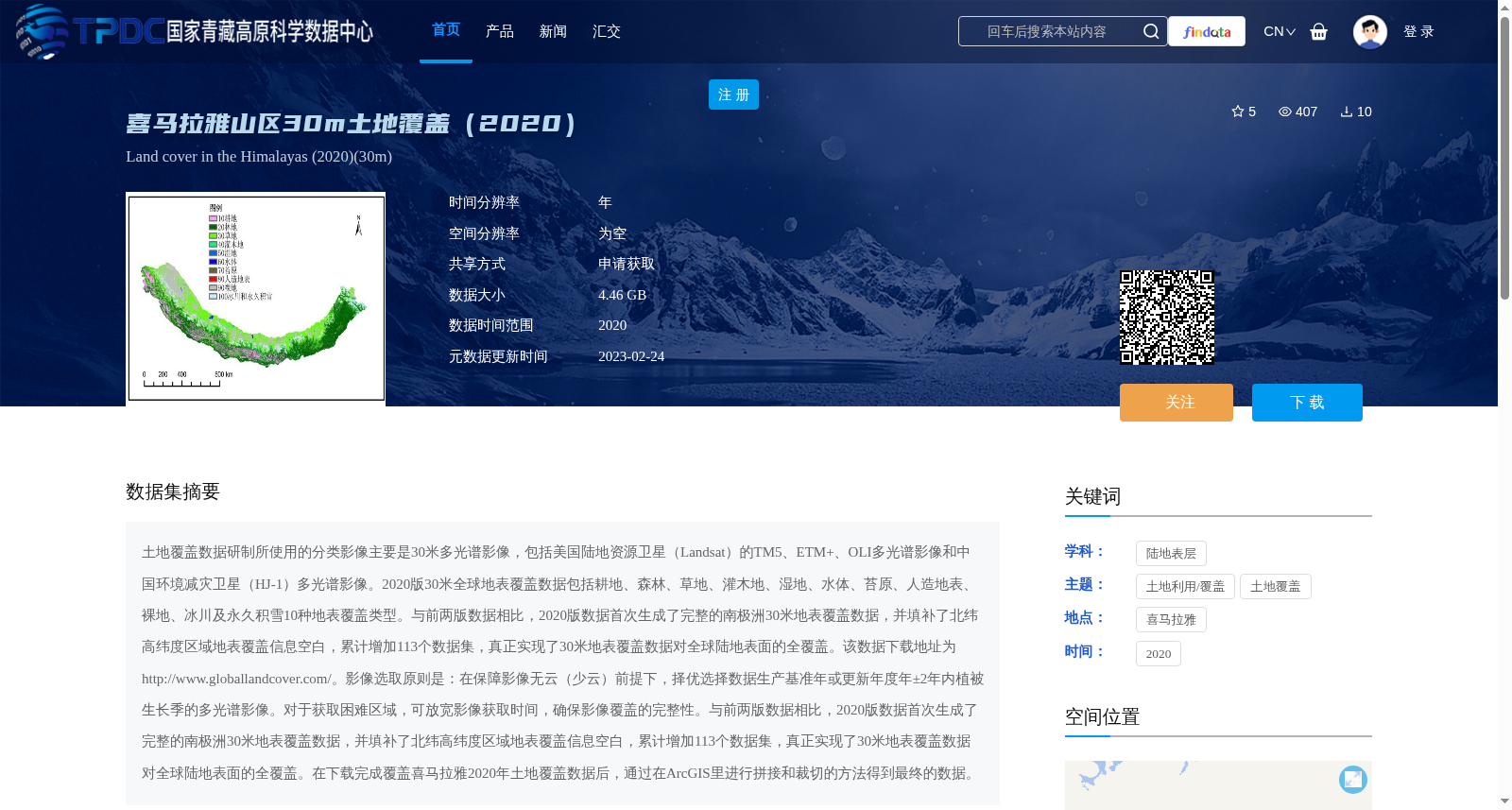
喜马拉雅山区30m土地覆盖(2020)
收藏资源简介:
土地覆盖数据研制所使用的分类影像主要是30米多光谱影像,包括美国陆地资源卫星(Landsat)的TM5、ETM+、OLI多光谱影像和中国环境减灾卫星(HJ-1)多光谱影像。2020版30米全球地表覆盖数据包括耕地、森林、草地、灌木地、湿地、水体、苔原、人造地表、裸地、冰川及永久积雪10种地表覆盖类型。与前两版数据相比,2020版数据首次生成了完整的南极洲30米地表覆盖数据,并填补了北纬高纬度区域地表覆盖信息空白,累计增加113个数据集,真正实现了30米地表覆盖数据对全球陆地表面的全覆盖。该数据下载地址为http://www.globallandcover.com/。影像选取原则是:在保障影像无云(少云)前提下,择优选择数据生产基准年或更新年度年±2年内植被生长季的多光谱影像。对于获取困难区域,可放宽影像获取时间,确保影像覆盖的完整性。与前两版数据相比,2020版数据首次生成了完整的南极洲30米地表覆盖数据,并填补了北纬高纬度区域地表覆盖信息空白,累计增加113个数据集,真正实现了30米地表覆盖数据对全球陆地表面的全覆盖。在下载完成覆盖喜马拉雅2020年土地覆盖数据后,通过在ArcGIS里进行拼接和裁切的方法得到最终的数据。
The classified imagery used for developing land cover datasets is primarily 30-meter multispectral imagery, including TM5, ETM+, and OLI multispectral imagery from the U.S. Landsat program, as well as multispectral imagery from China's Environmental Disaster Reduction Satellite (HJ-1). The 2020 version of the 30-meter global land cover dataset includes 10 land cover types: cropland, forest, grassland, shrubland, wetland, water body, tundra, artificial surfaces, bare land, and glaciers and permanent snow cover. Compared with the previous two versions, the 2020 dataset generated the first complete 30-meter land cover dataset for Antarctica for the first time, filled the gap in land cover information for high-latitude regions north of the equator, and added a total of 113 datasets, truly achieving full coverage of the global land surface with 30-meter land cover data. The download address for this dataset is http://www.globallandcover.com/. The principle for selecting imagery is as follows: on the premise of ensuring cloud-free (or cloud-light) imagery, preferentially select multispectral imagery from the vegetation growing season within ±2 years of the data production baseline year or the update year. For regions where imagery acquisition is difficult, the image acquisition time window can be relaxed to ensure the completeness of imagery coverage. Compared with the previous two versions, the 2020 dataset generated the first complete 30-meter land cover dataset for Antarctica for the first time, filled the gap in land cover information for high-latitude regions north of the equator, and added a total of 113 datasets, truly achieving full coverage of the global land surface with 30-meter land cover data. After downloading the 2020 land cover data covering the Himalayas, the final dataset was obtained through mosaicking and clipping operations in ArcGIS.