折扣商家让利增收数据集
收藏资源简介:
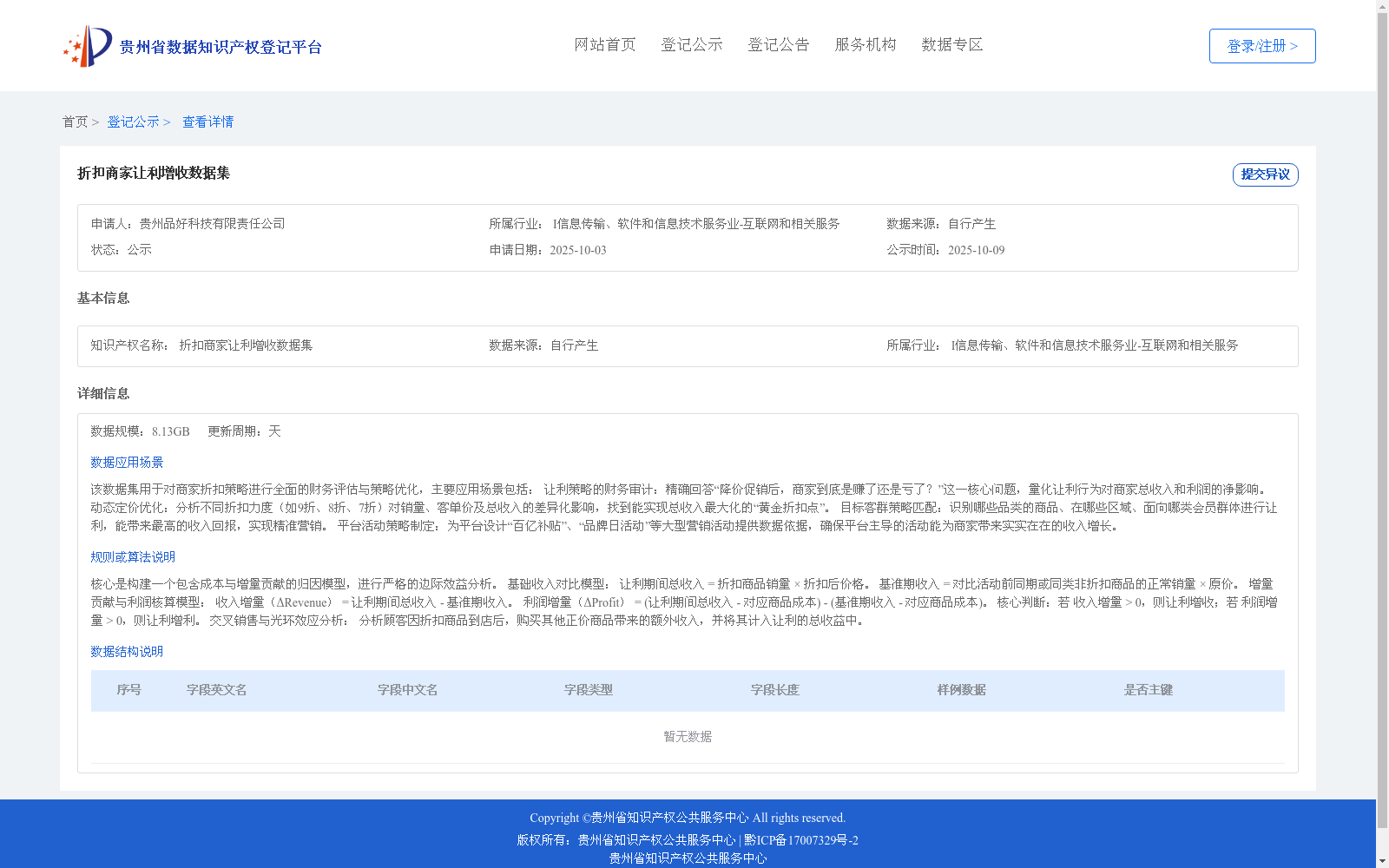
核心是构建一个包含成本与增量贡献的归因模型,进行严格的边际效益分析。 基础收入对比模型: 让利期间总收入 = 折扣商品销量 × 折扣后价格。 基准期收入 = 对比活动前同期或同类非折扣商品的正常销量 × 原价。 增量贡献与利润核算模型: 收入增量(ΔRevenue) = 让利期间总收入 - 基准期收入。 利润增量(ΔProfit) = (让利期间总收入 - 对应商品成本) - (基准期收入 - 对应商品成本)。 核心判断:若 收入增量 > 0,则让利增收;若 利润增量 > 0,则让利增利。 交叉销售与光环效应分析: 分析顾客因折扣商品到店后,购买其他正价商品带来的额外收入,并将其计入让利的总收益中。
The core of this dataset is to build an attribution model incorporating costs and incremental contributions, and conduct rigorous marginal benefit analysis. Basic Revenue Comparison Model: Total Revenue During Discount Period = Sales Volume of Discounted Products × Discounted Unit Price. Baseline Period Revenue = Normal Sales Volume of either the Corresponding Period Prior to the Campaign or Similar Non-discounted Products × Original Unit Price. Incremental Contribution and Profit Accounting Model: Revenue Increment (ΔRevenue) = Total Revenue During Discount Period - Baseline Period Revenue. Profit Increment (ΔProfit) = (Total Revenue During Discount Period - Corresponding Product Costs) - (Baseline Period Revenue - Corresponding Product Costs). Core Judgment: If Revenue Increment > 0, the discount strategy increases revenue; if Profit Increment > 0, the discount strategy increases profit. Cross-selling and Halo Effect Analysis: Analyze the additional revenue generated by customers who visit the store due to discounted products and purchase other full-priced goods, and include this portion into the total revenue of the discount promotion.