
NO-FAIL POLICY: IMPACT ON THE ACADEMIC PERFORMANCE OF THE LEARNERS AMIDST THE PANDEMIC
收藏DataCite Commons2025-04-01 更新2025-04-16 收录
下载链接:
https://data.mendeley.com/datasets/ry24h5f2r2
下载链接
链接失效反馈官方服务:
资源简介:
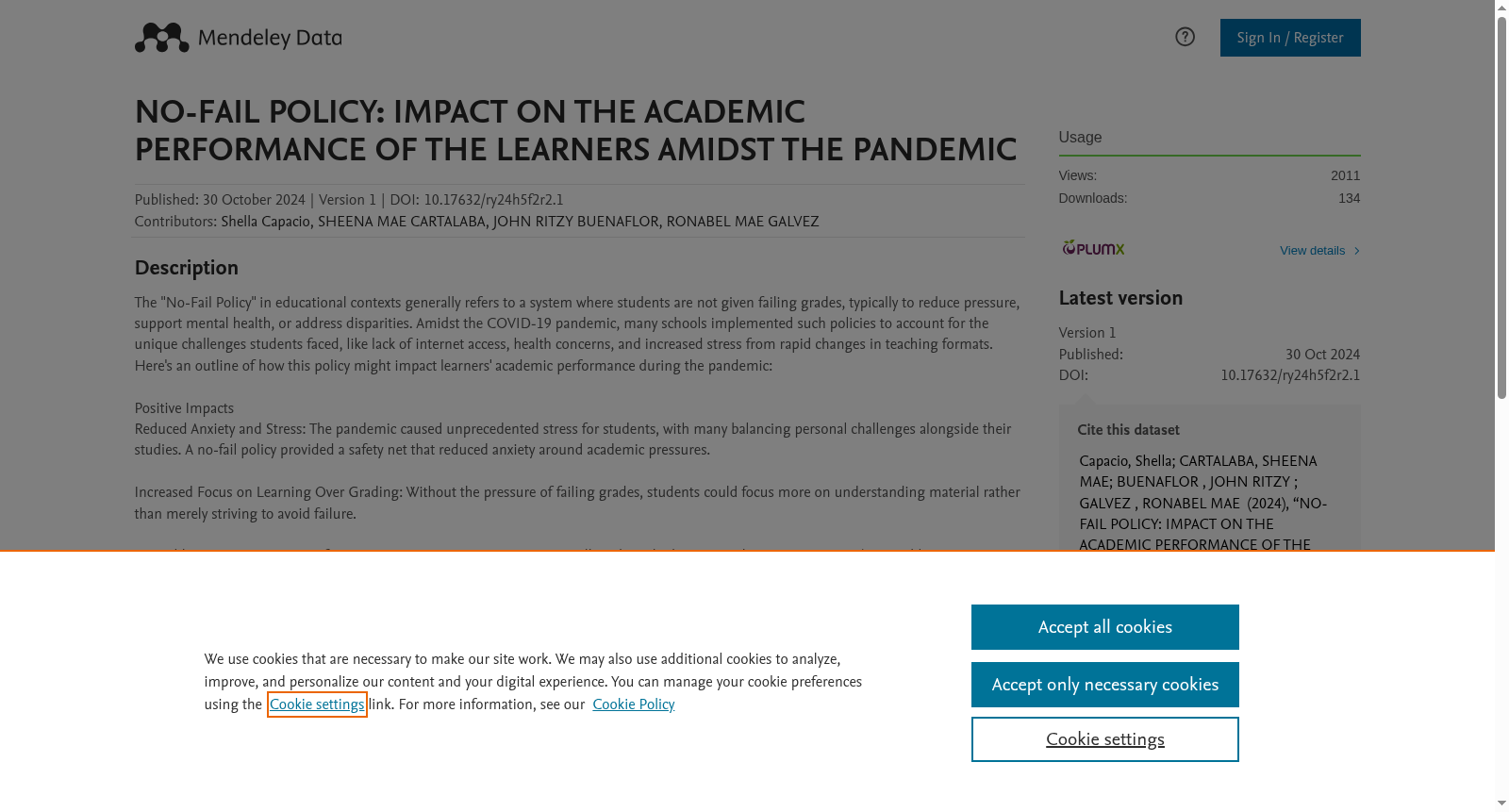
The "No-Fail Policy" in educational contexts generally refers to a system where students are not given failing grades, typically to reduce pressure, support mental health, or address disparities. Amidst the COVID-19 pandemic, many schools implemented such policies to account for the unique challenges students faced, like lack of internet access, health concerns, and increased stress from rapid changes in teaching formats. Here's an outline of how this policy might impact learners' academic performance during the pandemic:
Positive Impacts
Reduced Anxiety and Stress: The pandemic caused unprecedented stress for students, with many balancing personal challenges alongside their studies. A no-fail policy provided a safety net that reduced anxiety around academic pressures.
Increased Focus on Learning Over Grading: Without the pressure of failing grades, students could focus more on understanding material rather than merely striving to avoid failure.
Equitable Treatment Across Different Learning Environments: Since not all students had access to the same resources (e.g., stable internet, quiet learning environments), the policy helped level the playing field for those disproportionately impacted by these limitations.
Encouragement to Continue Education: The policy potentially decreased dropout rates by encouraging students to stay engaged even if their grades suffered, which helped maintain continuity in education.
Negative Impacts
Reduced Academic Accountability: Without the risk of failing, some students might not put in the necessary effort, which could reduce overall learning outcomes and mastery of content.
Lowered Standards of Achievement: Some educators and parents worry that no-fail policies set a precedent that de-emphasizes academic excellence and creates a gap in foundational knowledge.
Difficulty in Measuring True Academic Performance: Teachers may find it challenging to gauge students' true academic progress, which could affect preparation for future coursework or career paths that require strong foundational knowledge.
Long-Term Effects on Work Ethic and Motivation: Critics argue that no-fail policies might inadvertently affect students’ work ethic, making it difficult for them to transition back to environments with more traditional grading standards.
Conclusion
The no-fail policy amidst the pandemic was primarily a support measure, ensuring that students continued to learn in difficult circumstances. However, while it addressed immediate inequities and mental health concerns, its long-term impact on academic performance and motivation is complex and still under study, as educational systems now look at how to balance support with accountability moving forward.
提供机构:
Mendeley Data
创建时间:
2024-10-29
搜集汇总
数据集介绍
背景与挑战
背景概述
该数据集研究了COVID-19疫情期间实施的‘无不及格政策’对学习者学业表现的影响,分析了政策带来的正面效应(如减轻学生压力、促进教育公平)和负面效应(如可能降低学业标准和动机)。数据集以PDF文件形式提供,发布于2024年,属于学术表现研究领域,旨在探讨教育支持与责任之间的平衡。
以上内容由遇见数据集搜集并总结生成



