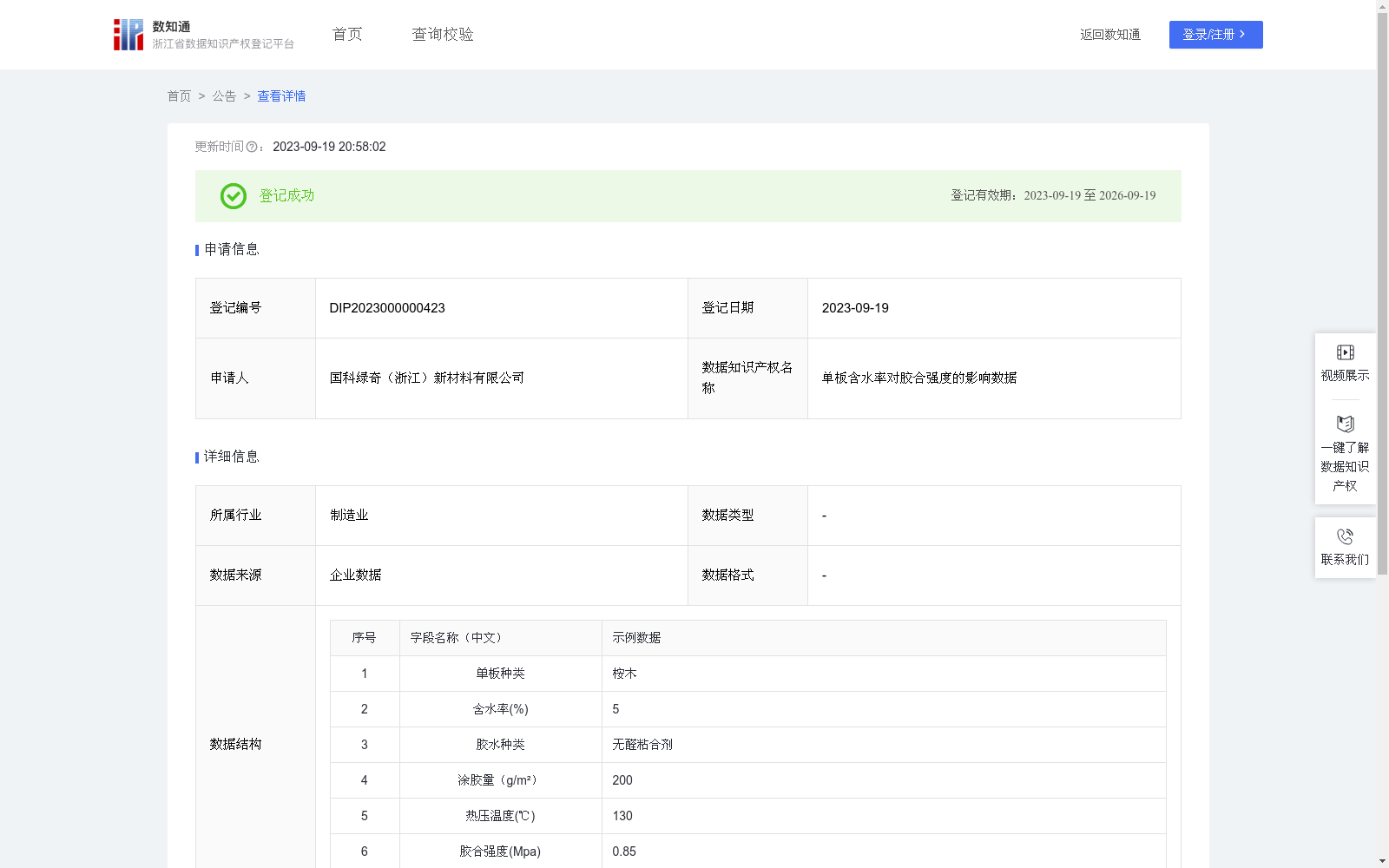
单板含水率对胶合强度的影响数据
收藏资源简介:
在胶合板的生产中所用单板的含水率与胶合强度密切相关,胶合强度也是影响胶合板质量的重要因素之一。通过采集胶合板在生产中所用单板的含水率,结合检测到的胶合强度,拟合得到回归模型,预测不同单板含水率所生产胶合板质量,便于尽早介入异常情况控制流程。单板含水率对胶合强度的影响数据的算法规则包括以下几个方面:1.采集不同批次单板的含水率,同时控制胶粘剂种类、涂胶量和热压温度的条件相同,制作样品。2.检测各样品的胶合强度,得到胶合强度值。3.根据含水率和胶合强度,拟合得到回归模型,模型可以根据不同批次单板的含水率预估成品的胶合强度值,以便更好的控制胶合板的质量。
The moisture content of veneers used in plywood production is closely correlated with bonding strength, which is also one of the critical factors affecting plywood quality. By collecting the moisture content data of veneers during plywood production and combining it with the detected bonding strength values, a regression model can be fitted to predict the quality of plywood produced with different veneer moisture contents, enabling early intervention in abnormal situation control workflows. The procedural rules for the dataset investigating the impact of veneer moisture content on bonding strength are as follows: 1. Collect the moisture content of veneers from different batches, while keeping the adhesive type, glue application amount and hot pressing temperature consistent, and fabricate test samples. 2. Measure the bonding strength of each sample to obtain the corresponding strength values. 3. Fit a regression model based on the collected moisture content and bonding strength data. This model can estimate the bonding strength of finished plywood products using the moisture content data of veneers from different batches, so as to better control the quality of plywood.