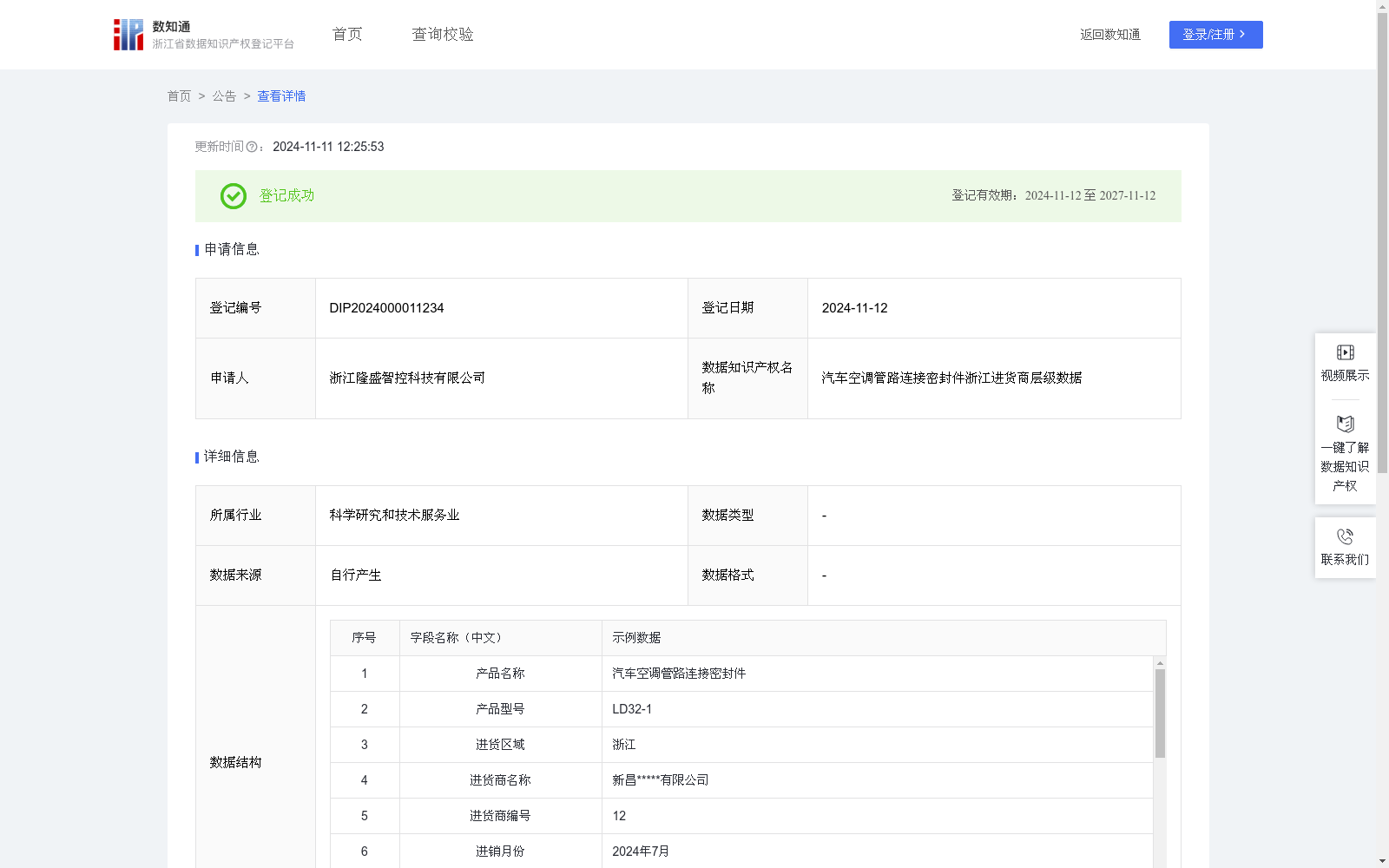
汽车空调管路连接密封件浙江进货商层级数据
收藏资源简介:
汽车空调系统的管路连接处通常使用各种类型的密封件来防止制冷剂泄漏。通过计算浙江区域内的不同进货商进货本公司汽车空调管路连接密封件的进货明细信息,对不同的进货商按照EDP模型进行分层,通过对进货商进行分层管理,所有企业可在后期对不同层级的进货商采取不同的运营策略提供数据依据。通过此方法,企业不仅能够更好地管理进货商关系,还能提高市场响应速度,增强供应链的灵活性,最终实现更高效的业务运营。1、数据采集:利用进货存管理系统导出浙江区域不同进货商每月进货本公司密封件的进货明细。2、数据处理:以进货商编号作为唯一标识,对数据进行清洗、去除无效数据操作。3、数据加工:通过LOOKUP函数计算出进货商最近一次进货距离当月月底的天数E,COUNTIF函数计算该月份进货次数D,SUMIF函数计算该月份进货总金额P,进货商最近一次进货距离当月月底的天数大于或者等于当月进货平均天数则E的定档值为1,进货商最近一次进货距离当月月底的天数小于当月进货平均天数则E的定档值为0,同理也分别计算出D、P的定档值(分别用进货次数、进货总金额与各自的平均值相比较),再根据EDP模型分层规则,将进货商分为8个层级,即分为重要价值客户(EDP为111)、重要保持客户(EDP为101)、重要发展客户(EDP为011)、重要挽留客户(EDP为001)、一般价值客户(EDP为110)、一般保持客户(EDP为100)、一般发展客户(EDP为010)和一般挽留客户(EDP为000)。4、数据应用:通过对进货商进行分层管理,所有企业可对不同层级的进货商定制不同的运营策略,极大地提升了企业对进货商关系的精细化管理能力。
Various types of seals are commonly used at pipeline connections of automotive air conditioning systems to prevent refrigerant leakage. This dataset is derived by calculating the purchase details of the company's automotive air conditioning pipeline connection seals from different purchasers in the Zhejiang region, and classifying these purchasers using the EDP model. It provides a data basis for enterprises to formulate differentiated operational strategies for purchasers at different tiers in the later stage. With this approach, enterprises can not only better manage purchaser relationships, but also improve market response speed, enhance supply chain flexibility, and ultimately achieve more efficient business operations. 1. Data Collection: Export the monthly purchase details of the company's seals from different purchasers in the Zhejiang region via the inventory and purchase management system. 2. Data Preprocessing: Take the purchaser number as the unique identifier, and conduct data cleaning and invalid data removal operations on the collected dataset. 3. Data Enrichment & Tiering: Calculate three key indicators using Excel functions: the number of days E from a purchaser's last purchase to the end of the current month via the LOOKUP function, the total number of purchases D in the current month via the COUNTIF function, and the total purchase amount P in the current month via the SUMIF function. Assign a rating value of 1 to E if the days from the last purchase to the end of the current month are greater than or equal to the average purchase days, otherwise assign 0. Similarly, calculate the rating values for D and P by comparing the respective indicator values with their averages. Finally, classify purchasers into 8 tiers according to the EDP model hierarchical rules: Important Value Customers (EDP=111), Important Retention Customers (EDP=101), Important Development Customers (EDP=011), Important Win-back Customers (EDP=001), General Value Customers (EDP=110), General Retention Customers (EDP=100), General Development Customers (EDP=010), and General Win-back Customers (EDP=000). 4. Data Application: By implementing tiered management of purchasers, enterprises can customize differentiated operational strategies for purchasers at different tiers, which significantly enhances the enterprise's refined management capability for purchaser relationships.