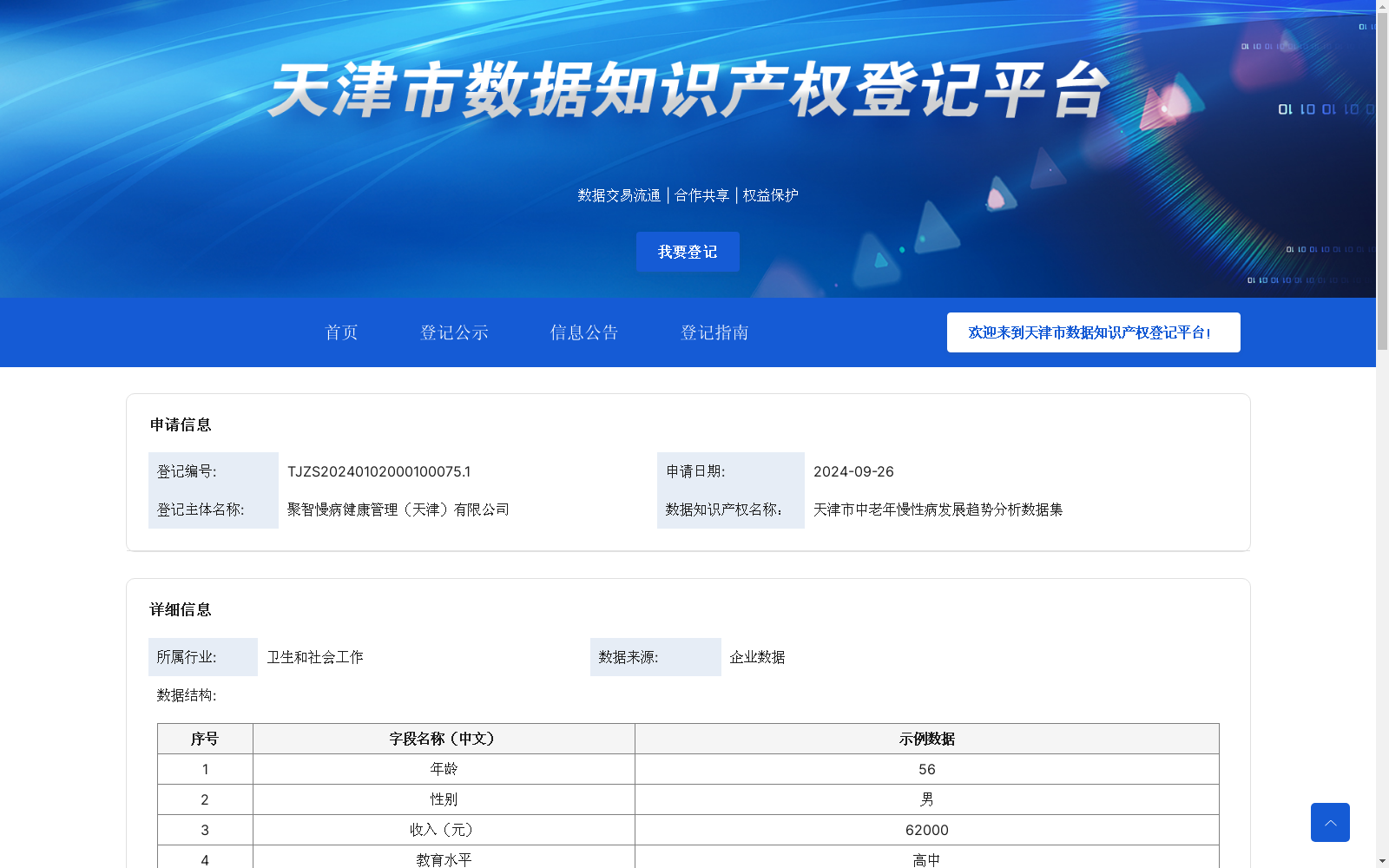
天津市中老年慢性病发展趋势分析数据集
收藏资源简介:
1.数据收集与清洗;2.疾病发展趋势预测:输入中老年人群的血压数据、生活方式因素、医疗记录等。采用多元线性回归模型,选择与慢性病发病相关的影响因素,包括人口学特征、生活方式、医疗使用情况等。使用回归分析方法(如最小二乘法)拟合模型,计算回归系数,并评估模型的拟合效果。3.慢性病风险分类:输入人口学数据、健康状况数据、生活方式等数据。采用决策树或支持向量机(SVM)。预测结果:预测出中高风险人群,这些个体面临较高的慢性病发展风险预测。4.群体划分:输入慢性病种类、生活方式数据、医疗记录等数据。采用Kmeans聚类算法。预测结果:中老年人群大多属于轻度慢性病群体,主要患有高血压、糖尿病等疾病。5.未来发病率预测;输入历史慢性病发病率数据。模型:时间序列分析模型(如ARIMA模型)。预测结果:未来5年内,慢性病的患病率预计。
1. Data Collection and Cleaning; 2. Disease Development Trend Prediction: Input blood pressure data, lifestyle factors, medical records and other relevant data of the middle-aged and elderly population. A multiple linear regression model is employed, with influencing factors associated with chronic disease onset selected, including demographic characteristics, lifestyle, medical service utilization and other aspects. Regression analysis methods such as the least squares method are used to fit the model, calculate regression coefficients, and evaluate the model's fitting performance. 3. Chronic Disease Risk Classification: Input demographic data, health status data, lifestyle data and other relevant data. Decision tree or Support Vector Machine (SVM) is adopted for the task. Prediction result: Identify medium- and high-risk groups who face a relatively high risk of chronic disease progression. 4. Group Partitioning: Input chronic disease type, lifestyle data, medical records and other relevant data. The K-means clustering algorithm is utilized. Prediction result: Most of the middle-aged and elderly population belong to the mild chronic disease group, mainly suffering from hypertension, diabetes and other chronic diseases. 5. Future Incidence Rate Prediction: Input historical chronic disease incidence data. Model: Time series analysis model (e.g., ARIMA model). Prediction result: The prevalence of chronic diseases is expected to be forecasted within the next five years.