lightonai/colpali-train-fine-tuning
收藏资源简介:
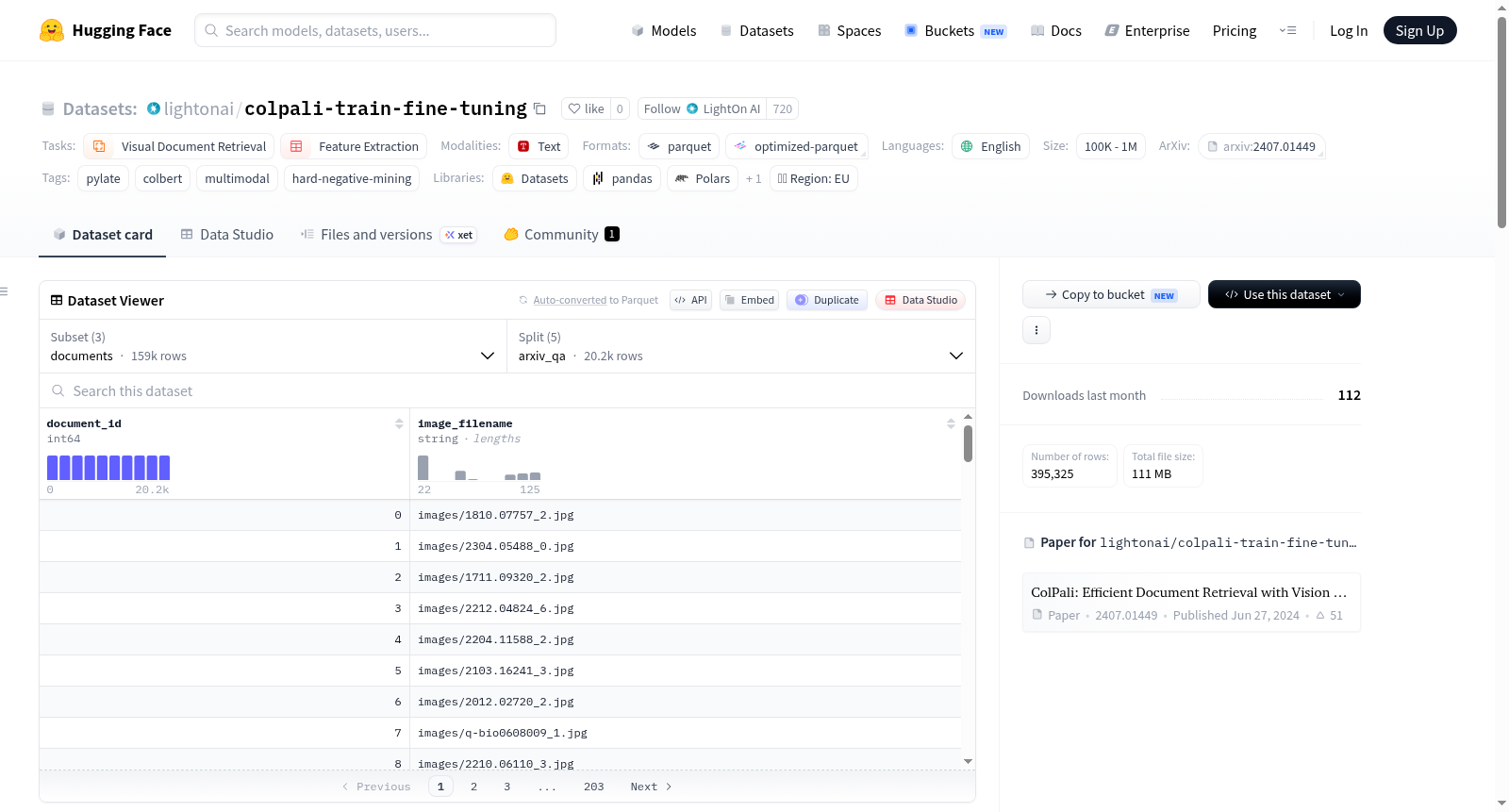
该数据集是为使用PyLate进行检索微调而重新格式化vidore/colpali_train_set数据集,包含英语查询、文档元数据和硬负例分配。图像单独存储在lightonai/colpali-train-images数据集中。硬负例的挖掘方法基于Nomic Embed Multimodal:使用密集检索模型为每个查询检索附近的文档页面,然后通过正例感知过滤去除可能错误的负例。数据集采用三表格式:queries(包含query_id和query列,表示查询文本和整数ID)、documents(包含document_id和image_filename列,将文档ID映射到伴生图像数据集)和scores(包含query_id、document_ids和scores列,为每个查询提供候选文档和对齐的相关性分数)。在scores的每一行中,第一个文档是正例,其余文档是挖掘的硬负例,document_ids和scores长度相同且位置匹配。可用分割包括arxiv_qa、tatdqa、docvqa、pdf和infographic_vqa。
This dataset reformats vidore/colpali_train_set for retrieval fine-tuning with PyLate. It contains English queries, document metadata, and hard-negative assignments. Images are stored separately in lightonai/colpali-train-images. Hard negatives were mined following the method described for Nomic Embed Multimodal: a dense retrieval model retrieves nearby document pages for each query, then positive-aware filtering removes likely false negatives. The dataset follows the three-table format used for PyLate fine-tuning: queries (with query_id and query columns for query text keyed by an integer ID), documents (with document_id and image_filename columns mapping document IDs to the companion image dataset), and scores (with query_id, document_ids, and scores columns providing candidate documents and aligned relevance scores for each query). In each scores row, the first document is the positive and the remaining documents are mined hard negatives, with document_ids and scores having the same length and matching positions. Available splits are arxiv_qa, tatdqa, docvqa, pdf, and infographic_vqa.