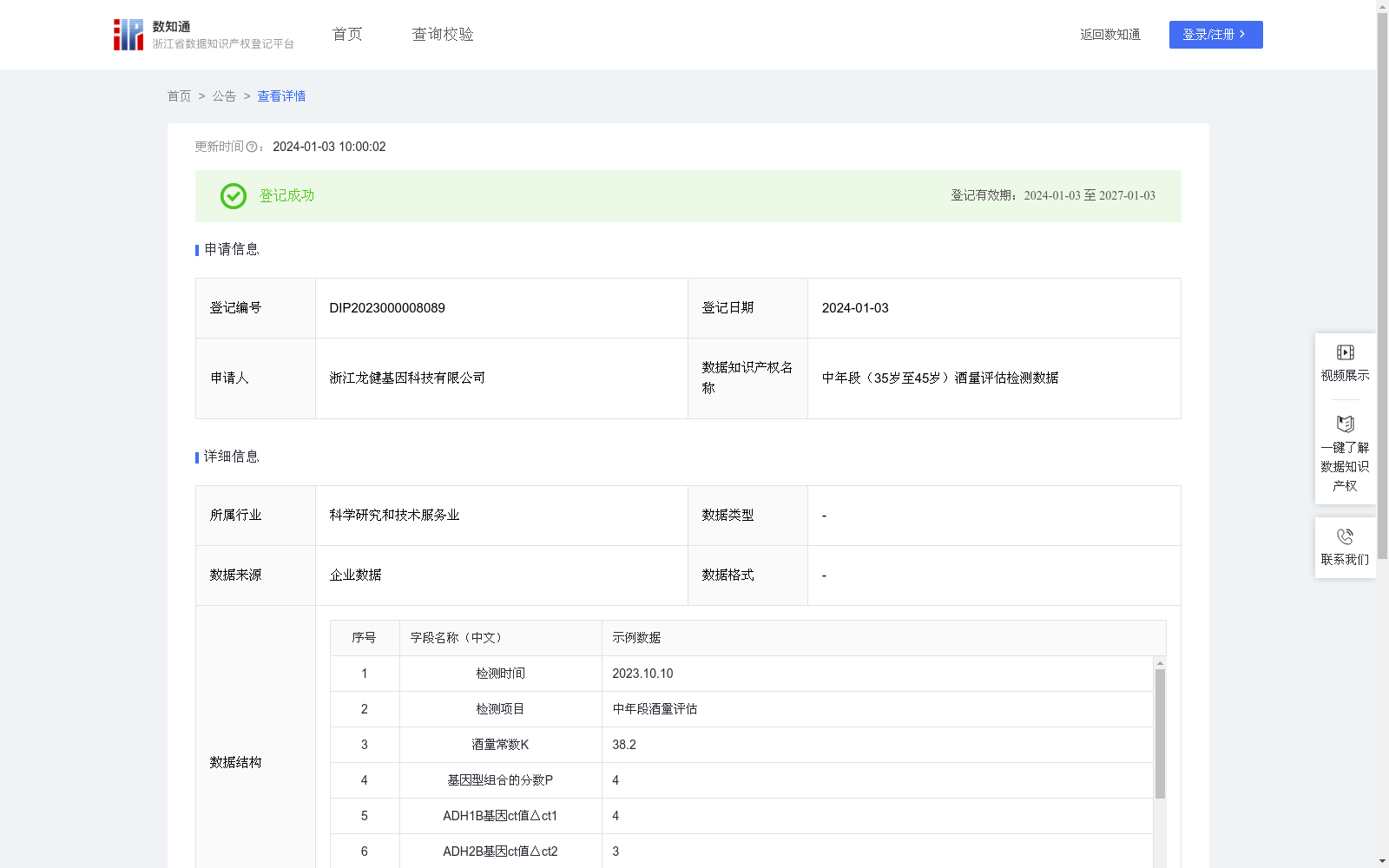
中年段(35岁至45岁)酒量评估检测数据
收藏资源简介:
通过检测数据,认识自身对酒精耐受的优劣势科学饮酒。主要应用于与饮酒相关的职业,比如品酒师,还与日常生活、节假日聚会等饮酒活动等领域息息相关,评价个人对酒精的耐受能力。算法:通过数据采集检测分析对人体的酒量进行评估,数据判定:若身体可承受乙醇含量优(250-500)良(125-250)中(50-125)差(0-50),V=K · P · △ct1/△ct2 V代表酒量(ml):酒中乙醇的含量;K为酒量常数P代表基因型组合的分数;P为基因型组合的分数,△ct1代表ADH1B基因的△ct值;△ct2代表ALDH2基因的△ct值。
This dataset helps users recognize their own advantages and disadvantages in alcohol tolerance via detection data, so as to practice scientific alcohol consumption. It is primarily applied in alcohol-related occupations such as wine tasters, and is closely linked to daily alcohol-related activities including daily life and holiday parties, with the purpose of evaluating an individual's alcohol tolerance. Algorithm: The human body's alcohol capacity is evaluated through data collection, detection and analysis. Data grading criteria: Based on the amount of ethanol the body can tolerate, the grades are divided into excellent (250-500), good (125-250), moderate (50-125), and poor (0-50). The calculation formula is V = K · P · △ct1/△ct2, where V represents alcohol capacity (in ml) corresponding to the ethanol content in the wine; K is the alcohol capacity constant; P represents the score of the genotype combination; △ct1 denotes the △ct value of the ADH1B gene; △ct2 denotes the △ct value of the ALDH2 gene.