
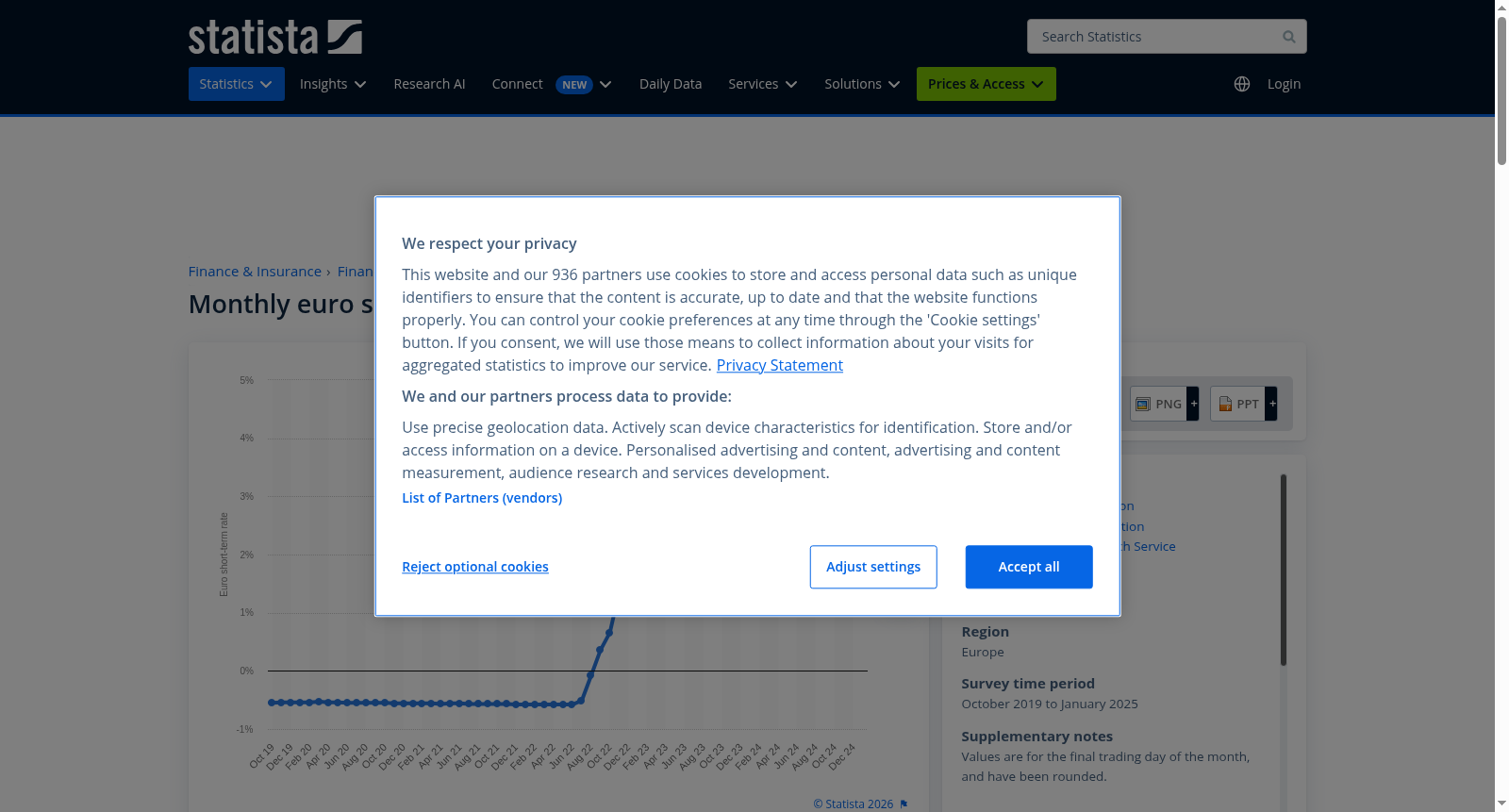
Euro short term rate 2019-2024, by month
收藏www.statista.com2024-11-08 更新2025-03-26 收录
下载链接:
https://www.statista.com/statistics/1203473/euro-short-term-rate-month/
下载链接
链接失效反馈官方服务:
资源简介:
Since its introduction in October 2019, the Euro Short-Term Rate (€STR) has remained constant at between -0.52 and -0.59 percent until the second half 2022. As of the end of October 2024, the rate stood at 3.16 percent, which was the highest rate observed. The €STR is an interest rate benchmark designed to replace the Euro OverNight Index Average (EOIA), adopting a different calculation methodology that returns significantly lower rates. It is intended that the EOIA will be discontinued from January 3, 2022.How is the Euro Short-Term Rate calculated?The €STR uses transaction data included in daily reporting on monetary exchanges from the 52 largest eurozone banks to calculate the average interests rate attached to loans throughout a business day. Only unsecured loans are included, as the rate on secured loans would be affected by the type of underlying collateral. Several key respects distinguish the €STR from alternative benchmarks like the EOIA, and the London Intrabank Offered Rate (LIBOR). First, the €STR is based on transaction data alone, whereas the LIBOR asking major banks directly what rate they would charge other banks for short terms loans. The second main difference is that, by considering money market transactions rather than only intrabank lending (like the EOIA and LIBOR), the €STR incorporates the role of other major actors like money market funds, insurance companies, and other financial corporations.Difference between €STR and EURIBORThe Euro Interbank Offered Rate (EURIBOR) is the other main reference interest rate governing eurozone lending. The EURIBOR differs from €STR though as it is based on a survey of the interest rates a panel of major banks would offer other major banks for interbank term deposits. There are therefore different reference rates published for different maturities, for example the EURIBOR one month rate, the EURIBOR six month rate, and the EURIBOR 12 month rate. In contrast, the €STR is intended to track the cost of overnight borrowing.
自2019年10月推出以来,欧元短期利率(€STR)在2022年下半年之前始终保持在-0.52%至-0.59%之间。截至2024年10月底,该利率上升至3.16%,创下了历史最高水平。欧元短期利率是一种旨在取代欧元隔夜指数平均(EOIA)的利率基准,它采用了一种不同的计算方法,能够得出显著较低的利率。预计EOIA将从2022年1月3日起停止使用。欧元短期利率是如何计算的?欧元短期利率通过分析每日货币交换报告中包含的52家最大欧元区银行的交易数据,计算整个营业日中贷款的平均利率。仅包括无担保贷款,因为担保贷款的利率会受到抵押品类型的影响。与EOIA和伦敦银行间同业拆借利率(LIBOR)等其他基准利率相比,欧元短期利率在几个关键方面有所不同。首先,欧元短期利率仅基于交易数据,而LIBOR则是直接向主要银行询问,他们愿意向其他银行收取的短期贷款利率。第二个主要区别在于,通过考虑货币市场交易而非仅限于银行间贷款(如EOIA和LIBOR),欧元短期利率纳入了其他主要参与者,如货币市场基金、保险公司以及其他金融机构的作用。欧元短期利率与EURIBOR的区别欧元银行间拆借利率(EURIBOR)是欧元区贷款的另一主要参考利率。与欧元短期利率不同,EURIBOR基于对一组主要银行将向其他主要银行提供的银行间定期存款利率的调查。因此,根据不同的到期期限,会发布不同的参考利率,例如EURIBOR一个月期利率、EURIBOR六个月期利率和EURIBOR十二个月期利率。相比之下,欧元短期利率旨在追踪隔夜借款的成本。
提供机构:
Statista
搜集汇总
数据集介绍
背景与挑战
背景概述
该数据集提供了2019年10月至2025年1月期间欧元短期利率的月度数据,展示了利率从初始的-0.549%上升到2025年1月的2.92%的波动情况。数据来源于欧元区银行的批发欧元无担保隔夜借款成本,反映了欧元区货币市场的利率变化。
以上内容由遇见数据集搜集并总结生成



