
Employment rate in the UK 2000-2024
收藏www.statista.com2025-03-21 收录
下载链接:
https://www.statista.com/statistics/281992/employment-rate-in-the-united-kingdom/
下载链接
链接失效反馈官方服务:
资源简介:
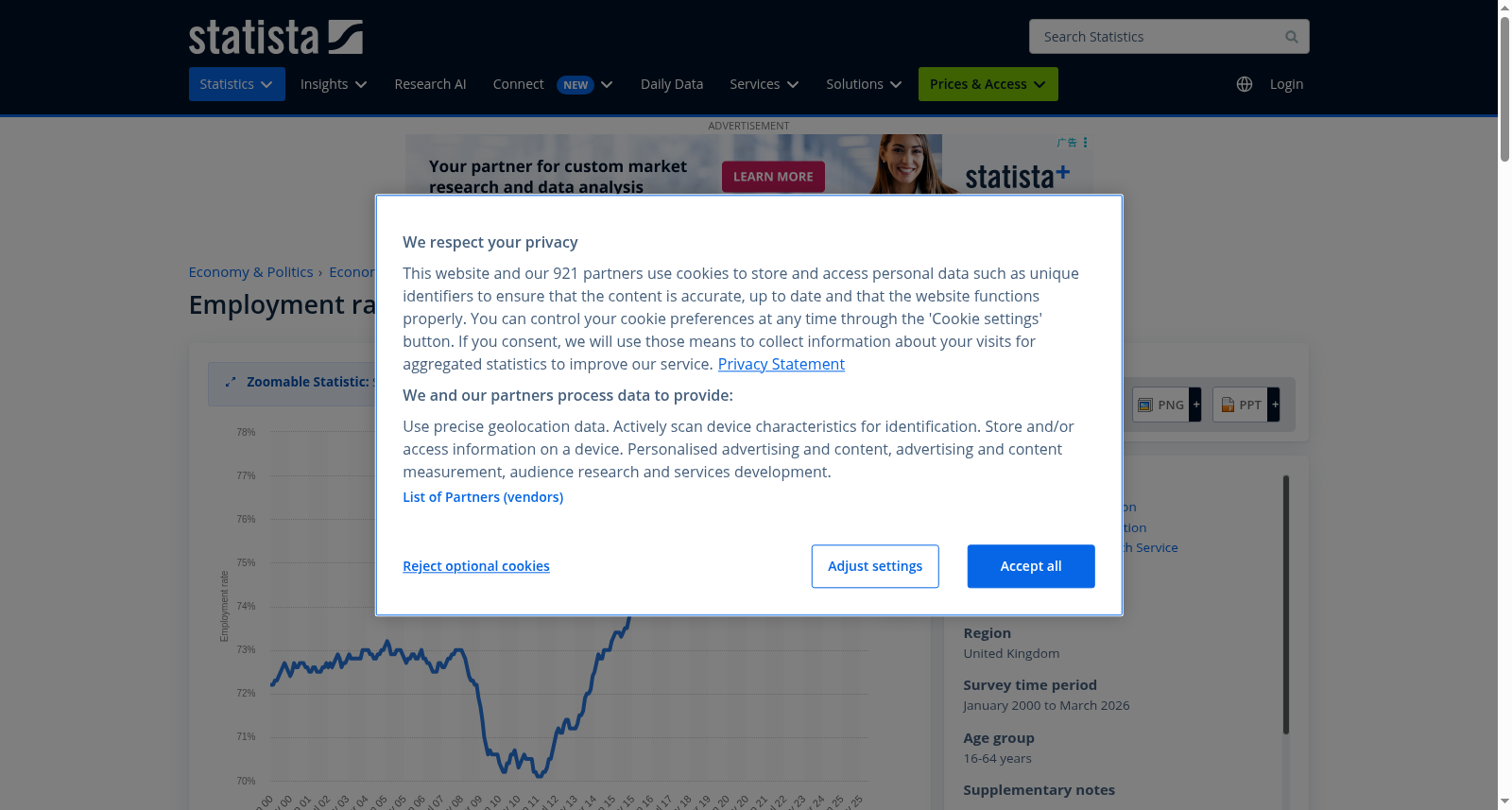
In September 2024, the employment rate in the United Kingdom was 74.8 percent, compared with 74.8 in the same period of 2023. After almost dropping below 70 percent in 2011, the employment rate in the United Kingdom started to climb at a relatively fast pace, peaking in early 2020. Due to the onset of the COVID-19 pandemic, however, the employment declined to 74.6 percent by January 2021. Although not quite at pre-pandemic levels, the employment rate has since recovered. Hot UK labor market cools in 2023Although unemployment in the UK spiked at 5.1 percent in the aftermath of the COVID-19 pandemic, it fell throughout most of 2022, to just 3.6 percent in August 2022. Around that time, the number of job vacancies in the UK was also at quite high levels, reaching a peak of 1.3 million by May 2022. The strong labor market put employees in quite a strong position, perhaps encouraging the high number of resignations that took place around that time. While wage growth has also been strong since 2022, these gains were cancelled-out for a long period between 2021 and 2023 when inflation grew faster than wages. By July 2023, unemployment had bounced back to 4.3 percent, while the number of job vacancies fell below one million in August 2023 for the first time since August 2021.UK in recession at end of 2023Although the UK labor market has loosened since 2022, it has generally remained in good health, with unemployment low by historical standards. Inflation also fell throughout 2023, from 10.1 percent at the beginning of the year, to four percent by December. Getting inflation down to more acceptable levels, however, came at the expense of raising the Bank of England's already high-interest rate throughout 2023. The knock-on effect of higher borrowing costs likely did little to spur economic growth that year, with GDP growing by just 0.1 percent in 2023. Even this meager economic growth was only achieved due to growth in the first half of the year. In the second half of 2023, the economy shrank in two consecutive quarters, meaning the UK is officially in recession heading into a probable election year.
于2024年9月,英国就业率上升至74.8%,与2023年同期持平。自2011年几乎降至70%以下以来,英国的就业率开始以较快的速度回升,并于2020年初达到峰值。然而,由于COVID-19疫情的爆发,就业率于2021年1月降至74.6%。尽管就业率尚未恢复至疫情前水平,但自此以来已有所恢复。2023年英国劳动力市场热度减退尽管在英国COVID-19疫情爆发后失业率一度激增至5.1%,但自2022年起失业率大部分时间都在下降,直至2022年8月降至3.6%。大约在同一时期,英国的职位空缺数量也处于较高水平,于2022年5月达到130万的高点。强劲的劳动力市场使员工处于较为有利的地位,或许也促使了当时大量辞职事件的发生。自2022年以来,工资增长也一直强劲,但这些收益在2021年至2023年期间因通货膨胀增速超过工资增速而被抵消。至2023年7月,失业率回升至4.3%,而2023年8月职位空缺数量首次降至一百万以下,自2021年8月以来。2023年底英国经济陷入衰退尽管自2022年以来英国劳动力市场有所放松,但总体上仍保持良好状态,失业率低于历史平均水平。通货膨胀在2023年全年也在下降,从年初的10.1%降至12月的4%。然而,将通货膨胀降低至可接受的水平,却是以英国央行在2023年提高已经较高的利率为代价。更高的借贷成本对刺激那一年的经济增长可能影响甚微,2023年国内生产总值仅增长了0.1%。即便如此微薄的经济增长也仅是得益于上半年的增长。但在2023年下半年,经济连续两个季度出现萎缩,这意味着英国正式进入衰退,并可能面临大选年。
提供机构:
Statista
搜集汇总
数据集介绍
背景与挑战
背景概述
该数据集记录了英国从2000年1月至2026年3月的就业率变化,数据来源于英国国家统计局。数据显示就业率在2011年跌至低点后快速回升,2020年初达到峰值,后受疫情影响下降并逐步恢复,2026年3月稳定在75%左右。数据集涵盖了16-64岁年龄组的就业情况,反映了英国劳动力市场的长期趋势和近期波动。
以上内容由遇见数据集搜集并总结生成



