
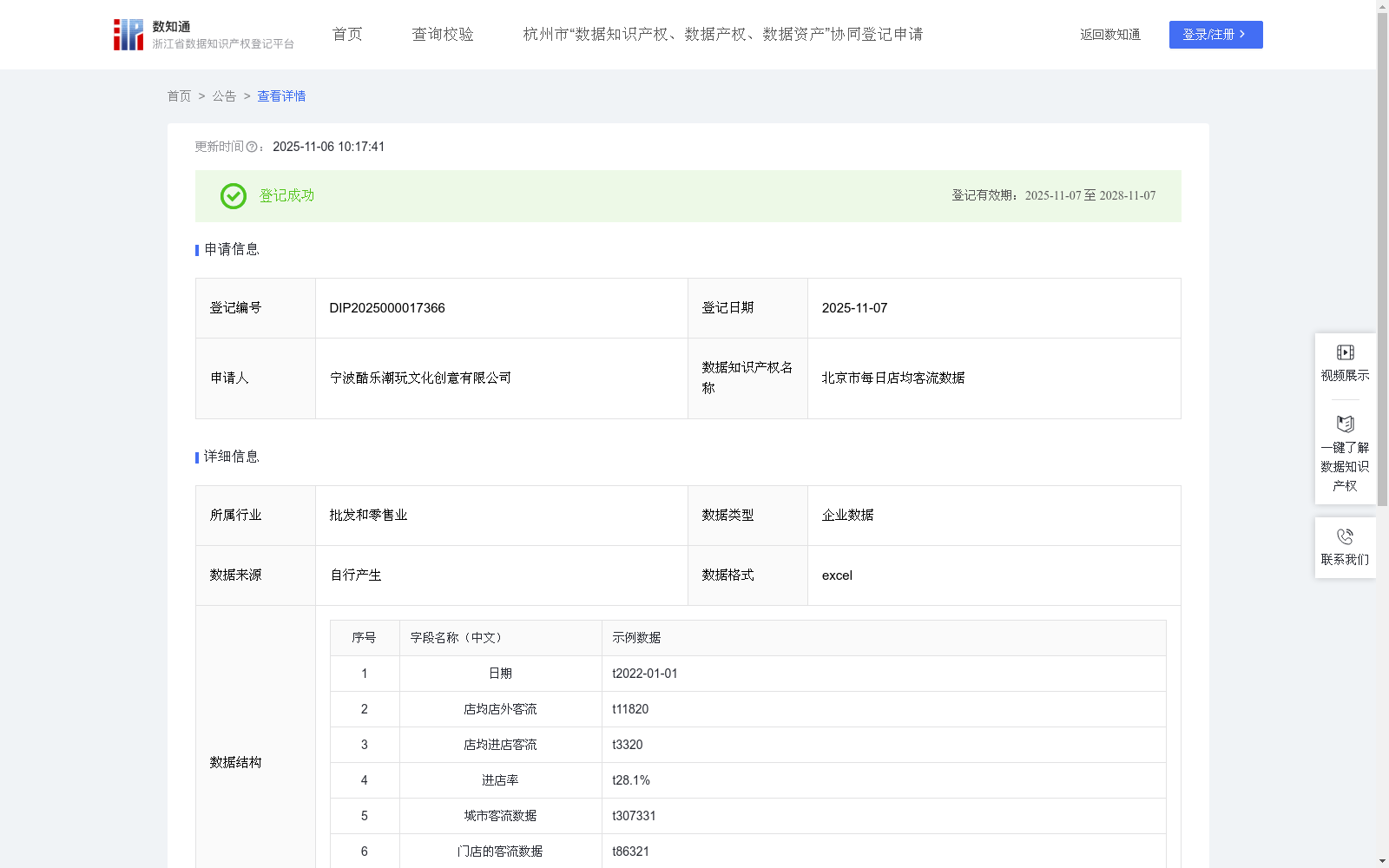
北京市每日店均客流数据
收藏浙江省数据知识产权登记平台2025-11-06 更新2025-11-07 收录
下载链接:
https://www.zjip.org.cn/home/announce/trends/8393096
下载链接
链接失效反馈官方服务:
资源简介:
1. 市场趋势分析:通过分析北京市每日门店的客流量变化趋势,可以洞察该地区消费者的消费行为模式,预测北京市未来的市场趋势,为企业在北京市的市场策略提供依据。
2. 资源配置和活动策略制定:通过北京市客流变化的规律,企业可针对性地调整对该地区人力投入(例如在客流大的时间增加人力),适时开展营销活动,以抓住市场机会,也为资源配置和绩效管理提供数据支持。一、数据抽取、清理和处理
数据抽取:从数据库抽取北京市客流相关原始数据表(这些数据是门店安装的客流器抓取的),包括客流门店维度表、门店客流数据表等。
数据清理:对抽取的数据进行清洗,去除重复、错误或无关的信息,处理缺失值、异常值,统一数据格式。
二、数据仓库层建设
1.数据模型设计
2.中间表ETL过程:将北京市不同客流器收集的数据,通过SQL梳理到同一个中间表中,中间表包含字段:日期、城市客流数据、门店的客流数据、门店数等。
三、基于中间表输出每日客流数据
通过中间表计算出:每日的店均店外客流、店均进店客流和进店率
算法规则包括: (1)店均店外客流=城市客流数据/门店数; (2)店均进店客流=门店的客流数据/门店数; (3)进店率=门店的客流数据/城市客流数据=店均进店客流/店均店外客流
1. Market Trend Analysis: By analyzing the daily foot traffic variation trends of stores in Beijing, we can gain insights into consumer behavior patterns in this region, predict future market trends in Beijing, and provide a basis for enterprises to formulate their market strategies in Beijing.
2. Resource Allocation and Activity Strategy Formulation: Leveraging the rules of foot traffic changes in Beijing, enterprises can adjust their human resource investment in this region in a targeted manner (e.g., increasing manpower during peak foot traffic hours) and launch marketing activities at the right time to seize market opportunities, while also providing data support for resource allocation and performance management.
I. Data Extraction, Cleansing and Processing
1. Data Extraction: Extract raw foot traffic-related tables for Beijing from the database. These data are captured by foot traffic sensors installed in stores, including store foot traffic dimension tables, store foot traffic data tables, and other relevant tables.
2. Data Cleansing: Clean the extracted data by removing duplicate, erroneous or irrelevant information, handling missing values and outliers, and unifying data formats.
II. Data Warehouse Layer Construction
1. Data Model Design
2. Intermediate Table ETL Process: Consolidate the data collected by different foot traffic sensors in Beijing into a single intermediate table via SQL. The intermediate table includes fields such as date, urban foot traffic data, store-level foot traffic data, and total number of stores.
III. Daily Foot Traffic Data Output Based on Intermediate Tables
Calculate the following metrics from the intermediate table: daily average out-of-store foot traffic per store, daily average in-store foot traffic per store, and in-store rate.
The algorithm rules are as follows:
(1) Daily average out-of-store foot traffic per store = Urban foot traffic data / Total number of stores;
(2) Daily average in-store foot traffic per store = Store-level foot traffic data / Total number of stores;
(3) In-store rate = Store-level foot traffic data / Urban foot traffic data = Daily average in-store foot traffic per store / Daily average out-of-store foot traffic per store
提供机构:
宁波酷乐潮玩文化创意有限公司
创建时间:
2025-08-22
搜集汇总
数据集介绍
背景与挑战
背景概述
该数据集记录了北京市门店每日客流情况,包含店均店外客流、进店客流及进店率等关键指标,数据规模1308条且每日更新。它通过算法处理原始客流器数据,支持市场趋势分析和企业资源配置决策,适用于批发零售行业的运营优化。
以上内容由遇见数据集搜集并总结生成



