
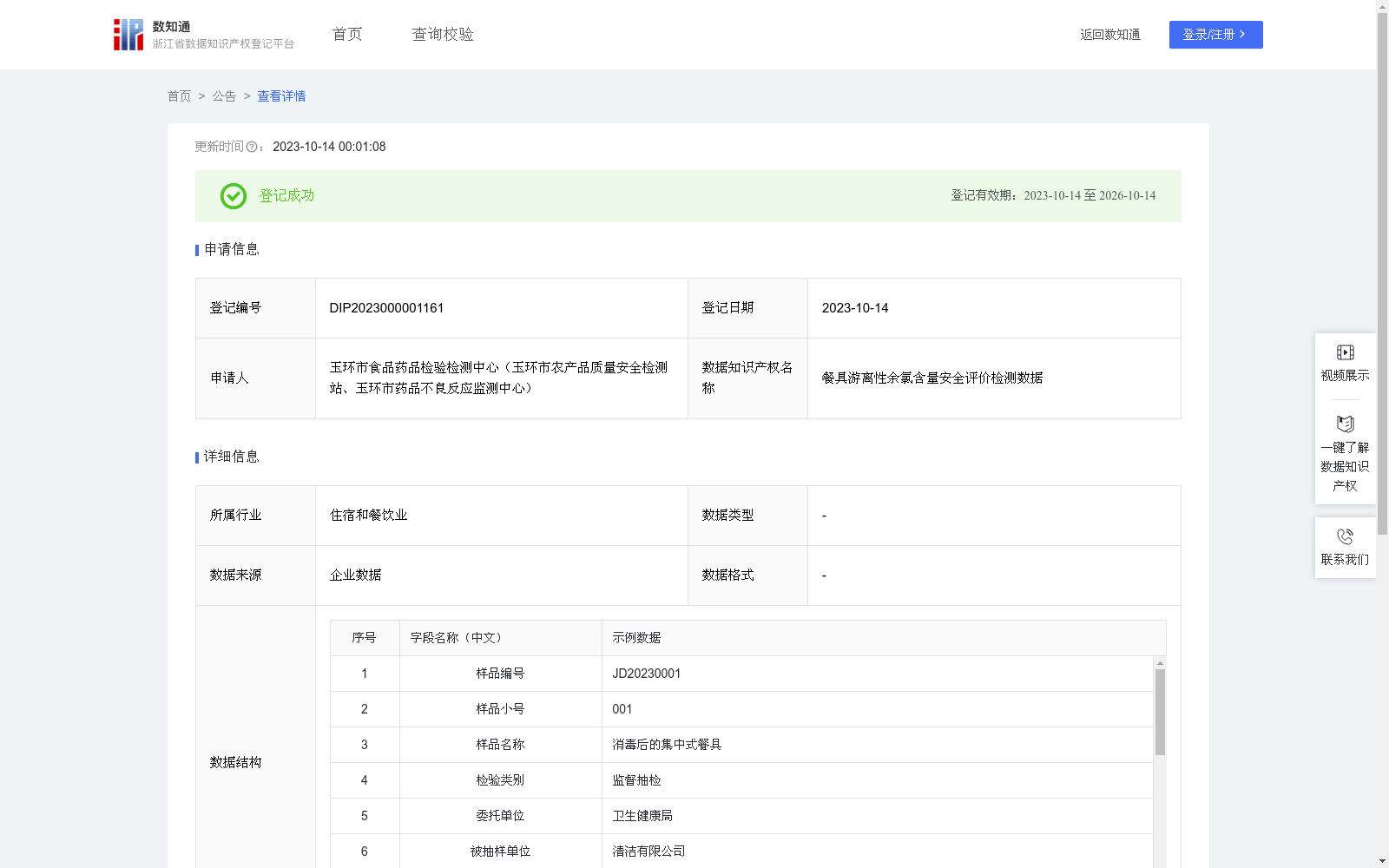
餐具游离性余氯含量安全评价检测数据
收藏浙江省数据知识产权登记平台2023-10-14 更新2024-05-08 收录
下载链接:
https://www.zjip.org.cn/home/announce/trends/5048
下载链接
链接失效反馈官方服务:
资源简介:
日常生产生活中,对于水的要求各不相同,一般情况下,对于自来水消毒都会用到氯。但是加氯容易,而对于氯的量的控制就是非常需要重视的。一旦控制不好,居民长期喝到超标的漂白粉很重的自来水就会对身体产生危害。而且,当氯和水中的有机酸发生反应会产生很多不好的副产物。严重的会导致死亡。虽然这些余氯过多产生的危害只有检测仪器才能监测的到,但并不代表余氯不存在。我们对食品餐盘进行游离性余氯抽样检测,以供消费者参考。1.数据采集:采集相关餐饮类服务行业的集中式餐具消毒后是否有游离性余氯残留含量超标的情况;2游离性余氯含量安全检测:通过食品安全国家标准消毒餐(饮)具对各类餐饮企业进行游离性余氯检测获得相关数据;3数据处理:筛选出游离性余氯留量问题检测结果,用于评估其餐具使用卫生性,检出游离性余氯发现率=游离性余氯检测出问题项次数/进行游离性余氯检测的餐具总数;4、数据应用: 餐具游离性余氯含量安全评价检测问题项检测结果可以作为食用安全性评价依据,为监管部门靶向监管提供技术支撑。
In daily production and life, water quality requirements vary across different scenarios. Generally, chlorine is used for tap water disinfection. While adding chlorine is a straightforward procedure, controlling its dosage requires great attention. If the dosage is improperly regulated, residents who drink tap water with excessive chlorine and a strong bleach odor over the long term will face health risks. Moreover, reactions between chlorine and organic acids in water produce numerous harmful byproducts, which can even lead to death in severe cases. Although the hazards caused by excessive residual chlorine can only be detected by testing instruments, this does not mean that residual chlorine is non-existent. We conduct sampling tests for free residual chlorine on food service tableware to provide references for consumers.
1. Data Collection: Collect data on whether the free residual chlorine content of centrally disinfected tableware from catering service industries exceeds the standard limits.
2. Free Residual Chlorine Content Safety Detection: Obtain relevant datasets by conducting free residual chlorine tests on various catering enterprises in accordance with the National Food Safety Standard for Disinfected Tableware and Drinking Utensils.
3. Data Processing: Screen out the test results related to non-compliant free residual chlorine residues to evaluate the hygiene safety of the tableware. The detection rate of free residual chlorine non-compliant items is calculated as: (number of non-compliant items detected with free residual chlorine) / total number of tableware tested for free residual chlorine.
4. Data Application: The test results of non-compliant items from the safety evaluation and detection of free residual chlorine content in tableware can be used as a basis for edible safety assessment, providing technical support for targeted supervision by regulatory authorities.
提供机构:
玉环市食品药品检验检测中心(玉环市农产品质量安全检测站、玉环市药品不良反应监测中心)
创建时间:
2023-09-23
搜集汇总
数据集介绍
以上内容由遇见数据集搜集并总结生成



