
The intricate pathogenicity of Group A <i>Streptococcus</i>: A comprehensive update
收藏DataCite Commons2025-09-16 更新2024-11-05 收录
下载链接:
https://tandf.figshare.com/articles/dataset/The_intricate_pathogenicity_of_group_a_i_Streptococcus_i_A_comprehensive_update/27178225
下载链接
链接失效反馈官方服务:
资源简介:
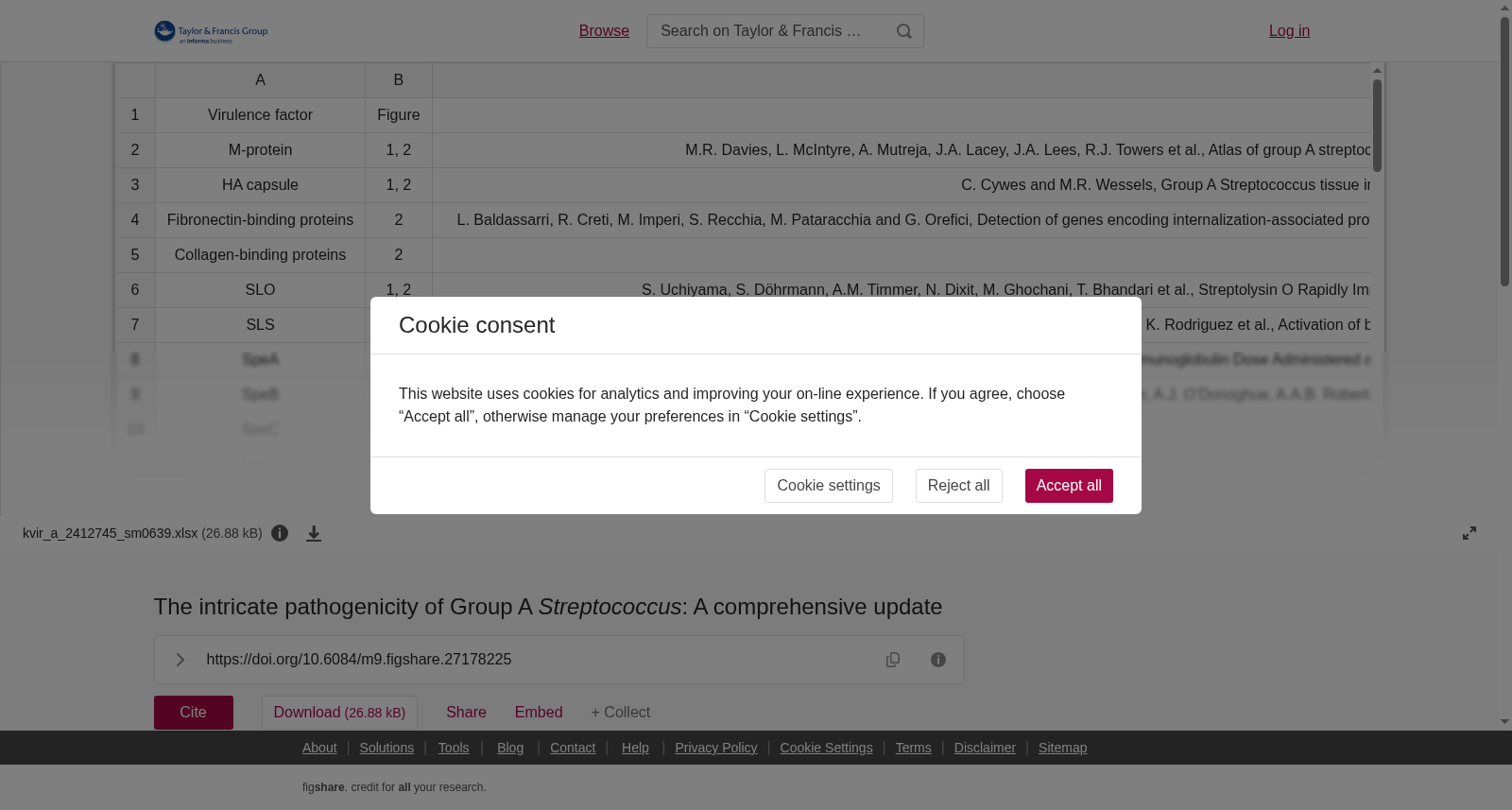
Group A <i>Streptococcus</i> (GAS) is a versatile pathogen that targets human lymphoid, decidual, skin, and soft tissues. Recent advancements have shed light on its airborne transmission, lymphatic spread, and interactions with neuronal systems. GAS promotes severe inflammation through mechanisms involving inflammasomes, IL-1β, and T-cell hyperactivation. Additionally, it secretes factors that directly induce skin necrosis via Gasdermin activation and sustains survival and replication in human blood through sophisticated immune evasion strategies. These include lysis of erythrocytes, using red cell membranes for camouflage, resisting antimicrobial peptides, evading phagocytosis, escaping from neutrophil extracellular traps (NETs), inactivating chemokines, and cleaving targeted antibodies. GAS also employs molecular mimicry to traverse connective tissues undetected and exploits the host’s fibrinolytic system, which contributes to its stealth and potential for causing autoimmune conditions after repeated infections. Secreted toxins disrupt host cell membranes, enhancing intracellular survival and directly activating nociceptor neurons to induce pain. Remarkably, GAS possesses mechanisms for precise genome editing to defend against phages, and its fibrinolytic capabilities have found applications in medicine. Immune responses to GAS are paradoxical: robust responses to its virulence factors correlate with more severe disease, whereas recurrent infections often show diminished immune reactions. This review focuses on the multifaceted virulence of GAS and introduces novel concepts in understanding its pathogenicity.
A群链球菌(Group A Streptococcus, GAS)是一类可侵染人类淋巴组织、蜕膜组织、皮肤及软组织的泛嗜性致病菌。近期研究进展揭示了其空气传播、淋巴扩散以及与神经系统相互作用的致病机制。A群链球菌可通过介导炎性小体(inflammasomes)激活、白细胞介素1β(IL-1β)释放以及T细胞过度活化的通路诱发重度炎症。此外,其分泌的毒素可通过激活焦亡素(Gasdermin)直接诱导皮肤坏死,并通过一系列复杂的免疫逃逸策略在人体血液中维持存活与增殖:此类策略包括裂解红细胞、利用红细胞膜进行免疫伪装、抵御抗菌肽、逃避吞噬作用、逃逸中性粒细胞胞外陷阱(neutrophil extracellular traps, NETs)、灭活趋化因子以及裂解靶向抗体。A群链球菌还可借助分子模拟作用悄无声息地穿透结缔组织,并利用宿主的纤维蛋白溶解系统:该系统既助力其实现隐匿侵染,也可能在反复感染后诱发自身免疫性疾病。其分泌的毒素可破坏宿主细胞膜,增强胞内生存能力,并直接激活痛觉感受器神经元以引发疼痛。值得注意的是,A群链球菌具备精准基因组编辑以抵御噬菌体(phages)的机制,其纤维蛋白溶解能力还已应用于临床医疗。机体针对A群链球菌的免疫反应存在悖论:对其毒力因子的强烈免疫应答与更严重的疾病程度相关,而反复感染往往伴随免疫反应的减弱。本综述聚焦A群链球菌多维度的毒力特性,并介绍了理解其致病机制的全新研究思路。
提供机构:
Taylor & Francis创建时间:
2024-10-07
搜集汇总
数据集介绍
以上内容由遇见数据集搜集并总结生成


