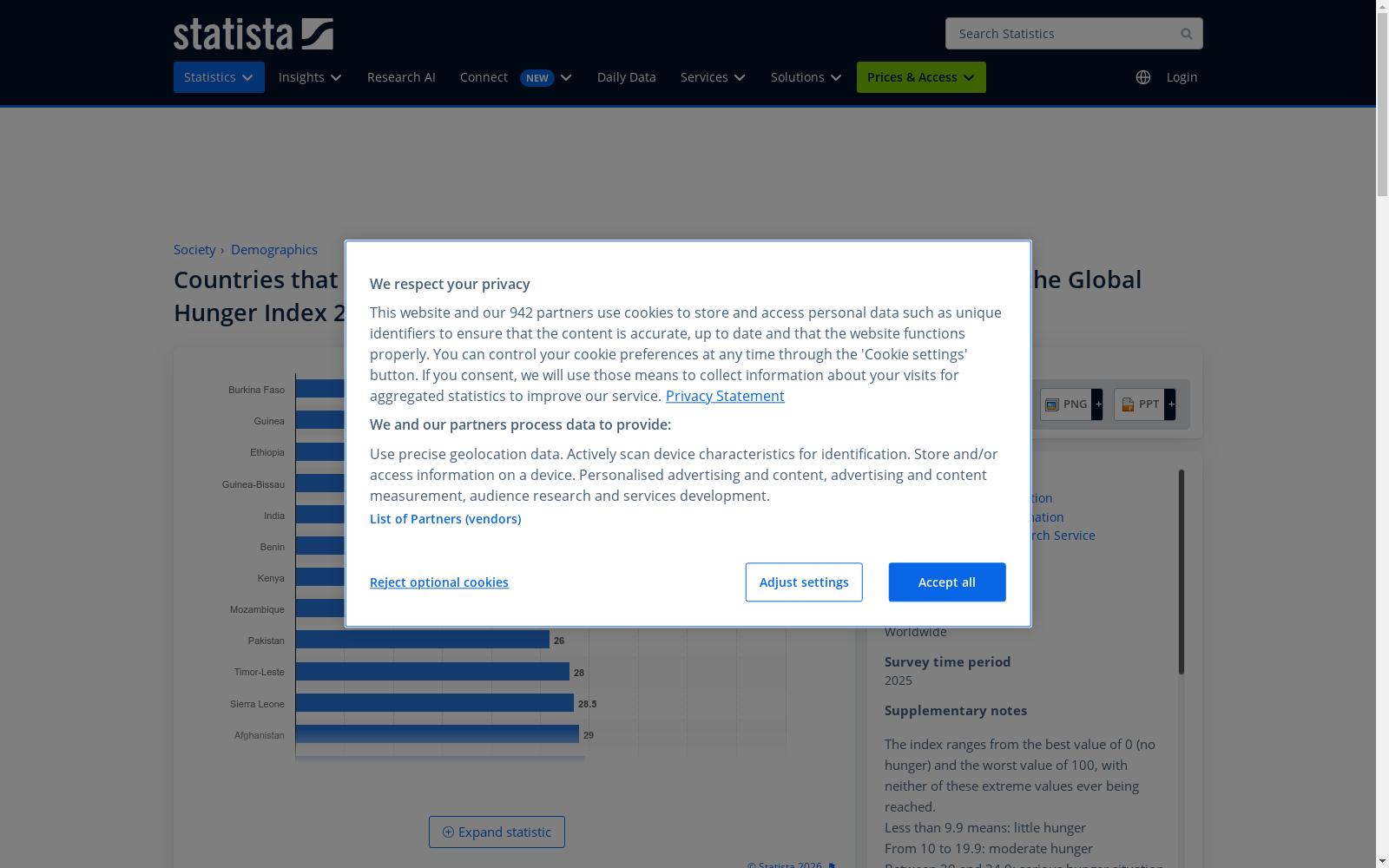
Global Hunger Index 2024 countries most affected by hunger
收藏资源简介:
According to the Global Hunger Index 2024, which was adopted by the International Food Policy Research Institute, Somalia was the most affected by hunger and malnutrition, with an index of 44.1. Yemen and Chad followed behind. The World Hunger Index combines three indicators: undernourishment, child underweight, and child mortality.Sub-Saharan Africa most affectedThe index is dominated by countries in Sub-Saharan Africa. In the region, more than one fifth of the population is undernourished . In terms of individuals, however, South Asia has the highest number of undernourished people. Globally, there are 735 million people that are considered undernourished or starving. A lack of food is increasing in over 20 countries worldwide.Undernourishment worldwideThe term malnutrition includes both undernutrition and overnutrition. Undernutrition occurs when an individual cannot maintain normal bodily functions such as growth, recovering from disease, and both learning and physical work. Some conditions such as diarrhea, malaria, and HIV/AIDS can all have a negative impact on undernutrition. Rural and agricultural communities can be especially susceptible to hunger during certain seasons. The annual hunger gap occurs when a family’s food supply may run out before the next season’s harvest is available and can result in malnutrition. Nevertheless, the prevalence of people worldwide that are undernourished has decreased over the last decades, from 18.7 percent in 1990-92 to 9.2 percent in 2022, but it has slightly increased since the outbreak of COVID-19. According to the Global Hunger Index, the reduction of global hunger has stagnated over the past decade.
依据国际食物政策研究所采纳的《2024年全球饥饿指数》,索马里受饥饿和营养不良的影响最为严重,指数达到44.1。也门和乍得紧随其后。世界饥饿指数综合了三个指标:营养不良、儿童体重不足和儿童死亡率。撒哈拉以南非洲地区受影响最为严重,该地区超过五分之一的人口处于营养不良状态。从个体数量来看,南亚地区营养不良人数最多。全球范围内,有7.35亿人被视为营养不良或饥饿。全球范围内,有超过20个国家的粮食短缺问题日益严重。营养不良一词涵盖了营养不良和营养过剩两种情况。营养不良是指个体无法维持正常的生理功能,如生长、疾病恢复以及学习和体力劳动。腹泻、疟疾和艾滋病等疾病都可能对营养不良产生负面影响。农村和农业社区在某些季节可能特别容易遭受饥饿。年度饥饿缺口发生在家庭粮食储备可能耗尽,而下一季节的收获尚不可得的情况下,这可能导致营养不良。然而,在过去几十年中,全球营养不良人群的普遍率有所下降,从1990-92年的18.7%降至2022年的9.2%,但自COVID-19疫情爆发以来,这一数字略有上升。根据全球饥饿指数,过去十年全球饥饿的减少已陷入停滞。