Architectural <i>Terracruda</i> Sculptures of the Silk Roads: New Conservation Insights Through a Diagnostic Approach Based on Non-Destructive X-ray Micro-Computed Tomography
收藏资源简介:
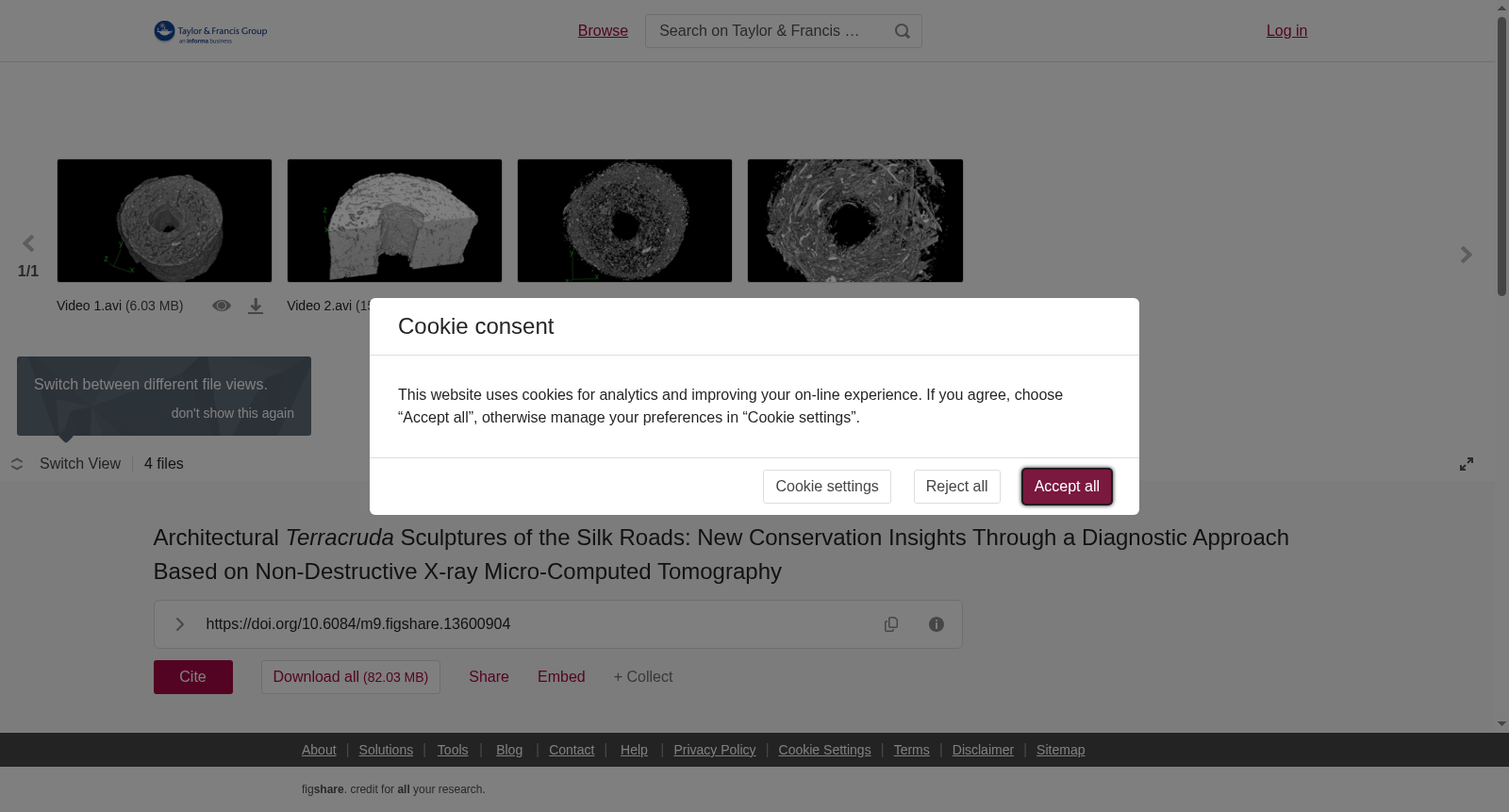
This work presents the results of the study of a fragment of architectural <i>terracruda</i> sculpture from the Buddhist archaeological site of Tepe Narenj (Kabul, Afghanistan, fifth-ninth centuries CE) through X-ray micro-computed tomographic analysis. This technique offers great potential for the study of artworks that, due to their nature, condition, or relevance, are not suitable for sampling. The results have provided useful data for understanding the making of the sculpture showing for the first time the relevance of materials of plant origin used in the composition of the clay-based body, a feature that had not been previously highlighted and which appears to be crucial for proposing suitable conservation interventions.
本研究呈现了对阿富汗喀布尔泰佩·纳伦吉(Tepe Narenj)佛教考古遗址出土的公元5至9世纪建筑用赤陶粗材(terracruda)雕塑残件的X射线显微计算机断层扫描(X-ray micro-computed tomographic)分析研究结果。该技术为研究因自身属性、保存状况或文物价值而不宜开展取样的艺术品提供了极大潜力。本次研究结果为解析该雕塑的制作工艺提供了有效数据,首次揭示了植物源材料在其陶质胎体配方中的关键作用——这一特征此前未被学界关注,且似乎对制定合理的文物保护干预方案至关重要。