
cgarciae/point-cloud-mnist
收藏Hugging Face2021-10-31 更新2024-03-04 收录
下载链接:
https://hf-mirror.com/datasets/cgarciae/point-cloud-mnist
下载链接
链接失效反馈官方服务:
资源简介:
# Point CLoud MNIST
A point cloud version of the original MNIST.
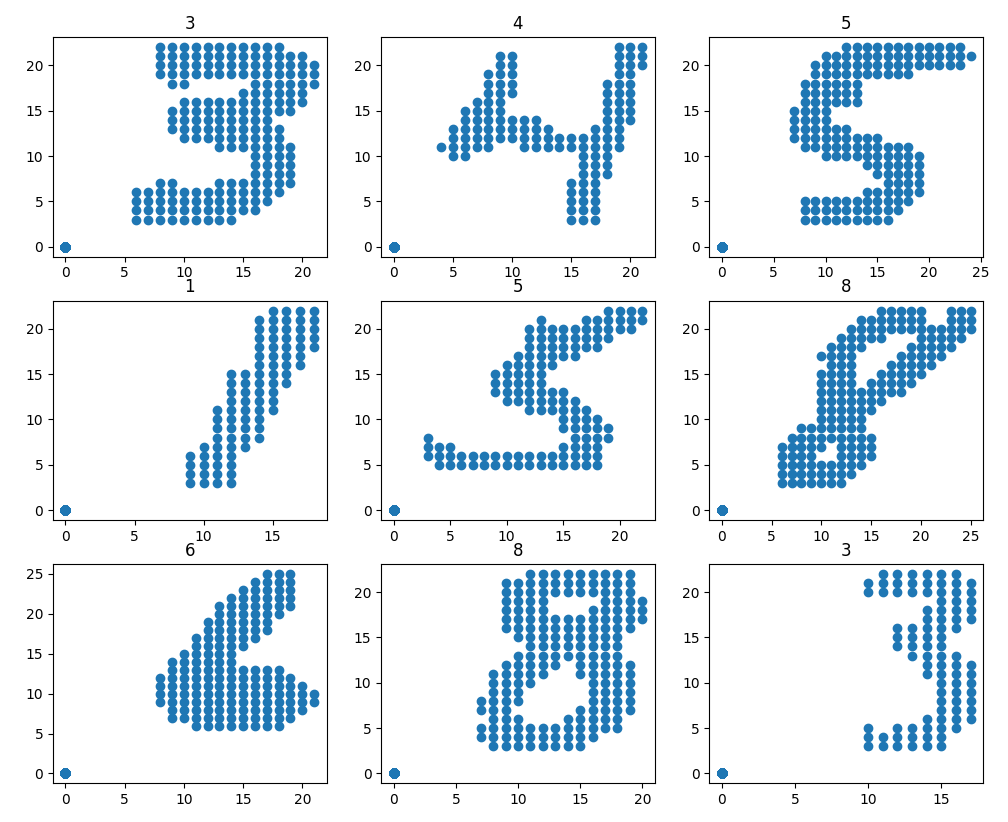
## Getting Started
```python
import matplotlib.pyplot as plt
import numpy as np
from datasets import load_dataset
# load dataset
dataset = load_dataset("cgarciae/point-cloud-mnist")
dataset.set_format("np")
# get numpy arrays
X_train = dataset["train"]["points"]
y_train = dataset["train"]["label"]
X_test = dataset["test"]["points"]
y_test = dataset["test"]["label"]
# plot some training samples
figure = plt.figure(figsize=(10, 10))
for i in range(3):
for j in range(3):
k = 3 * i + j
plt.subplot(3, 3, k + 1)
idx = np.random.randint(0, len(X_train))
plt.title(f"{y_train[idx]}")
plt.scatter(X_train[idx, :, 0], X_train[idx, :, 1])
plt.show()
```
## Format
* `points`: `(batch, point, 3)` array of uint8.
* `label`: `(batch, 1)` array of uint8.
Where `point` is the number of points in the point cloud. Points have no order and were shuffled when creating the data. Each point has the structure `[x, y, v]` where:
* `x`: is the x coordinate of the point in the image.
* `y`: is the y coordinate of the point in the image.
* `v`: is the value of the pixel at the point in the image.
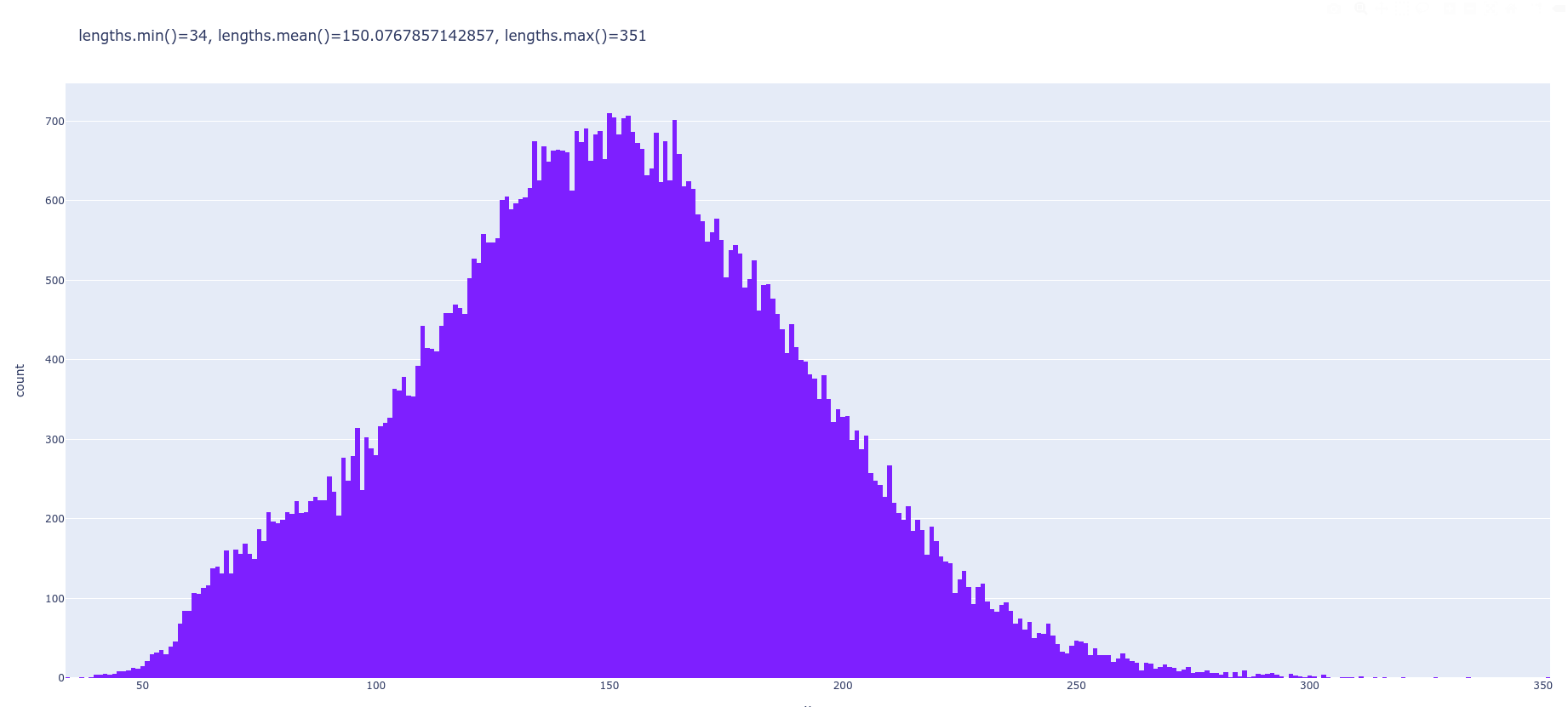
Samples are padded with `0`s such that `point = 351` since its the largest number of non-zero pixels per image in the original dataset. You can tell apart padding point because they are the only ones where `v = 0`.
Here is the distribution of non-zero pixels in the MNIST:
提供机构:
cgarciae
原始信息汇总
数据集概述:Point Cloud MNIST
数据集描述
- 类型: 点云版本的MNIST数据集。
- 数据结构:
points:(batch, point, 3)的 uint8 数组。label:(batch, 1)的 uint8 数组。
数据详情
- 点云结构: 每个点包含
[x, y, v],其中:x: 点的x坐标。y: 点的y坐标。v: 点在图像中的像素值。
- 点数: 每个样本的点数固定为351,通过填充
0实现。 - 填充标识: 填充点可通过
v = 0识别。
数据分布
- 非零像素分布: 展示了MNIST数据集中非零像素的分布情况。



