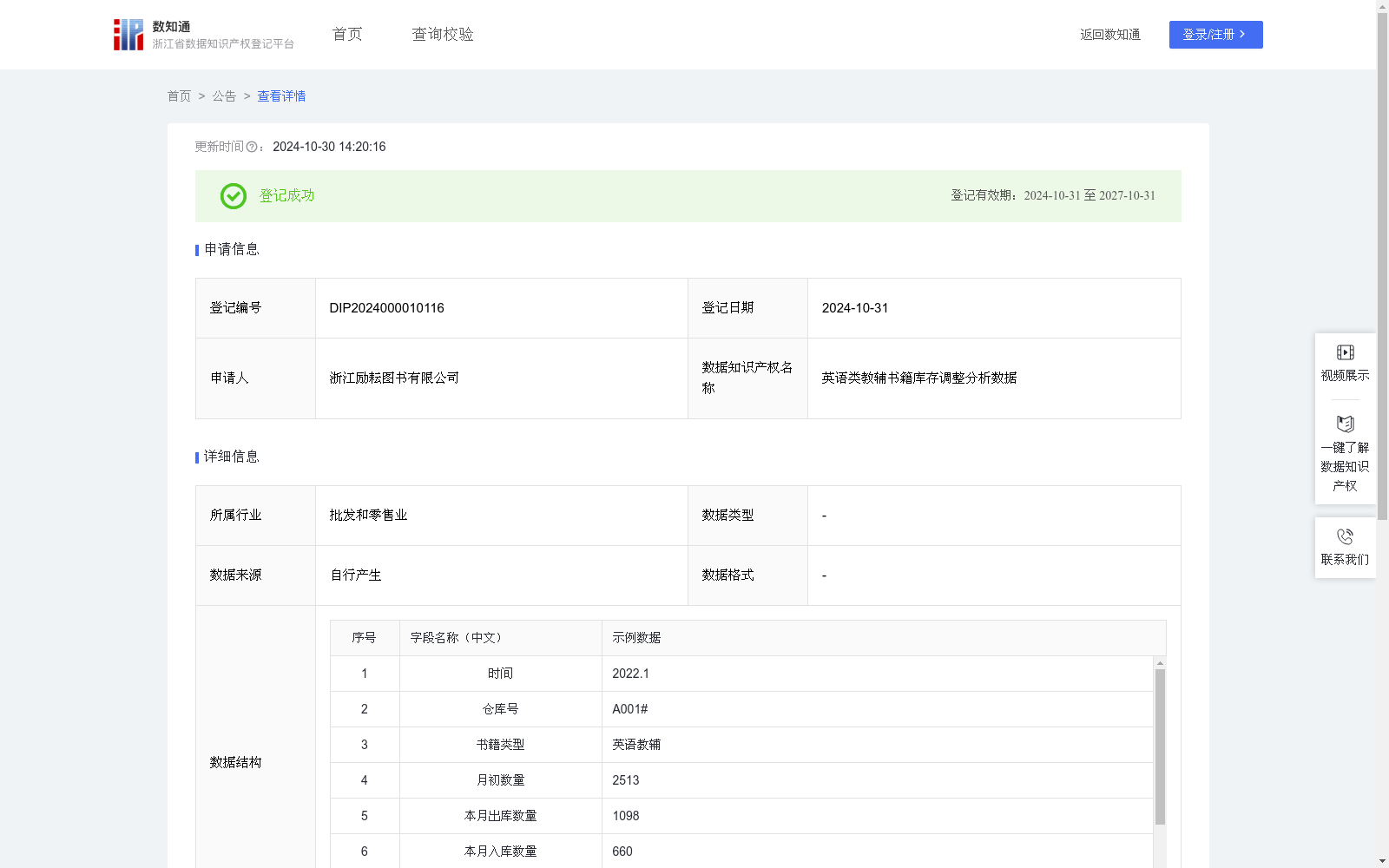
英语类教辅书籍库存调整分析数据
收藏资源简介:
书籍销售商家的书籍仓库空间有限,一般需要定期对库存书籍进行清点整理,尽可能腾出空间用来存放热销书籍。教辅类书籍一般是书店的畅销书籍,但是不同学科的教辅书籍在不同城市区域的销量也存在较大差异。以英语类教辅书籍为例,根据对每个仓库月初数量、本月出库数量、本月入库数量和月末数量的统计,计算得到库存调整指数和针对该类教辅书籍的建议调整类型,最终得到建议调整数量,以帮助仓库书籍管理人员更方便的管理书籍库存量。英语类教辅书籍库存调整分析数据的算法规则包括以下几个方面:1.数据采集:采集书籍仓库在一个月中英语教辅书籍的月初数量、本月出库数量和本月入库数量,得到月末数量。2.数据处理:根据(月末数量/本月出库数量),得到库存调整指数,库存调整指数≥2,则建议调整类型为减少;2>库存调整指数≥1.2,则建议调整类型为不变;库存调整指数<1.2,则建议调整类型为增加。若建议调整类型为减少,则建议调整数量=本月出库数量*0.8;若建议调整类型为增加,则建议调整数量=丨本月出库数量*0.8-月末数量丨。3.仓库书籍管理人员可以参考建议调整类型和建议调整数量对该品类的教辅书籍进行调整,提高管理效率。
Book retailers typically have limited warehouse space, so they need to conduct regular inventory checks and organization of stocked books to free up as much space as possible for best-selling books. Teaching auxiliary books are generally bestsellers in bookstores, yet the sales volumes of teaching auxiliary books across different subjects vary considerably across different urban regions. Taking English-language teaching auxiliary books as an example, by counting the beginning-of-month inventory quantity, monthly outbound shipment quantity, monthly inbound receipt quantity and end-of-month inventory quantity of each warehouse, the inventory adjustment index and the recommended adjustment type for this category of teaching auxiliary books are calculated, and the recommended adjustment quantity is finally obtained to help warehouse book managers manage the book inventory more conveniently. The algorithm rules for the inventory adjustment analysis data of English-language teaching auxiliary books include the following aspects: 1. Data Collection: Collect the beginning-of-month inventory quantity, monthly outbound shipment quantity and monthly inbound receipt quantity of English teaching auxiliary books in the book warehouse within one month, and derive the end-of-month inventory quantity. 2. Data Processing: Calculate the inventory adjustment index as (end-of-month inventory quantity / monthly outbound shipment quantity). If the inventory adjustment index ≥ 2, the recommended adjustment type is "reduction"; if 2 > inventory adjustment index ≥ 1.2, the recommended adjustment type is "no change"; if the inventory adjustment index < 1.2, the recommended adjustment type is "increase". If the recommended adjustment type is "reduction", the recommended adjustment quantity = monthly outbound shipment quantity * 0.8; if the recommended adjustment type is "increase", the recommended adjustment quantity = |monthly outbound shipment quantity * 0.8 - end-of-month inventory quantity|. 3. Warehouse book managers can refer to the recommended adjustment type and recommended adjustment quantity to adjust this category of teaching auxiliary books, thereby improving management efficiency.