快手店铺保湿喷雾售后类型分析数据
收藏资源简介:
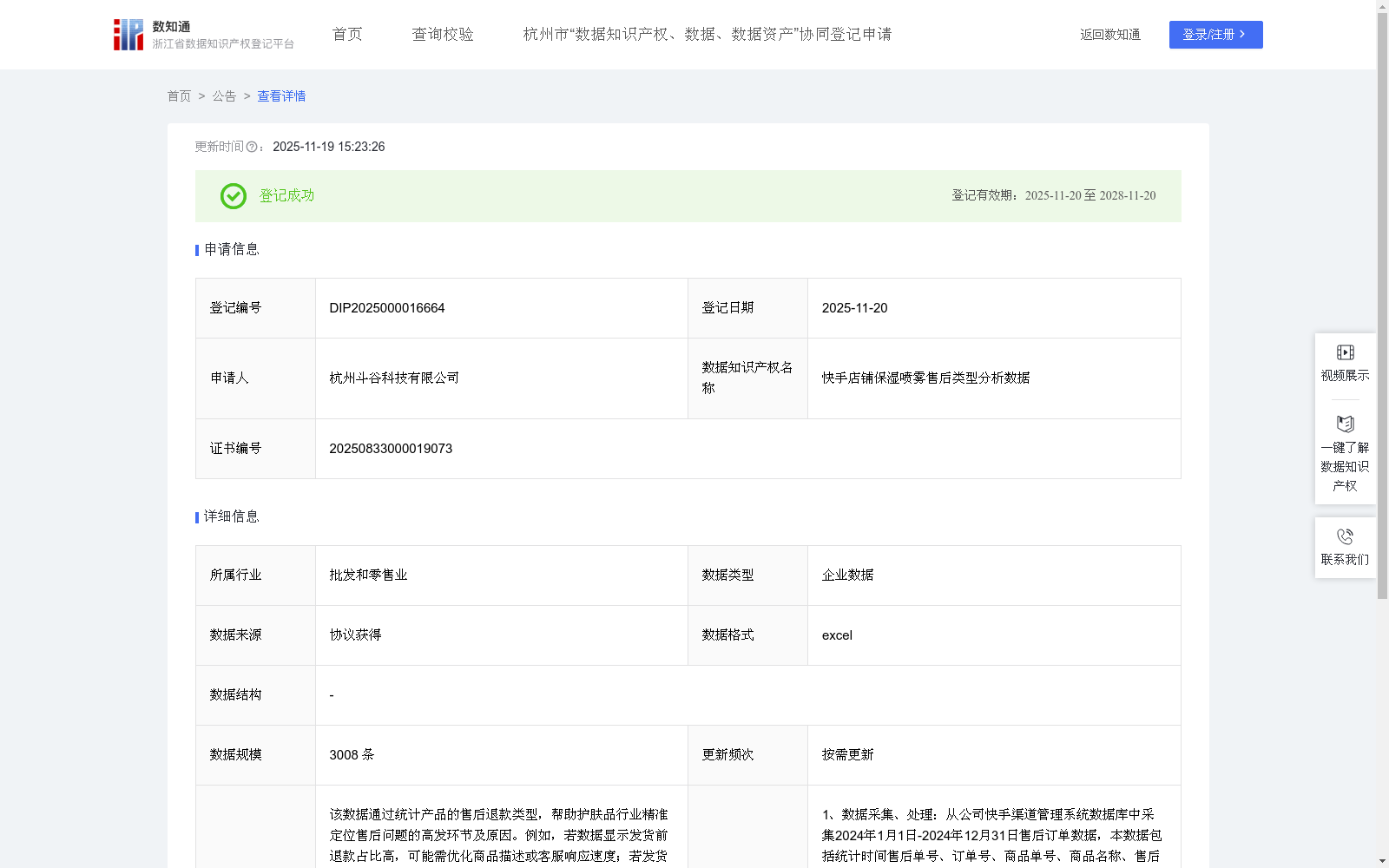
该数据通过统计产品的售后退款类型,帮助护肤品行业精准定位售后问题的高发环节及原因。例如,若数据显示发货前退款占比高,可能需优化商品描述或客服响应速度;若发货后产生退款,则需评估运费险的投入成本与收益。通过分析退款类型分布,企业可科学决策是否购买运费险、优化供应链或调整售后策略,从而降低运营成本、提升用户满意度,并为长期市场策略提供数据支撑;平台可整合各商家的售后数据,识别出共性问题,出台针对性的治理规则,从而提升整个平台生态的用户体验和健康度;其方法论可迁移至任何重视客户体验与留存率的行业,实现从“被动处理投诉”到“主动预防问题”的转变。1、数据采集、处理:从公司快手渠道管理系统数据库中采集2024年1月1日-2024年12月31日售后订单数据,本数据包括统计时间售后单号、订单号、商品单号、商品名称、售后类型等,并对敏感信息进行加密处理,对数据进行加工、脱敏、筛选、统计、分析。 2、算法规则:对采集得到的数据进行计算分析,统计得出总售后类型订单数、未发货退款订单数、已发货退款订单数、其他类型退款订单数,未发货退款订单数占比=未发货退款订单数/总售后类型订单数,已发货退款订单数占比=已发货退款订单数/总售后类型订单数。 3.经过统计、筛选得到综合分析结果。为企业管理者和政策制定者在经营中的产品售后管理进行战略制定和市场指导。
This dataset analyzes product after-sales refund types to help the skincare industry accurately identify high-prevalence after-sales issues and their root causes. For instance, if the data shows a high proportion of pre-shipment refunds, enterprises may need to optimize product descriptions or customer service response speed; if refunds occur after shipment, they should evaluate the cost-benefit ratio of freight insurance investment. By analyzing the distribution of refund types, enterprises can make data-driven decisions on whether to purchase freight insurance, optimize supply chains, or adjust after-sales strategies, thereby reducing operating costs, improving user satisfaction, and providing data support for long-term market strategies. Platforms can aggregate after-sales data from all merchants, identify common recurring issues, and formulate targeted governance rules to enhance user experience and the overall health of the platform's ecosystem. This methodology is transferable to any industry that prioritizes customer experience and retention rates, enabling the transition from "passive complaint handling" to "active proactive problem prevention". 1. Data Collection and Processing: Collect after-sales order data from the database of the company's Kuaishou channel management system from January 1, 2024 to December 31, 2024. This dataset contains fields including statistical timestamp, after-sales order number, order number, product item number, product name, after-sales type, etc. Sensitive information will be encrypted, and the data will undergo processing, desensitization, filtering, counting and analysis. 2. Algorithm Rules: Perform computational analysis on the collected data, and calculate the total number of after-sales refund orders, the number of pre-shipment refund orders, the number of post-shipment refund orders, and the number of other-type refund orders. The proportion of pre-shipment refund orders = (number of pre-shipment refund orders) / (total number of after-sales refund orders); the proportion of post-shipment refund orders = (number of post-shipment refund orders) / (total number of after-sales refund orders). 3. Comprehensive analysis results are generated via statistics and filtering, providing strategic planning and market guidance for enterprise managers and policymakers in product after-sales management during business operations.