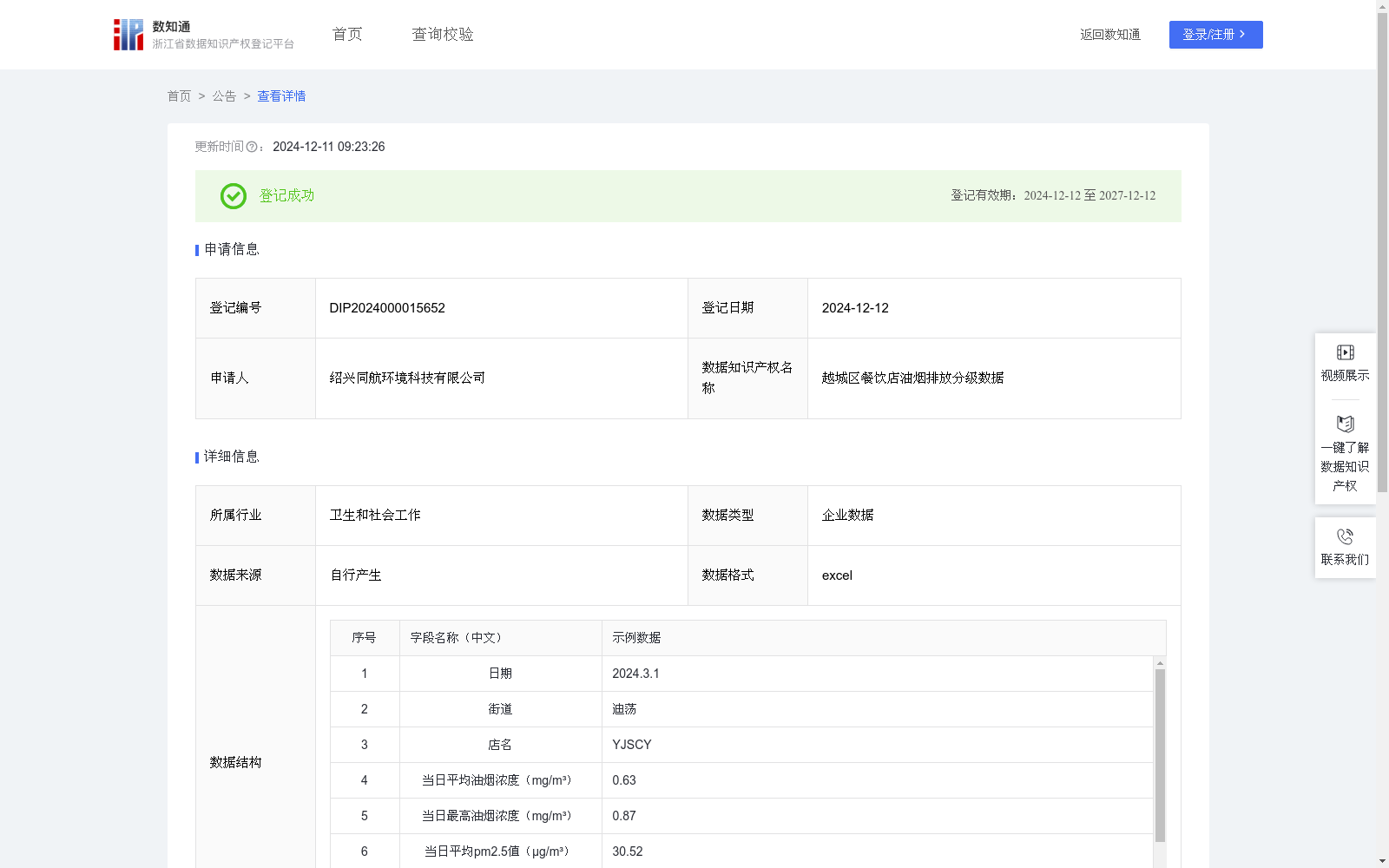
越城区餐饮店油烟排放分级数据
收藏资源简介:
油烟排放对大气环境会造成直接和间接的影响,因此有关部门需要对辖区内的餐饮店进行定期巡检,确保餐饮店的油烟排放处于合理的范围内。但是每个街道内的餐饮店数量众多,如果定期对每家餐饮店都进行高频率的巡检,会极大的增加巡检人员的工作量。为此,可以通过安装在餐饮店内的油烟监测装置反馈当日平均油烟浓度、当日最高油烟浓度、当日平均pm2.5值、当日最高pm2.5值,根据上述4个数值评估得到油烟排放等级,最终得到建议月巡检次数,以帮助巡检人员根据每家餐饮店的烟排放情况来调整巡检次数。1.数据采集:通过安装在餐饮店内的油烟监测装置检测得到本店当日平均油烟浓度、当日最高油烟浓度、当日平均pm2.5值、当日最高pm2.5值。2.数据处理:当日平均油烟浓度在0-0.3、0.31-0.65、0.66-1区间内的分别得3分、2分、1分,当日最高油烟浓度0-0.5、0.51-0.8、0.81-1区间内的分别得3分、2分、1分,当日平均pm2.5值在0-30、30.01-70、70以上区间内的分别得3分、2分、1分,当日最高pm2.5值在0-40、40.01-80、80以上区间内的分别得3分、2分、1分。3.数据分类:最终合计计分为9-12分的油烟排放等级为A,6-8分的油烟排放等级为B,4-5分的油烟排放等级为C。油烟排放等级A、B、C对应的建议月巡检次数分别为1次、2次、3次。将不同油烟排放等级的餐饮店进行区分,把巡检重心放到本街道中油烟排放等级低的餐饮店,既有利于减轻巡检人员的工作量,又能着重监督不规范的餐饮店,提高整改效果和效率。
Cooking fume emissions exert both direct and indirect adverse impacts on the atmospheric environment. Therefore, relevant authorities are required to conduct regular inspections on catering businesses within their jurisdiction to ensure that their cooking fume emissions are within a reasonable range. However, the substantial number of catering businesses in each street means that performing high-frequency regular inspections for every single establishment will drastically increase the workload of inspection staff. To mitigate this issue, cooking fume monitoring devices installed in the catering venues can collect and report four metrics: daily average cooking fume concentration, daily peak cooking fume concentration, daily average PM2.5 concentration, and daily peak PM2.5 concentration. Based on these four indicators, the cooking fume emission level can be evaluated, and the recommended monthly inspection frequency can be derived, so as to assist inspection personnel in adjusting the inspection schedule for each catering business according to its actual fume emission status. 1. Data Collection: The four aforementioned metrics are detected by the cooking fume monitoring device installed in the respective catering business. 2. Data Processing: Scoring criteria are set as follows: - 3 points, 2 points, and 1 point are awarded when the daily average cooking fume concentration falls within the intervals of 0–0.3, 0.31–0.65, and 0.66–1, respectively; - 3 points, 2 points, and 1 point are awarded when the daily peak cooking fume concentration falls within the intervals of 0–0.5, 0.51–0.8, and 0.81–1, respectively; - 3 points, 2 points, and 1 point are awarded when the daily average PM2.5 concentration falls within the intervals of 0–30, 30.01–70, and above 70, respectively; - 3 points, 2 points, and 1 point are awarded when the daily peak PM2.5 concentration falls within the intervals of 0–40, 40.01–80, and above 80, respectively. 3. Data Classification: The final total score corresponds to specific emission levels: 9–12 points for Level A, 6–8 points for Level B, and 4–5 points for Level C. The recommended monthly inspection frequencies for restaurants with Level A, B, and C emissions are 1, 2, and 3 times per month, respectively. By categorizing catering businesses based on their cooking fume emission levels and prioritizing inspection efforts on venues with lower emission levels in the street, this approach not only helps reduce the workload of inspection personnel but also enables targeted supervision of non-compliant catering businesses, thereby improving the effectiveness and efficiency of rectification work.