
NOAA Ocean Noise Reference Station Network (NRS) Raw Passive Acoustic Data
收藏doi.org2025-01-21 收录
下载链接:
https://doi.org/10.7289/v5m32t0d
下载链接
链接失效反馈官方服务:
资源简介:
Passive acoustic monitoring of the ocean ambient sound field is a critical aspect of NOAA's mandate for ocean and coastal stewardship. This includes detecting and characterizing: (1) sounds produced and used by living marine resources (e.g., endangered marine mammals); (2) natural sources of noise from physical oceanographic processes; and (3) anthropogenic noise sources that contribute to the overall ocean noise environment. Noise generated by anthropogenic activities (especially commercial shipping and seismic oil & gas exploration) is increasingly being recognized as a potential threat to marine mammals which are protected in the U.S. by the Marine Mammal Protection Act and the Endangered Species Act. Current scientific data suggest that increased ambient noise levels impact marine mammals by hindering communication (Hatch et al. 2012), altering communication behavior (Parks et al. 2013), altering locomotive behavior (Pirotta et al. 2013), and inducing stress (Rolland et al. 2012).
Additional concerns associated with the degraded acoustic quality of diverse habitats broaden these concerns to include possible repercussions for fish and invertebrate species, many of which NOAA manages as commercially-harvested, protects as resources within sanctuaries, or studies as key elements to sustaining healthy ecosystems. For these reasons it is important for science-based regulatory agencies including NOAA to monitor long-term trends and changes in the ambient sound field.
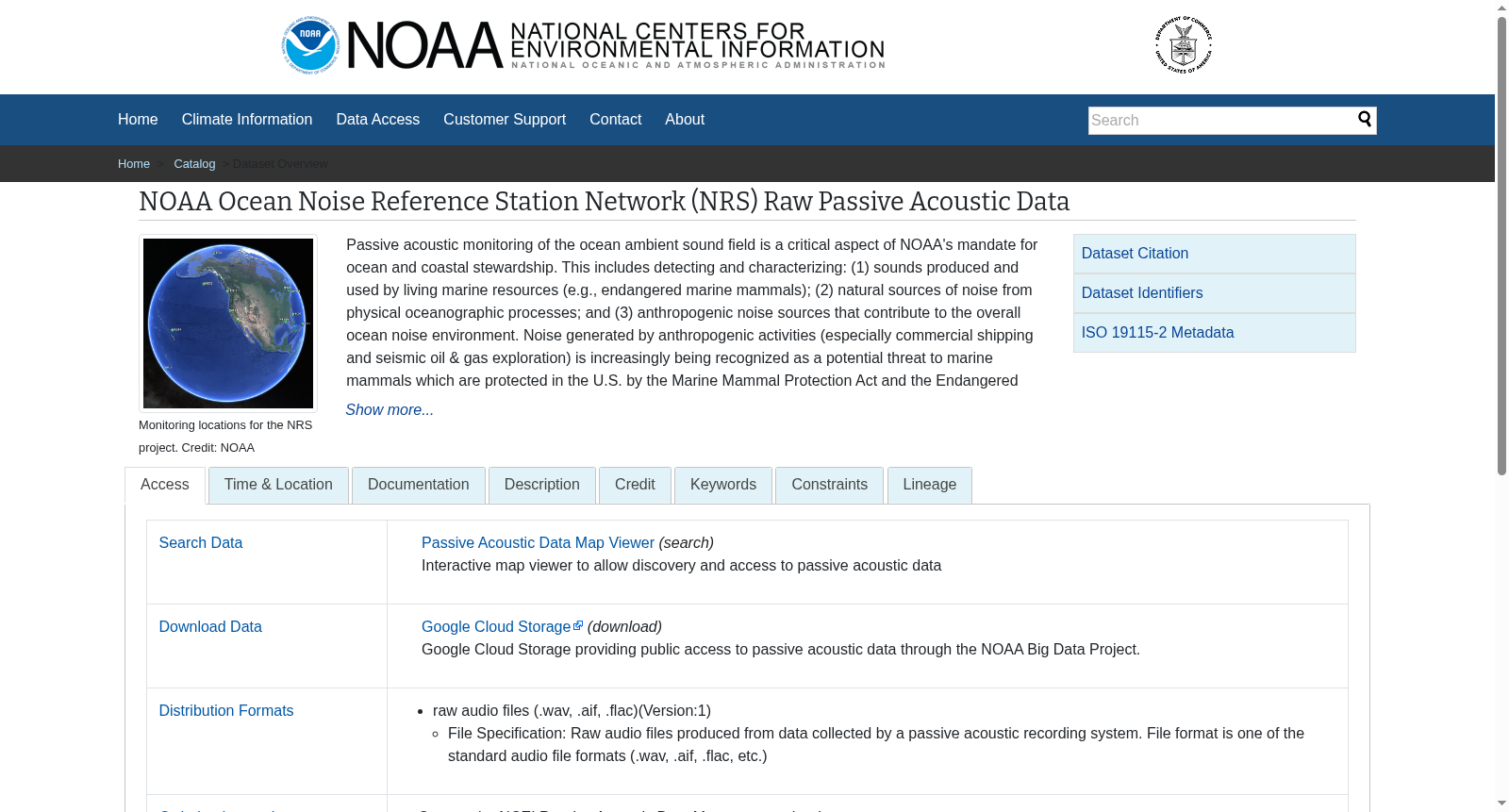
The objective of the proposed project is to establish a network of initially ten ocean noise reference stations in U.S. waters to monitor long-term changes and trends in the underwater ambient sound field (McDonald et al. 2006). Our plan is to deploy identical autonomous acoustic recording systems developed in-house at PMEL at each reference station to ensure proper calibration and consistency of the collected data sets.
对海洋环境声场的被动声学监测是NOAA(美国国家海洋和大气管理局)海洋及海岸守护职责的核心内容。这包括检测和描述:(1)由海洋生物资源(例如,濒危海洋哺乳动物)产生和使用的声音;(2)来自物理海洋学过程的自然噪声源;(3)对整体海洋噪声环境产生影响的源自人类活动的噪声源。人类活动(尤其是商业航运和地震油气勘探)产生的噪声日益被视为对美国通过《海洋哺乳动物保护法》和《濒危物种法》保护的海洋哺乳动物构成潜在威胁。现有的科学数据表明,环境噪声水平的升高会阻碍海洋哺乳动物的沟通(Hatch等,2012年)、改变其沟通行为(Parks等,2013年)、改变其运动行为(Pirotta等,2013年)以及引起压力(Rolland等,2012年)。与不同栖息地声学质量下降相关的额外担忧使这些担忧扩展到包括对鱼类和无脊椎动物物种可能产生的后果,其中许多物种由NOAA管理,作为商业捕捞资源、在保护区内的资源或作为维持健康生态系统关键要素进行研究的对象。因此,对于以科学为基础的监管机构,包括NOAA,监测环境声场的长期趋势和变化至关重要。拟议项目的目标是在美国水域建立一个由最初十个海洋噪声参考站组成的网络,以监测水下环境声场的长期变化和趋势(McDonald等,2006年)。我们的计划是在每个参考站部署由PMEL(美国太平洋海洋和环境实验室)内部开发的相同自主声学记录系统,以确保所收集数据集的正确校准和一致性。
提供机构:
doi.org搜集汇总
数据集介绍
背景与挑战
背景概述
该数据集是美国国家海洋和大气管理局(NOAA)海洋噪声参考站网络(NRS)的原始被动声学数据,用于长期监测海洋环境声音场的变化和趋势。它覆盖了美国水域的多个海域,包括大西洋、太平洋和北冰洋,数据从2014年5月持续更新至今,以原始音频文件格式提供。该数据集的目的是支持海洋噪声研究,特别是针对人为噪声对海洋哺乳动物等生物的影响评估,并涉及多机构合作,确保数据的一致性和可比性。
以上内容由遇见数据集搜集并总结生成


