大模型代码生成能力测试数据
收藏资源简介:
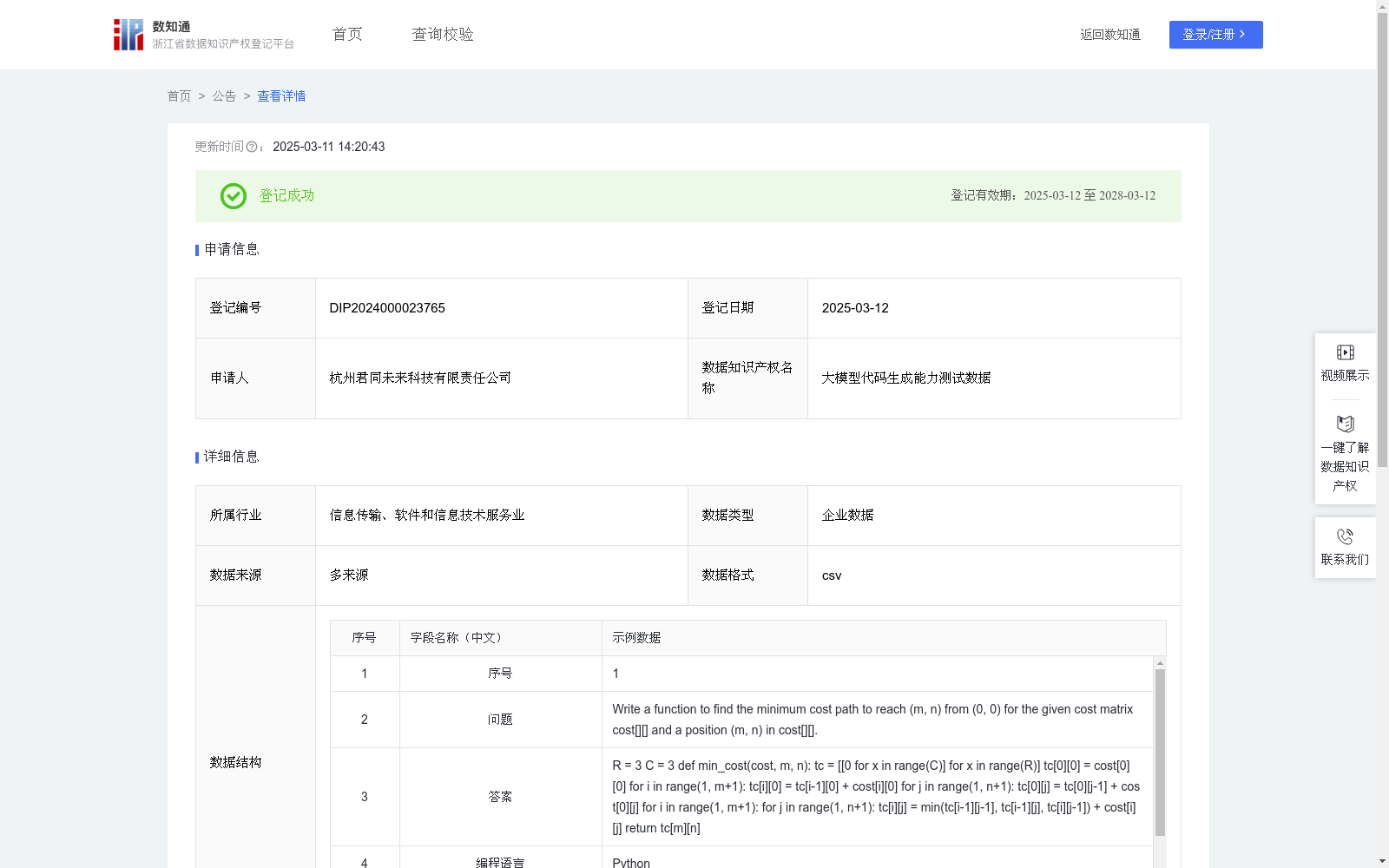
通过精心设计和多层次的数据加工流程,大模型代码生成能力测试数据集被构建为高质量、高标准化的评估集。这些数据涵盖了广泛的编程主题,包括算法设计、数据结构、面向对象编程、并发编程、代码优化、调试技巧等。代码生成能力测试数据集为大语言模型提供全面的编程能力测试素材,帮助了解模型在编写代码时的逻辑思维和实现能力。通过测试评估大模型的代码生成语言、快速提取需求、推导实现过程的能力,适应多样化应用场景,如软件开发、自动化测试、技术支持和代码审查等。本次评估的编程语言为Python、C++。(1) 数据来源:原始数据来源于公开编程题库、学术会议论文中的编程问题、在线编程学习平台的题目集合,以及人工设计的创新编程问题,并为数据添加来源。 (2) 数据标准化处理:对收集到的编程题目进行标准化处理,包括统一题目格式、语言规范化、变量定义标准化,以及排除歧义性描述,确保题目表达清晰、易于模型解析。 (3) 关键信息标注:为题目附加详细的标注信息,包括问题、答案、编程语言、回答类型、功能相似度等。标注的信息为模型的代码生成分析提供多层次验证依据。其中,功能相似度为生成的算法功能点与输入语料中的算法要求功能重合度。 (4) 问题改编与生成:基于基础题目集合,应用数据改编技术生成同类但具有不同表达形式的题目,例如对题目语言进行变换、数据替换、条件扩展。 (5) 测试指标设计:设计针对代码生成能力测试的多维评估指标,包括问题理解正确率、代码生成准确率、算法优化能力、代码风格规范性,以及对提示性问题和开放性问题的响应质量。 (6) 模型评估与验证:使用数据集对大模型进行全面评估,分析其在理解编程问题、生成有效代码及优化代码表现上的能力,并通过对比不同大模型的评估结果,形成对模型编程能力的系统性评价。
Constructed through meticulous design and a multi-level data processing workflow, the Large Language Model (LLM) Code Generation Capability Test Dataset is a high-quality, highly standardized evaluation set. This dataset covers a wide range of programming topics, including algorithm design, data structures, object-oriented programming, concurrent programming, code optimization, debugging skills, and more. It provides comprehensive programming ability test materials for large language models, helping to evaluate the model's logical thinking and implementation capabilities when writing code. The dataset is used to test the LLM's abilities in code generation for target languages, rapid requirement extraction, and derivation of implementation processes, adapting to diverse application scenarios such as software development, automated testing, technical support, and code review. The programming languages involved in this evaluation are Python and C++. (1) Data Source: The original data is collected from public programming question banks, programming problems in academic conference papers, question sets from online programming learning platforms, and innovatively designed manual programming problems, with their sources annotated for each piece of data. (2) Data Standardization Processing: Standardization processing is performed on the collected programming questions, including unifying question formats, standardizing language expressions, standardizing variable definitions, and eliminating ambiguous descriptions, to ensure clear expression of the questions and ease of model parsing. (3) Key Information Annotation: Detailed annotation information is attached to each question, including the problem statement, answer, programming language, response type, functional similarity, and more. The annotated information provides multi-level verification basis for the model's code generation analysis. Specifically, functional similarity refers to the degree of overlap between the functional points of the generated algorithm and the algorithm requirement functions specified in the input corpus. (4) Question Adaptation and Generation: Based on the basic question set, data adaptation techniques are applied to generate questions of the same type but with different expression forms, such as modifying the question language, replacing data, and expanding conditions. (5) Test Indicator Design: Multi-dimensional evaluation indicators for code generation capability tests are designed, including problem understanding accuracy, code generation accuracy, algorithm optimization capability, code style standardization, and response quality to prompt-based and open-ended questions. (6) Model Evaluation and Verification: The dataset is used to conduct comprehensive evaluations of large language models, analyzing their capabilities in understanding programming problems, generating valid code, and optimizing code performance. By comparing the evaluation results of different LLMs, a systematic assessment of the model's programming capabilities is formed.