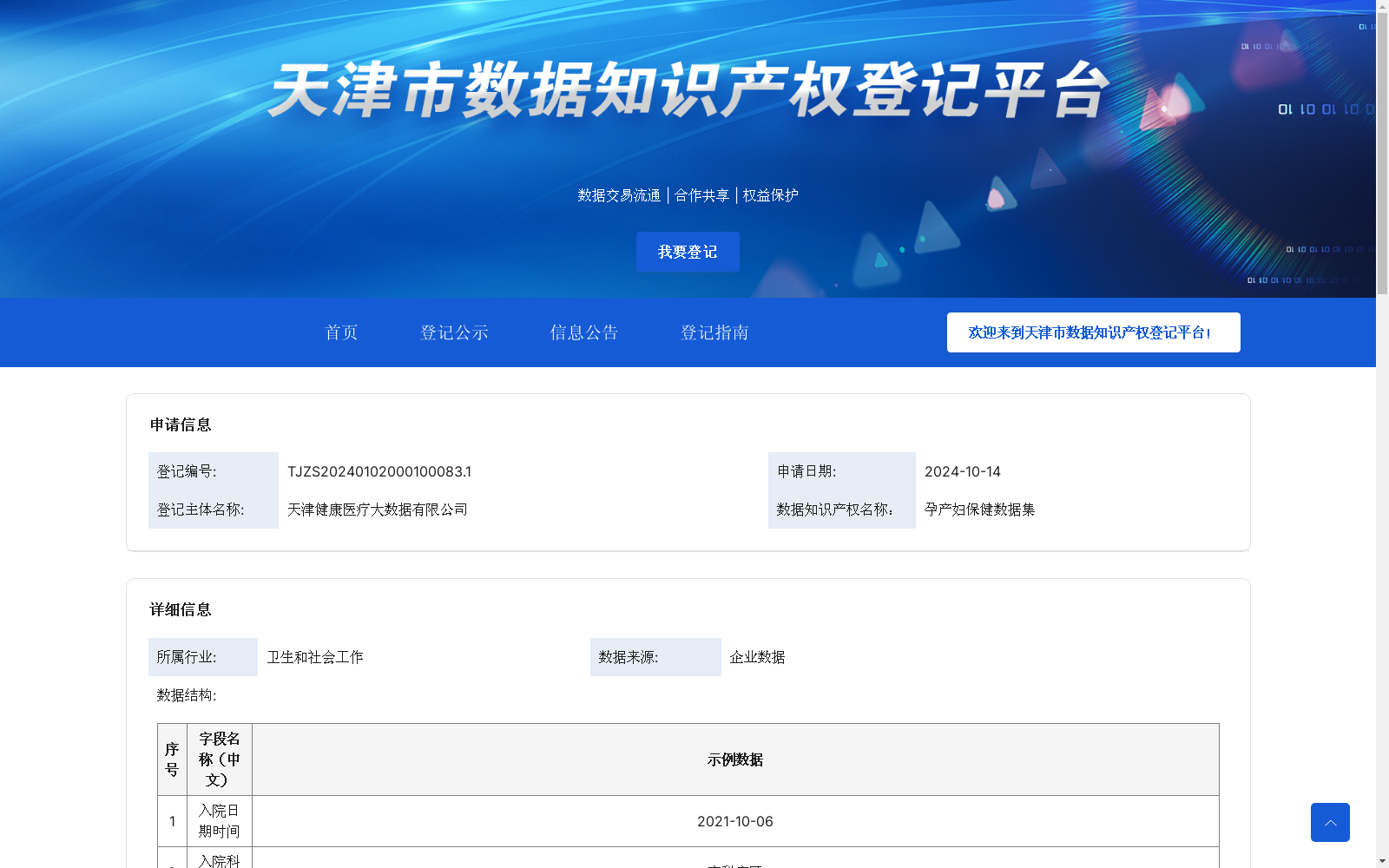
孕产妇保健数据集
收藏资源简介:
多维诊疗数据构建患者主索引:将患者数据特征向量定义为患者性别、住址、家族遗传病、过敏原等信息,使用DBSCAN算法,基于特征向量的密度,将密度相近的数据点划为同一个簇,将患者数据点进行聚类,每个聚类可以视为一个患者群体,作为主索引的标识。 电子病历质控分类模型:该模型通过自然语言处理技术对电子病历中的主诉、现病史、既往史等文本进行识别和分析,提取关键信息并进行分类。包含7个类别,每类250个样本。数据处理包括标签化、分词,并转换为TXT文件。用 BERT的分词器将病历文本转化为BERT所需的输入格式,质控标签转换为数值标签。训练集与测试集按9:1比例划分。使用 BertForSequenceClassification模型进行训练。模型评估通过 classification_report 方法进行。参数更新步骤包括将数据放入指定文件夹,运行训练和更新命令,确保模型、标签和标签名同步。
Patient Master Index Construction via Multi-dimensional Clinical Data: Define the feature vector of patient data as information such as patient gender, address, family genetic diseases, allergens, etc. Use the DBSCAN algorithm to cluster patient data points based on the density of their feature vectors, dividing data points with similar densities into the same cluster. Each cluster can be regarded as a patient group, serving as the identifier of the patient master index. Electronic Medical Record Quality Control Classification Model: This model identifies and analyzes texts such as chief complaint, history of present illness, past medical history in electronic medical records via natural language processing (NLP) technology, extracts key information and performs classification. It contains 7 categories, with 250 samples per category. Data processing includes labeling, word segmentation, and conversion to TXT files. Use the BERT tokenizer to convert medical record texts into the input format required by BERT, and convert quality control labels into numerical labels. Split the training set and test set at a 9:1 ratio. Train with the BertForSequenceClassification model. Model evaluation is carried out via the classification_report method. The parameter update steps include placing the data into the designated folder, running the training and update commands, and ensuring synchronization among the model, labels and label names.