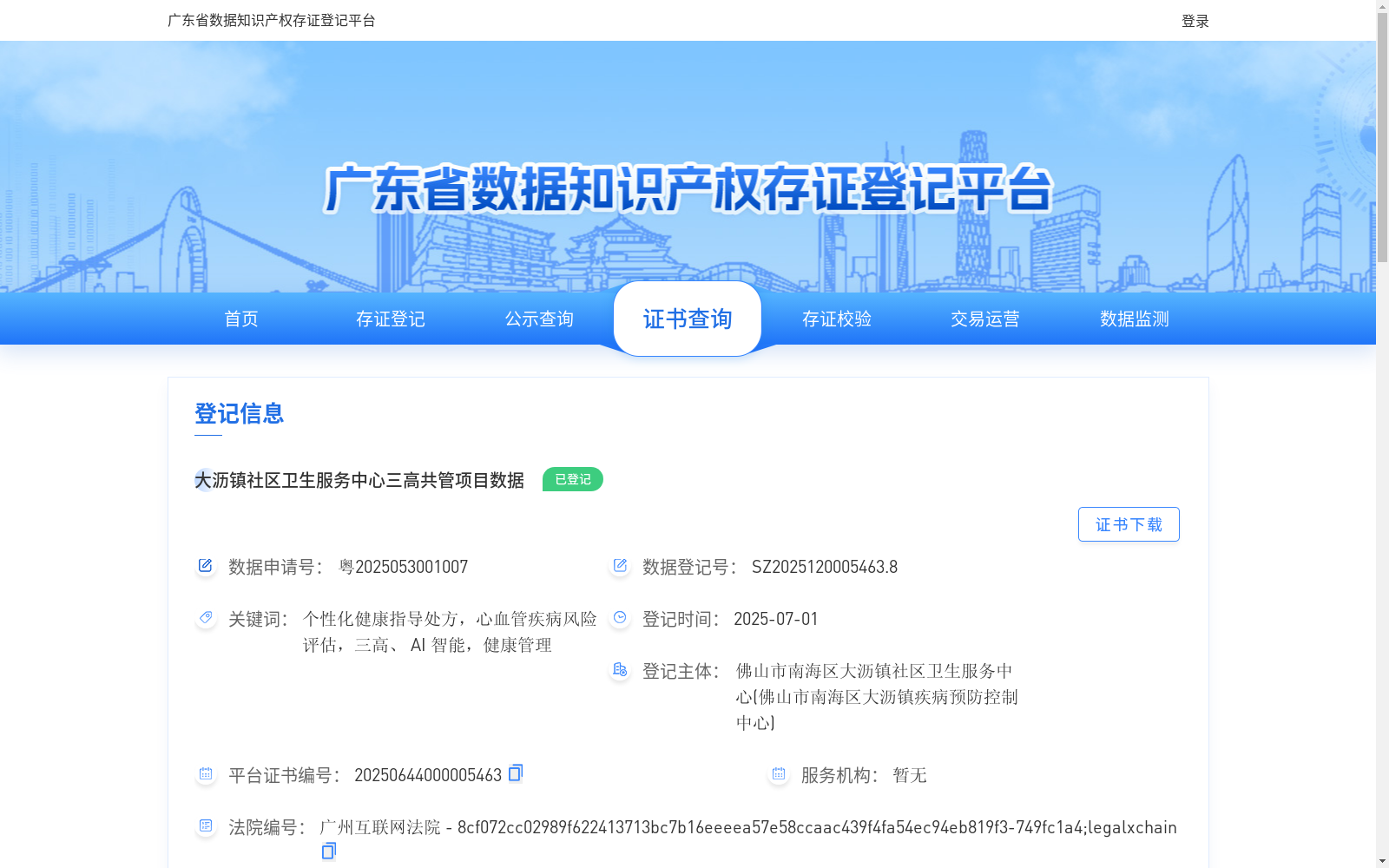
大沥镇社区卫生服务中心三高共管项目数据
收藏资源简介:
通过提取患者的高血压、糖尿病、ASCVD事件、CKD等疾病史,性别、年龄、吸烟等一般情况,以及血脂四项、脂蛋白a、同型半胱氨酸、颈动脉B超等检验检查结果,系统自动识别患者存在的心血管病危险因素和评估10年ASCVD发生风险等级,自动生成动脉粥样硬化性心血管病风险评估告知书,同时医生借助 AI 智能分析手段,智能辅助生成疾病风险评估、药物治疗方案建议、健康指导建议等,帮助医生快速、准确地对患者心血管疾病风险进行评估和健康干预,将血压、血糖、血脂控制在目标范围内,可有效降低心血管疾病的发生风险。通过提取患者的血压、心率、体重、身高、腰围、体质指数、周运动次数和时长、日吸烟量、日饮酒量、摄盐情况、日主食量、心理状况、空腹血糖、糖化血红蛋白、低密度脂蛋白胆固醇、尿酸等健康信息,系统自动判断以上指标是否超过针对该患者的健康管理控制目标,自动生成各项指标控制是否满意的健康干预效果评估结果,并自动生成针对性健康指导意见,并最终形成一份个性化健康指导处方。帮助医生快速、准确地对患者心血管疾病风险个性化健康干预,将各项健康危险因素进行有效管理,可有效降低心血管疾病的发生风险。
By extracting patients' medical histories including hypertension, diabetes mellitus, atherosclerotic cardiovascular disease (ASCVD) events and chronic kidney disease (CKD), general demographic and lifestyle information such as gender, age and smoking status, as well as laboratory and imaging test results including four lipid panels, lipoprotein(a), homocysteine and carotid artery ultrasound, the system can automatically identify the cardiovascular disease risk factors of patients, stratify their 10-year ASCVD risk level, and automatically generate ASCVD risk assessment informed documents. Leveraging AI-powered intelligent analysis tools, physicians can intelligently generate disease risk assessments, medication treatment plan recommendations and health guidance suggestions, which enables them to quickly and accurately evaluate patients' cardiovascular disease risks and implement health interventions, thereby controlling blood pressure, blood glucose and blood lipid within target ranges and effectively reducing the incidence of cardiovascular diseases. By extracting additional health information of patients including blood pressure, heart rate, body weight, height, waist circumference, body mass index (BMI), weekly exercise frequency and duration, daily tobacco and alcohol consumption, salt intake, daily staple food intake, psychological status, fasting blood glucose (FBG), glycated hemoglobin (HbA1c), low-density lipoprotein cholesterol (LDL-C) and uric acid, the system can automatically determine whether the above indicators exceed the health management control targets tailored for the specific patient, automatically generate health intervention effect evaluation results for whether each indicator is well controlled, and produce targeted health guidance suggestions, finally forming a personalized health guidance prescription. This helps physicians quickly and accurately implement personalized health interventions for patients' cardiovascular disease risks, effectively manage various health risk factors, and further reduce the incidence of cardiovascular diseases.