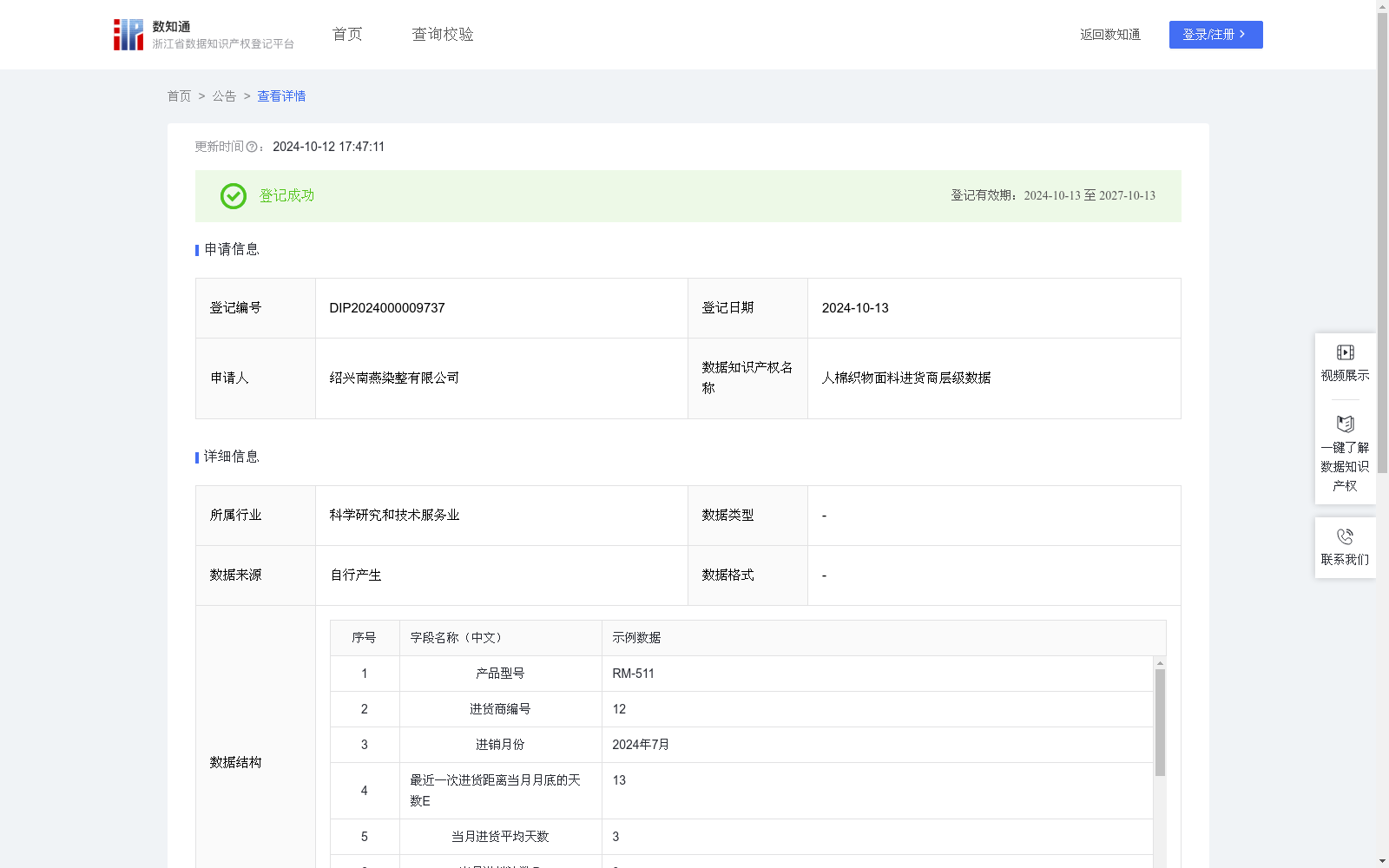
人棉织物面料进货商层级数据
收藏资源简介:
通过分析进货商层级数据,可以洞察人棉织物面料的市场需求趋势,包括不同季节、不同区域以及不同消费群体的需求变化。这有助于进货商提前预判市场走势,制定更为精准的采购计划。通过监控进货商层级数据中的市场波动情况,进货商可以及时发现潜在的市场风险,并采取相应的措施进行防范和应对。1、数据采集:利用进货存管理系统(金蝶供应链云)导出全国区域内的不同进货商每月进货本公司人棉面料的进货明细。2、数据处理:以进货商编号作为唯一标识,对数据进行清洗、去除无效数据和极限数据等操作。3、数据加工:通过LOOKUP函数计算出进货商最近一次进货距离当月月底的天数E,COUNTIF函数计算该月份进货次数D,SUMIF函数计算该月份进货总金额P,进货商最近一次进货距离当月月底的天数大于或者等于当月进货平均天数则E的定档值为1,进货商最近一次进货距离当月月底的天数小于当月进货平均天数则E的定档值为0,同理也分别计算出D、P的定档值(分别用进货次数、进货总金额与各自的平均值相比较),再根据EDP模型分层规则,将进货商分为8个层级,即分为重要价值客户(EDP为111)、重要保持客户(EDP为101)、重要发展客户(EDP为011)、重要挽留客户(EDP为001)、一般价值客户(EDP为110)、一般保持客户(EDP为100)、一般发展客户(EDP为010)和一般挽留客户(EDP为000)。4、数据应用:人棉织物面料进货商层级数据将有助于进货商更好地把握市场动态,优化供应链管理,提高运营效
By analyzing the tiered data of purchasers, we can gain insights into the market demand trends of rayon fabrics, including demand changes across different seasons, regions and consumer groups. This helps purchasers predict market trends in advance and formulate more accurate procurement plans. By monitoring market fluctuations in the tiered purchaser data, purchasers can timely identify potential market risks and take corresponding measures for prevention and response. 1. Data Collection: Export the monthly purchase details of the company's rayon fabrics from various purchasers across the country using the Inventory and Purchase Management System (Kingdee Supply Chain Cloud). 2. Data Processing: Take the purchaser number as the unique identifier to clean the data, remove invalid data and extreme values, etc. 3. Data Calculation & Processing: Calculate the number of days E between a purchaser's latest purchase and the end of the current month using the LOOKUP function; calculate the number of purchases D in the current month using the COUNTIF function; calculate the total purchase amount P in the current month using the SUMIF function. If the number of days between the latest purchase and the end of the current month is greater than or equal to the average purchase days of the month, the tiered value of E is set to 1; otherwise, it is set to 0. Similarly, calculate the tiered values of D and P respectively by comparing the number of purchases and total purchase amount with their respective averages. Then, classify purchasers into 8 tiers according to the EDP model tiering rules: Important Value Customers (EDP = 111), Important Retention Customers (EDP = 101), Important Development Customers (EDP = 011), Important Win-back Customers (EDP = 001), General Value Customers (EDP = 110), General Retention Customers (EDP = 100), General Development Customers (EDP = 010), and General Win-back Customers (EDP = 000). 4. Data Application: The tiered data of rayon fabric purchasers will help purchasers better grasp market dynamics, optimize supply chain management, and improve operational efficiency.