中国植物性状数据库V2
收藏资源简介:
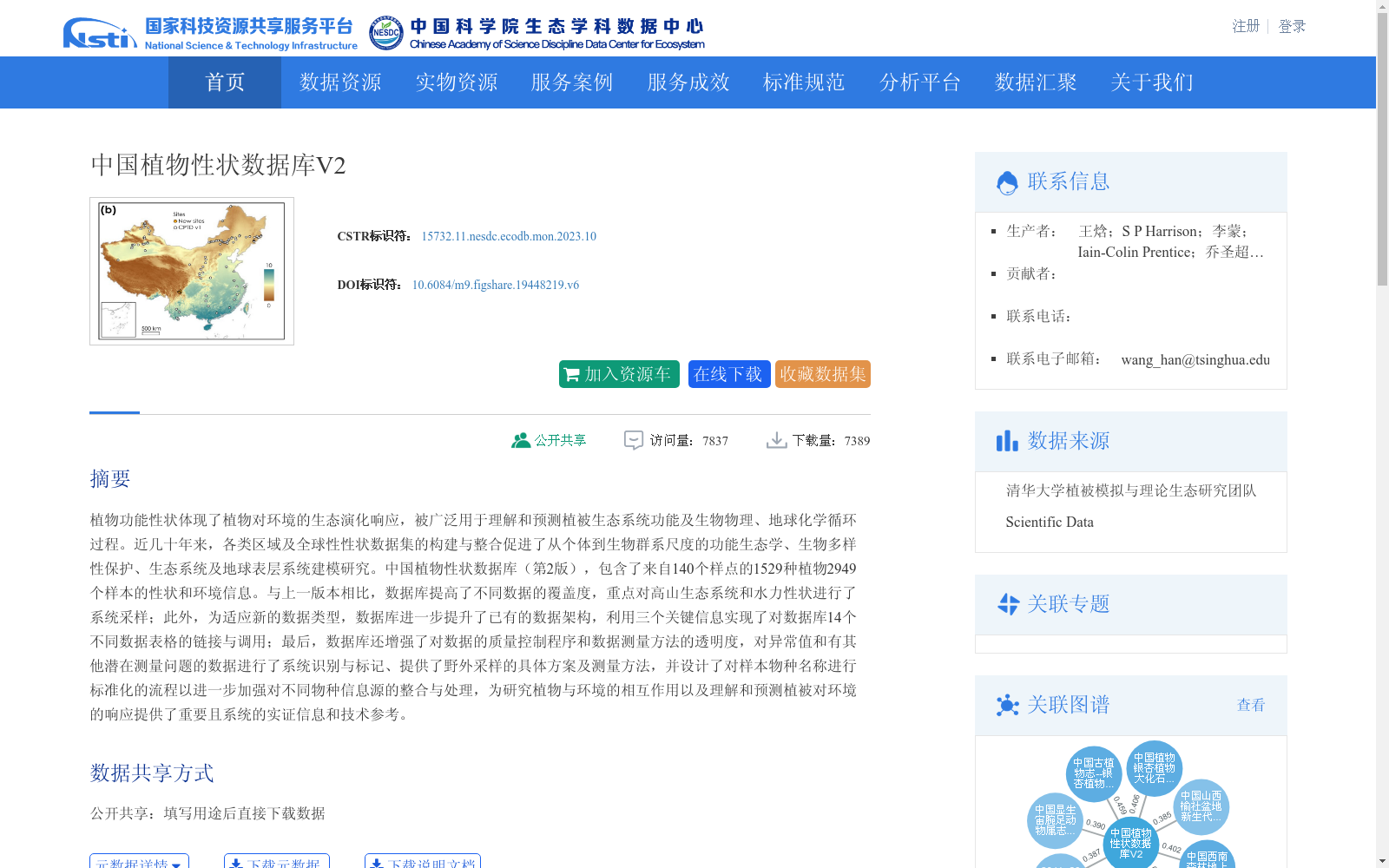
植物功能性状体现了植物对环境的生态演化响应,被广泛用于理解和预测植被生态系统功能及生物物理、地球化学循环过程。近几十年来,各类区域及全球性性状数据集的构建与整合促进了从个体到生物群系尺度的功能生态学、生物多样性保护、生态系统及地球表层系统建模研究。中国植物性状数据库(第2版),包含了来自140个样点的1529种植物2949个样本的性状和环境信息。与上一版本相比,数据库提高了不同数据的覆盖度,重点对高山生态系统和水力性状进行了系统采样;此外,为适应新的数据类型,数据库进一步提升了已有的数据架构,利用三个关键信息实现了对数据库14个不同数据表格的链接与调用;最后,数据库还增强了对数据的质量控制程序和数据测量方法的透明度,对异常值和有其他潜在测量问题的数据进行了系统识别与标记、提供了野外采样的具体方案及测量方法,并设计了对样本物种名称进行标准化的流程以进一步加强对不同物种信息源的整合与处理,为研究植物与环境的相互作用以及理解和预测植被对环境的响应提供了重要且系统的实证信息和技术参考。
Plant functional traits reflect the ecological and evolutionary responses of plants to their environment, and are widely used to understand and predict vegetation ecosystem functions as well as biophysical and biogeochemical cycling processes. In recent decades, the development and integration of various regional and global-scale trait datasets have promoted functional ecological, biodiversity conservation, and ecosystem and Earth surface system modeling research spanning scales from individual organisms to entire biomes. The China Plant Trait Database (Version 2) contains trait and environmental information for 2949 samples of 1529 plant species collected from 140 sampling sites. Compared with the previous version, this updated database has improved cross-category data coverage, with systematic sampling focused on alpine ecosystems and hydraulic traits. Additionally, to adapt to new data types, the database has further upgraded its existing data architecture, enabling linking and invocation of 14 distinct data tables within the database using three core pieces of information. Finally, the database has strengthened data quality control procedures and the transparency of data measurement methods: it systematically identifies and marks outliers and data with other potential measurement issues, provides detailed field sampling protocols and measurement methods, and develops a workflow for standardizing sample species names to further enhance the integration and processing of information from different species sources. Collectively, this database provides critical and systematic empirical information and technical references for research on plant-environment interactions, and for understanding and predicting vegetation responses to environmental changes.