氧化铝/石墨-硫酸钡层状复合材料的摩擦学性能及润滑机理
收藏资源简介:
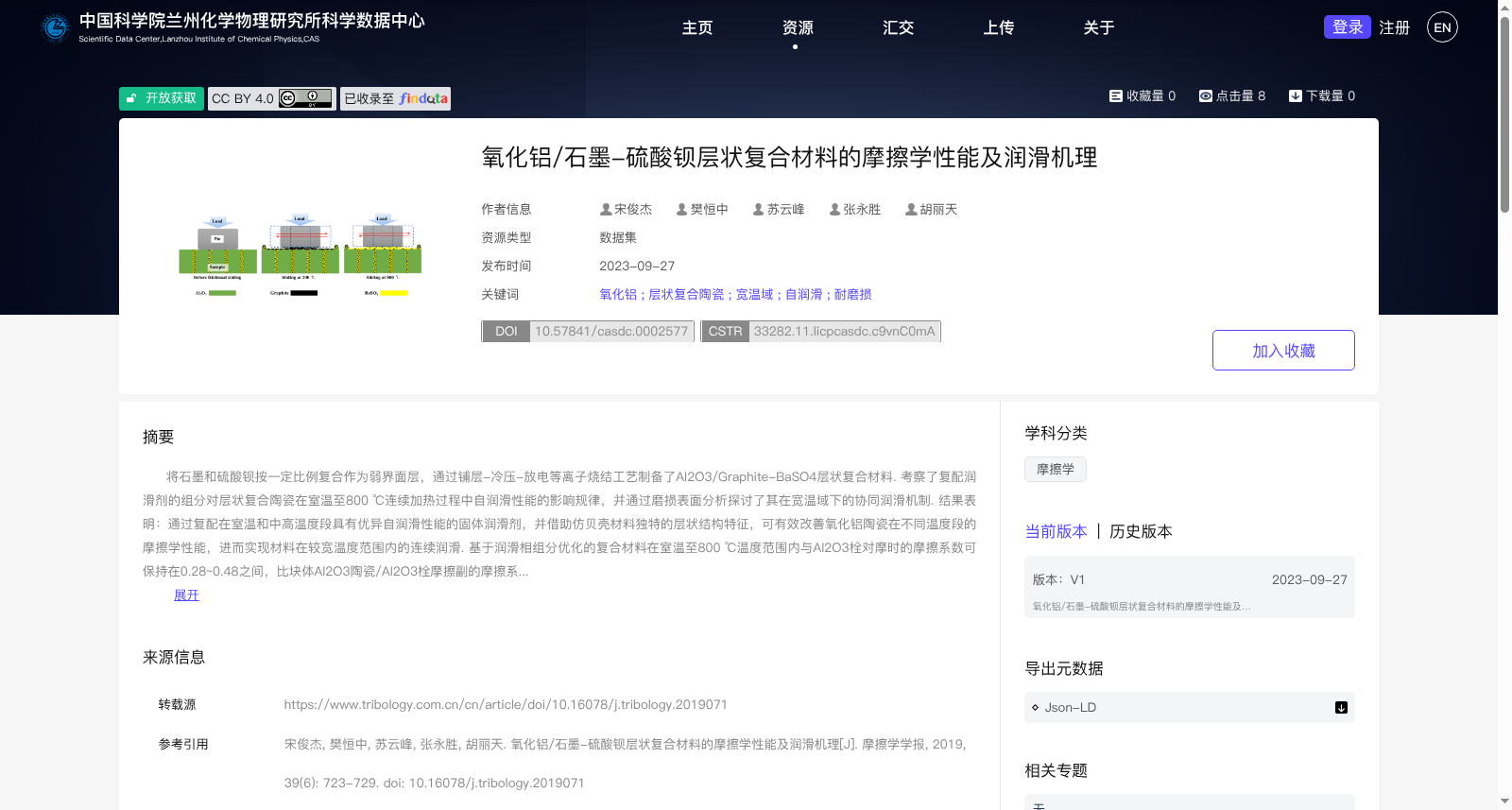
将石墨和硫酸钡按一定比例复合作为弱界面层,通过铺层-冷压-放电等离子烧结工艺制备了Al2O3/Graphite-BaSO4层状复合材料. 考察了复配润滑剂的组分对层状复合陶瓷在室温至800 ℃连续加热过程中自润滑性能的影响规律,并通过磨损表面分析探讨了其在宽温域下的协同润滑机制. 结果表明:通过复配在室温和中高温度段具有优异自润滑性能的固体润滑剂,并借助仿贝壳材料独特的层状结构特征,可有效改善氧化铝陶瓷在不同温度段的摩擦学性能,进而实现材料在较宽温度范围内的连续润滑. 基于润滑相组分优化的复合材料在室温至800 ℃温度范围内与Al2O3栓对摩时的摩擦系数可保持在0.28~0.48之间,比块体Al2O3陶瓷/Al2O3栓摩擦副的摩擦系数降低了近60%.
Graphite and barium sulfate were compounded in a specific ratio to act as a weak interlayer. The Al₂O₃/Graphite-BaSO₄ layered composite was fabricated via the layering-cold pressing-discharge plasma sintering process. The effect of the composition of compounded solid lubricants on the self-lubricating performance of the layered composite ceramics during continuous heating from room temperature to 800 ℃ was systematically investigated. Furthermore, the synergistic lubrication mechanism across a wide temperature range was explored through worn surface analysis. The results show that by compounding solid lubricants with excellent self-lubricating properties at room temperature and medium-high temperature ranges, and leveraging the unique layered structural characteristics of nacre-inspired materials, the tribological performance of alumina ceramics at different temperature stages can be effectively improved, thus achieving continuous lubrication of the material over a wide temperature range. The composite optimized based on the lubricating phase composition maintains a friction coefficient between 0.28 and 0.48 when sliding against an Al₂O₃ pin within the temperature range of room temperature to 800 ℃, which is nearly 60% lower than that of the bulk Al₂O₃ ceramic/Al₂O₃ pin friction pair.