
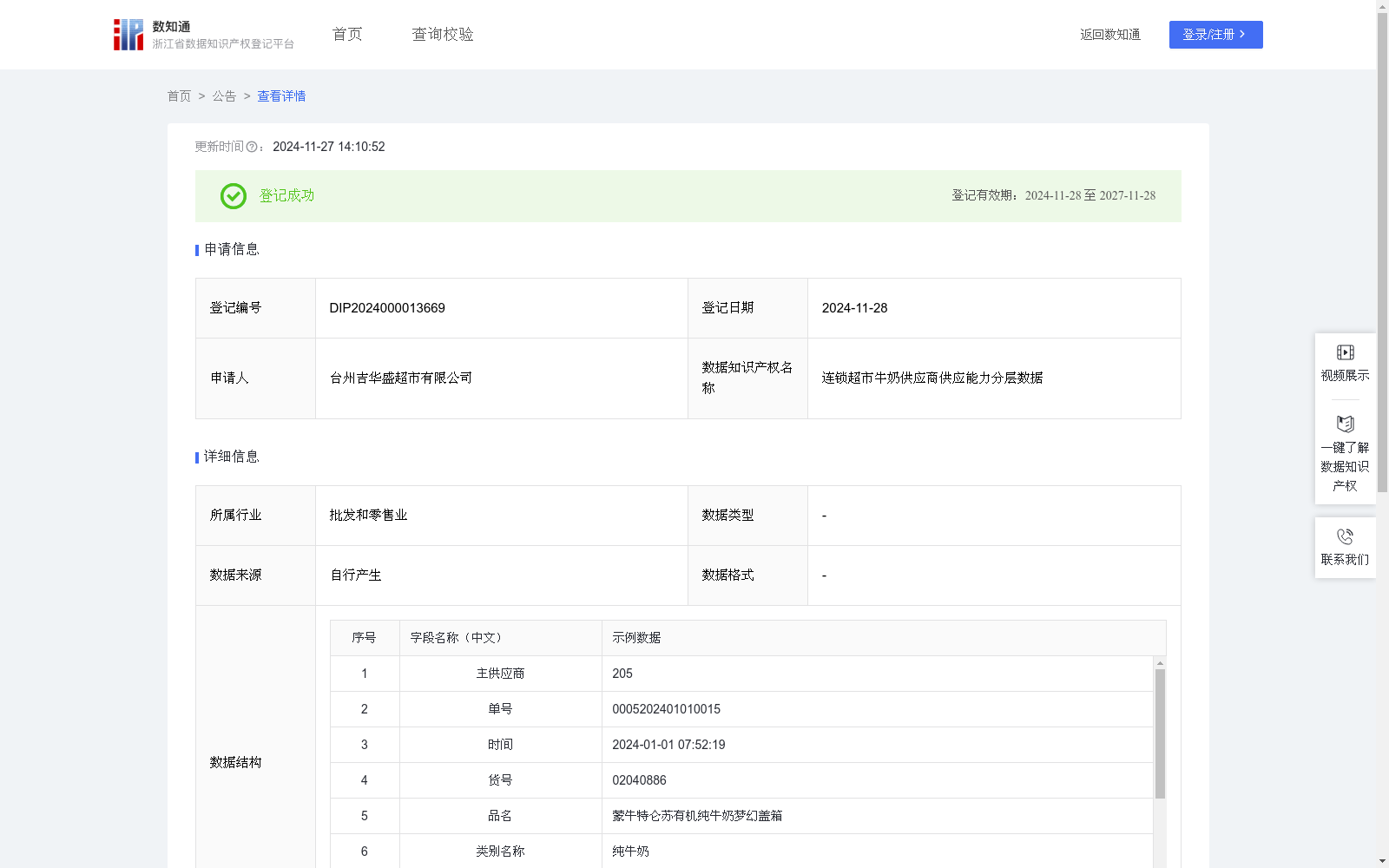
连锁超市牛奶供应商供应能力分层数据
收藏浙江省数据知识产权登记平台2024-11-27 更新2024-11-28 收录
下载链接:
https://www.zjip.org.cn/home/announce/trends/90036
下载链接
链接失效反馈官方服务:
资源简介:
为了更有效地管理连锁超市在台州各地的产品周转,并制定更有针对性的产品营销策略。通过采用统计学模型排序、聚类的方法对季度牛奶供应商进行统计建立,对牛奶供应商进行标签制定,确认重点供应商了解各供应商的供应能力、受欢迎度,制定营销策略提供数据支持,提升客户满意度和竞争力。1.数据采集:对超市用户一个月牛奶销售数量、销售金额做数据记录。2.数据处理: 采用统计学模型排序、聚类的方法,对牛奶季度铝供应商的销售金额、销售总金额进行统计。供应商金额占总销售金额占比=季度对应该供应商销售总额/季度产品总销售额*100%;3.数据分类:该供应商供应产品消费金额占该类产品总金额的比例按从大到小进行排名。供应分类运用ABCDEF分类法,对占比大于等于20%以上,给予“A类供应”分层;占比在小于20%到大于等于15%区间,则给予“B类供应”分层;占比在小于15%到大于等于10%区间,则给予“C类供应”分层;占比在小于10%到大于等于5%区间,则给予“D类供应”分层;占比在小于5%到大于等于1%区间,则给予“E类供应”分层;占比在小于1%以下,则给予“F类供应”分层。4.数据应用:通过这样的分析流程,超市不仅能够更准确地把握市场动态和客户喜好,还能够有效提升客户满意度和市场竞争力。
To more effectively manage product turnover and develop more targeted product marketing strategies for supermarket chains across Taizhou, this dataset was constructed using statistical model-based ranking and clustering methods to analyze quarterly milk suppliers, establish supplier labels, identify key suppliers, understand their supply capabilities and market popularity, and provide data support for formulating marketing strategies to enhance customer satisfaction and market competitiveness.
1. Data Collection: Record the monthly sales volume and sales amount of milk products for supermarket customers.
2. Data Processing: Adopt statistical model-based ranking and clustering methods to count the sales amount and total sales volume of quarterly milk suppliers. The formula for the supplier's proportion of total sales is: Supplier's proportion of total sales amount = (Total sales amount of the supplier in the quarter / Total sales amount of milk products in the quarter) * 100%.
3. Data Classification: Rank the proportion of the supplier's supplied product consumption amount to the total amount of this product category in descending order. Apply the ABCDEF classification method for supply categorization: Suppliers with a proportion ≥ 20% are classified as "Class A Supply"; those with a proportion ranging from 15% (inclusive) to 20% (exclusive) are classified as "Class B Supply"; those with a proportion ranging from 10% (inclusive) to 15% (exclusive) are classified as "Class C Supply"; those with a proportion ranging from 5% (inclusive) to 10% (exclusive) are classified as "Class D Supply"; those with a proportion ranging from 1% (inclusive) to 5% (exclusive) are classified as "Class E Supply"; and those with a proportion < 1% are classified as "Class F Supply".
4. Data Application: Through this analysis workflow, supermarkets can not only accurately grasp market trends and customer preferences, but also effectively improve customer satisfaction and market competitiveness.
提供机构:
台州吉华盛超市有限公司
创建时间:
2024-10-26
搜集汇总
数据集介绍
特点
该数据集记录了连锁超市牛奶供应商的供应能力数据,包含617条记录,用于通过统计学模型对供应商进行分类,以支持营销策略制定和提升客户满意度。数据采用ABCDEF分类法对供应商进行分层,关键字段包括供应商销售总额、产品总销售额及占比等。
以上内容由遇见数据集搜集并总结生成



