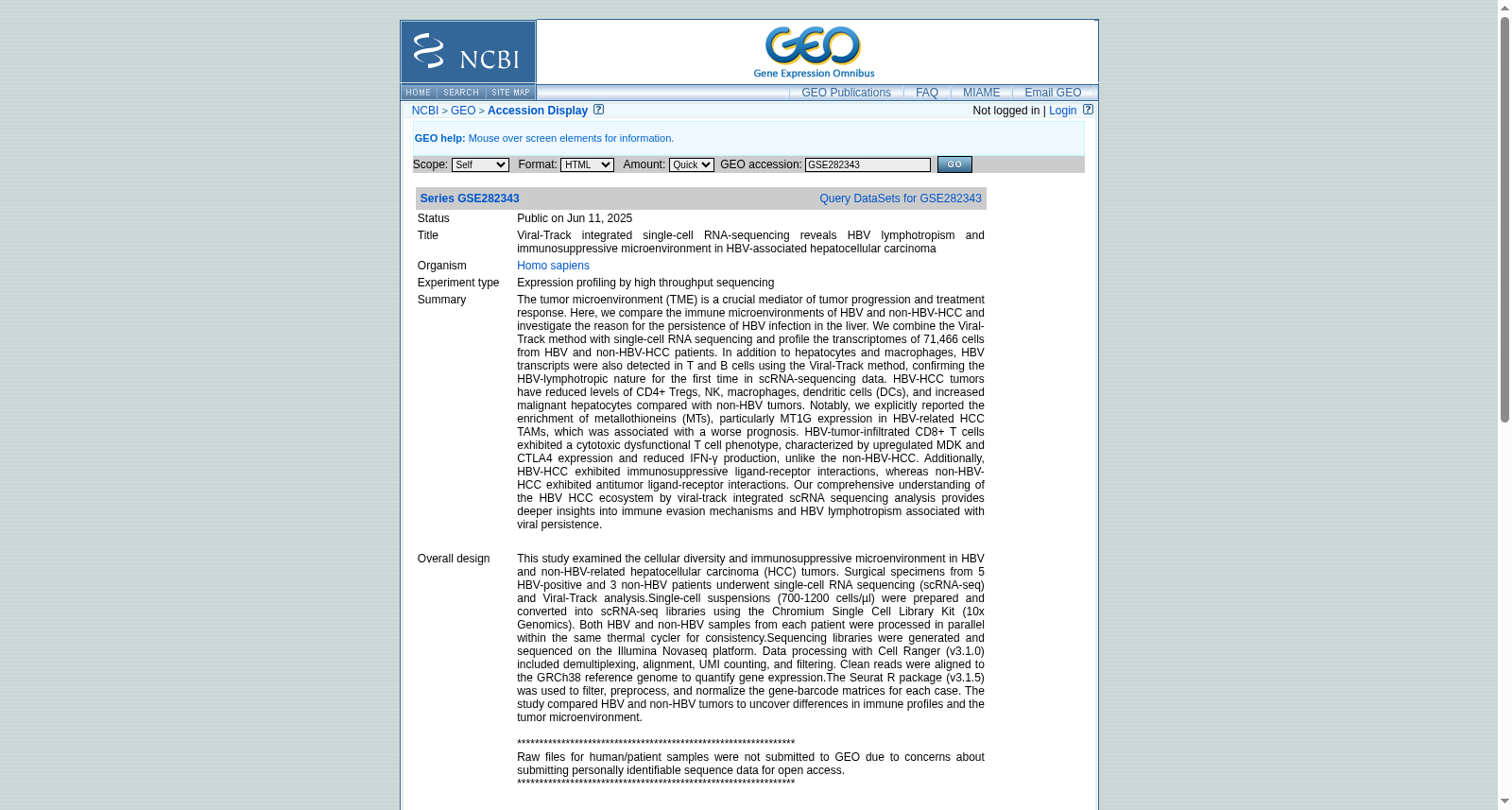
Viral-Track integrated single-cell RNA-sequencing reveals HBV lymphotropism and immunosuppressive microenvironment in HBV-associated hepatocellular carcinoma
收藏资源简介:
The tumor microenvironment (TME) is a crucial mediator of tumor progression and treatment response. Here, we compare the immune microenvironments of HBV and non-HBV-HCC and investigate the reason for the persistence of HBV infection in the liver. We combine the Viral-Track method with single-cell RNA sequencing and profile the transcriptomes of 71,466 cells from HBV and non-HBV-HCC patients. In addition to hepatocytes and macrophages, HBV transcripts were also detected in T and B cells using the Viral-Track method, confirming the HBV-lymphotropic nature for the first time in scRNA-sequencing data. HBV-HCC tumors have reduced levels of CD4+ Tregs, NK, macrophages, dendritic cells (DCs), and increased malignant hepatocytes compared with non-HBV tumors. Notably, we explicitly reported the enrichment of metallothioneins (MTs), particularly MT1G expression in HBV-related HCC TAMs, which was associated with a worse prognosis. HBV-tumor-infiltrated CD8+ T cells exhibited a cytotoxic dysfunctional T cell phenotype, characterized by upregulated MDK and CTLA4 expression and reduced IFN-γ production, unlike the non-HBV-HCC. Additionally, HBV-HCC exhibited immunosuppressive ligand-receptor interactions, whereas non-HBV-HCC exhibited antitumor ligand-receptor interactions. Our comprehensive understanding of the HBV HCC ecosystem by viral-track integrated scRNA sequencing analysis provides deeper insights into immune evasion mechanisms and HBV lymphotropism associated with viral persistence. This study examined the cellular diversity and immunosuppressive microenvironment in HBV and non-HBV-related hepatocellular carcinoma (HCC) tumors. Surgical specimens from 5 HBV-positive and 3 non-HBV patients underwent single-cell RNA sequencing (scRNA-seq) and Viral-Track analysis.Single-cell suspensions (700-1200 cells/µl) were prepared and converted into scRNA-seq libraries using the Chromium Single Cell Library Kit (10x Genomics). Both HBV and non-HBV samples from each patient were processed in parallel within the same thermal cycler for consistency.Sequencing libraries were generated and sequenced on the Illumina Novaseq platform. Data processing with Cell Ranger (v3.1.0) included demultiplexing, alignment, UMI counting, and filtering. Clean reads were aligned to the GRCh38 reference genome to quantify gene expression.The Seurat R package (v3.1.5) was used to filter, preprocess, and normalize the gene-barcode matrices for each case. The study compared HBV and non-HBV tumors to uncover differences in immune profiles and the tumor microenvironment. *************************************************************** Raw files for human/patient samples were not submitted to GEO due to concerns about submitting personally identifiable sequence data for open access. ***************************************************************