
English-Azerbaijani (Arabic Script) Parallel Corpus
收藏arXiv2024-07-07 更新2024-07-12 收录
下载链接:
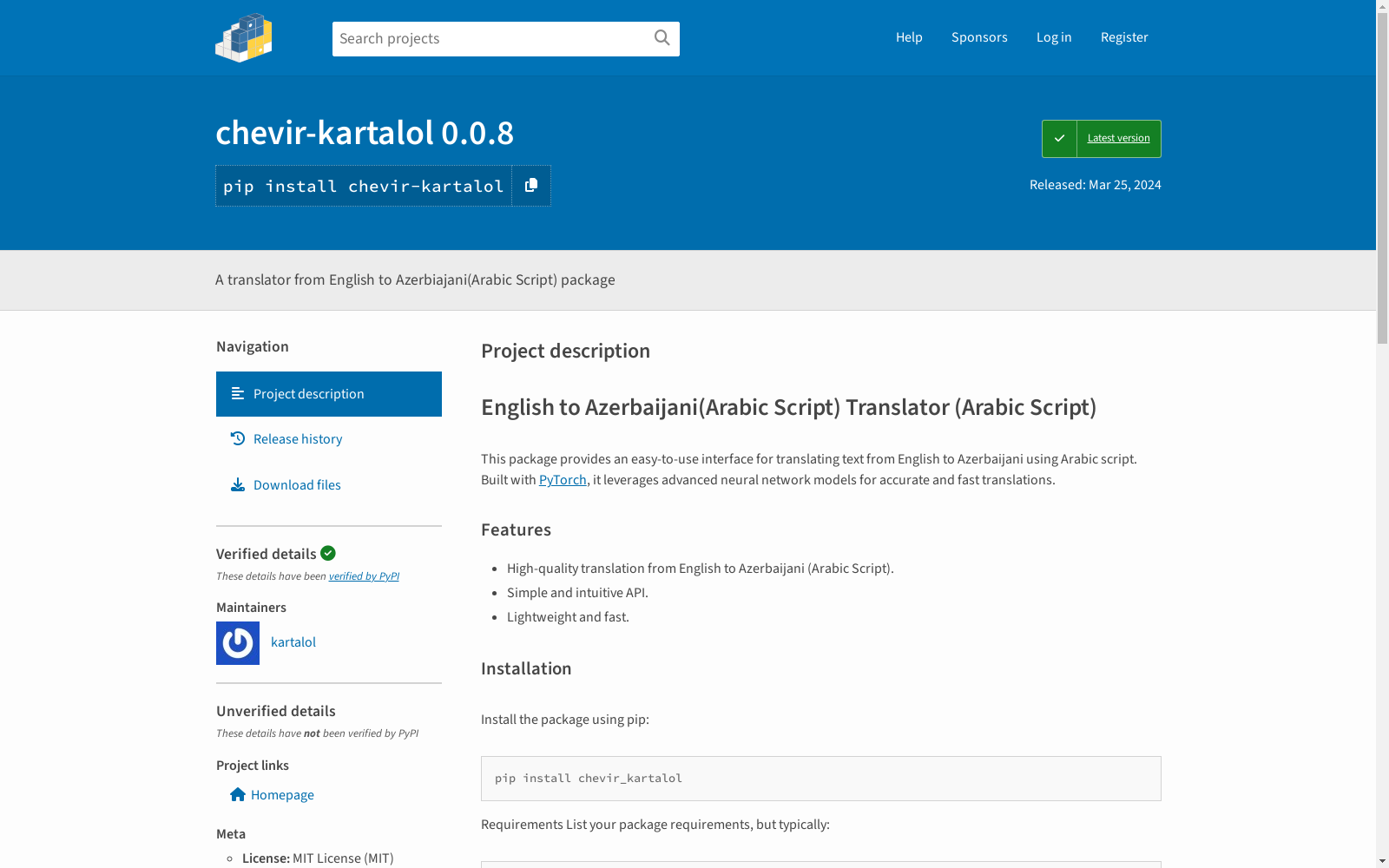
https://pypi.org/project/chevir-kartalol/
下载链接
链接失效反馈官方服务:
资源简介:
本研究介绍了一个创新的英语-阿塞拜疆语(阿拉伯文字)平行语料库,由卡塔尔奥尔研究小组等机构创建。该数据集包含548,000对平行句子,总计约900万词,来源于新闻文章和圣经文本等多种资源。数据集的创建过程包括文本的自动转换和人工校对,确保了语言的准确性和一致性。此数据集主要应用于自然语言处理和机器翻译领域,特别是在资源不足的语言环境中,推动了语言学习和技术的进步。
This study presents an innovative English-Azerbaijani (Arabic script) parallel corpus, developed by institutions including the Qatar Al Research Group and other relevant organizations. The dataset comprises 548,000 parallel sentence pairs, with a total word count of approximately 9 million, sourced from diverse materials such as news articles and biblical texts. The dataset construction workflow involves automatic text conversion and manual proofreading, ensuring strict linguistic accuracy and consistency. This corpus is primarily utilized in the domains of natural language processing (NLP) and machine translation (MT), especially in under-resourced language environments, and has contributed to advancements in language learning and related technological progress.
提供机构:
卡塔尔奥尔研究小组
创建时间:
2024-07-07
原始信息汇总
数据集概述
数据集名称
- chevir-kartalol
数据集描述
- 一个从英语翻译到阿塞拜疆语(阿拉伯文字)的包。
数据集来源
- PyPI
搜集汇总
数据集介绍
构建方式
The English-Azerbaijani (Arabic Script) Parallel Corpus was constructed with the aim of addressing the technological gap in language learning and machine translation for under-resourced languages, particularly the Azerbaijani language. The corpus was meticulously compiled from diverse sources, including news articles and holy texts, and consists of 548,000 parallel sentences and approximately 9 million words per language. The Azerbaijani content, initially composed in the Latin alphabet, was converted to the Arabic script using an automated system named Mirze, followed by rigorous human verification to ensure accuracy and consistency. This corpus represents a significant contribution to the field of linguistic resources and is designed to enhance natural language processing applications and language education technology.
特点
The English-Azerbaijani (Arabic Script) Parallel Corpus is notable for its comprehensive nature, consisting of a substantial number of parallel sentences derived from diverse sources. This dataset is particularly valuable for its focus on the Arabic script variant of the Azerbaijani language, which has been historically under-resourced in digital language resources. The corpus has been developed with the aim of supporting the preservation and revitalization of the Azerbaijani language and culture, addressing discrimination faced by Azerbaijani speakers, and promoting educational opportunities for Azerbaijani speakers. It also serves as an essential asset for researchers and educators aiming to foster bilingual education and multilingual communication.
使用方法
The English-Azerbaijani (Arabic Script) Parallel Corpus can be utilized for various purposes, including training machine translation systems, enhancing natural language processing applications, and supporting language education technology. Researchers and educators can leverage this corpus to develop tailored technological solutions that cater to the needs of diverse linguistic communities. The corpus can also be used to facilitate the advancement of machine translation systems tailored for specific linguistic needs, promote inclusive language learning through technology, and foster bilingual education and multilingual communication. Additionally, the Python package of the code is available for download, and a website is accessible for further exploration and utilization of the corpus.
背景与挑战
背景概述
随着神经机器翻译(NMT)的兴起,许多高资源语言之间的翻译质量得到了显著提升,但对于资源匮乏的语言来说,这种技术进步带来的益处却并未得到均匀分布。阿塞拜疆语,特别是使用阿拉伯字母的变体,就是这样一个例子。尽管它拥有丰富的文化遗产和庞大的使用者群体,但在数字语言资源方面的发展却相对滞后。为了填补这一空白,Jalil Nourmohammadi Khiarak及其团队创建了一个创新的英-阿塞拜疆(阿拉伯字母)平行语料库,旨在促进机器翻译系统的开发,并支持语言学习技术的进步。该语料库包含548,000个平行句子,以及每种语言约900万个单词,来源于新闻文章和神圣文本等多种渠道,旨在增强自然语言处理(NLP)应用和语言教育技术。这一语料库的创建标志着语言学资源领域的一个重要进展,特别是对于在NMT革命中落后于时代的突厥语系语言而言。通过展示首个英-阿塞拜疆(阿拉伯字母)语言对的全面案例研究,这项工作突显了NMT在低资源环境下的变革潜力。该语料库的开发和利用不仅促进了针对特定语言需求的机器翻译系统的发展,而且通过技术手段促进了包容性语言学习。研究结果证明了该语料库在训练深度学习MT系统方面的有效性,并强调了其在促进双语教育和多语种交流方面的关键作用。该研究为未来探索缺乏大量数字资源的语言的NMT应用铺平了道路,从而增强了全球语言教育框架。
当前挑战
创建英-阿塞拜疆(阿拉伯字母)平行语料库的过程中,研究人员面临了多个挑战。首先,阿塞拜疆语作为一种资源匮乏的语言,其数字语言资源的缺乏对机器翻译系统的开发构成了挑战。其次,阿塞拜疆语使用拉丁和阿拉伯两种字母,这增加了文本转换的复杂性。为了解决这个问题,研究人员开发了一个自动系统,将拉丁字母的阿塞拜疆语文本转换为阿拉伯字母。然而,自动化转换过程中可能引入的错误或不一致性需要通过人工校对来纠正。此外,由于阿塞拜疆语是粘着语,形态学上的错误可能会严重扭曲意义,因此,确保翻译的准确性和流畅性是一个重要的挑战。最后,尽管该语料库为NMT在低资源语言环境中的应用提供了有价值的资源,但与高资源语言的NMT系统相比,性能仍有待提升。这些挑战表明,在资源匮乏的语言环境中,NMT的发展需要专门的资源和持续的改进。
常用场景
经典使用场景
在神经机器翻译(NMT)和语言学习技术领域,English-Azerbaijani (Arabic Script) Parallel Corpus 数据集的引入为低资源语言提供了宝贵的资源。该数据集由548,000个平行句子组成,每语言约900万个单词,涵盖了新闻文章和神圣文本等多种来源,旨在增强自然语言处理(NLP)应用和语言教育技术。通过这个数据集,研究人员和开发者能够构建和优化专门针对特定语言需求的机器翻译系统,从而推动低资源语言环境下的NMT应用。此外,该数据集也促进了包容性语言学习的进步,通过技术手段为讲Azerbaijani (Arabic Script)语言的用户提供更多语言学习的机会。
衍生相关工作
English-Azerbaijani (Arabic Script) Parallel Corpus 数据集的建立为低资源语言的研究和应用奠定了基础。基于该数据集,研究人员可以进一步探索NMT在低资源语言环境下的应用,开发更加精准和高效的翻译系统。同时,该数据集也为其他低资源语言的研究提供了参考,推动了全球语言教育框架的发展。此外,该数据集还可用于开发针对Azerbaijani (Arabic Script)语言的学习工具和教材,促进双语教育和多语种交流的发展。
数据集最近研究
最新研究方向
在自然语言处理(NLP)领域,对于资源匮乏的语言,如使用阿拉伯字母的阿塞拜疆语,构建平行语料库是推动机器翻译(MT)和教育技术发展的关键步骤。English-Azerbaijani (Arabic Script) Parallel Corpus 的构建填补了这一领域的空白,为阿塞拜疆语和英语之间的翻译提供了重要的数据资源。这一数据集不仅有助于改善语言学习工具,也促进了NMT在低资源环境下的应用。通过引入这一数据集,研究者们能够探索NMT在资源匮乏的语言环境中的潜力,并推动全球语言教育框架的进步。未来,这一数据集有望为缺乏充足数字资源的语言提供更多NMT应用,从而促进更包容的语言学习技术。
相关研究论文
- 1Enhancing Language Learning through Technology: Introducing a New English-Azerbaijani (Arabic Script) Parallel Corpus卡塔尔奥尔研究小组 · 2024年
以上内容由遇见数据集搜集并总结生成



