
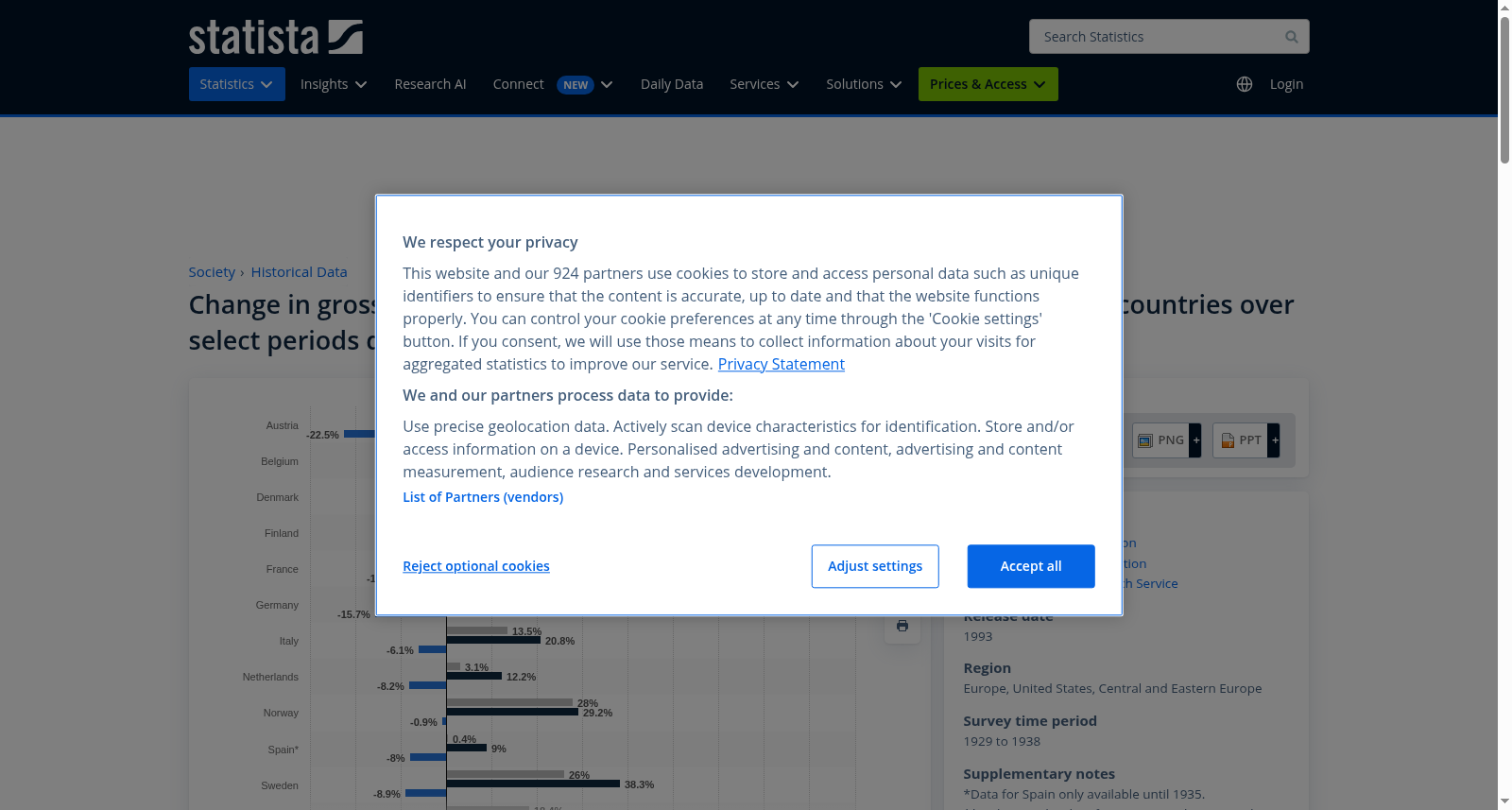
Change in GDP in the U.S and European countries 1929-1938
收藏www.statista.com2025-01-08 收录
下载链接:
https://www.statista.com/statistics/1237792/europe-us-gdp-change-great-depression/
下载链接
链接失效反馈官方服务:
资源简介:
Between the Wall Street Crash of 1929 and the end of the Great Depression in the late 1930s, the Soviet Union saw the largest growth in its gross domestic product, growing by more than 70 percent between 1929 and 1937/8. The Great Depression began in 1929 in the United States, following the stock market crash in late October. The inter-connectedness of the global economy, particularly between North America and Europe, then came to the fore as the collapse of the U.S. economy exposed the instabilities of other industrialized countries. In contrast, the economic isolation of the Soviet Union and its detachment from the capitalist system meant that it was relatively shielded from these events.1929-1932The Soviet Union was one of just three countries listed that experienced GDP growth during the first three years of the Great Depression, with Bulgaria and Denmark being the other two. Bulgaria experienced the largest GDP growth over these three years, increasing by 27 percent, although it was also the only country to experience a decline in growth over the second period. The majority of other European countries saw their GDP growth fall in the depression's early years. However, none experienced the same level of decline as the United States, which dropped by 28 percent.1932-1938In the remaining years before the Second World War, all of the listed countries saw their GDP grow significantly, particularly Germany, the Soviet Union, and the United States. Coincidentally, these were the three most powerful nations during the Second World War. This recovery was primarily driven by industrialization, and, again, the U.S., USSR, and Germany all experienced the highest level of industrial growth between 1932 and 1938.
在1929年的华尔街股市崩盘以及1930年代后期的大萧条结束期间,苏联见证了其国内生产总值(GDP)的最大增长,从1929年到1937/8年增长了超过70%。大萧条始于1929年的美国,紧随10月底的股市崩盘之后。当时全球经济尤其是北美与欧洲之间的相互依存性凸显出来,因为美国经济的崩溃揭示了其他工业化国家的脆弱性。相比之下,苏联的经济孤立及其与资本主义体系的疏离意味着它相对地免受这些事件的影响。在1930年代初的大萧条的前三年中,苏联是仅有的三个实现GDP增长的国家之一,另外两个是保加利亚和丹麦。在这三年中,保加利亚经历了最大的GDP增长,增长了27%,尽管它也是唯一在第二阶段经历增长下降的国家。大多数其他欧洲国家在萧条的前几年见证了其GDP增长的下降。然而,没有哪个国家的降幅与美国相当,美国的降幅达到了28%。在第二次世界大战前的剩余年份中,所有列出的国家都见证了其GDP的显著增长,尤其是德国、苏联和美国。巧合的是,这三个国家也是第二次世界大战中最强大的国家。这一复苏主要是由工业化推动的,而且,再次强调,美国、苏联和德国在1932年至1938年之间经历了最高的工业增长水平。
提供机构:
Statista
搜集汇总
数据集介绍
背景与挑战
背景概述
该数据集记录了1929年至1938年大萧条期间美国及多个欧洲国家(如德国、法国、英国、苏联等)的国内生产总值(GDP)百分比变化,数据按三个时间段(1929-1932年、1932/3-1937/8年、1929-1937/8年)呈现。数据集显示,早期大多数国家GDP下降(美国降幅最大达28%),但苏联、保加利亚和丹麦例外;后期所有国家GDP均增长,其中德国、苏联和美国因工业化驱动增长最为显著。这反映了全球经济在大萧条中的不同轨迹和复苏模式。
以上内容由遇见数据集搜集并总结生成


