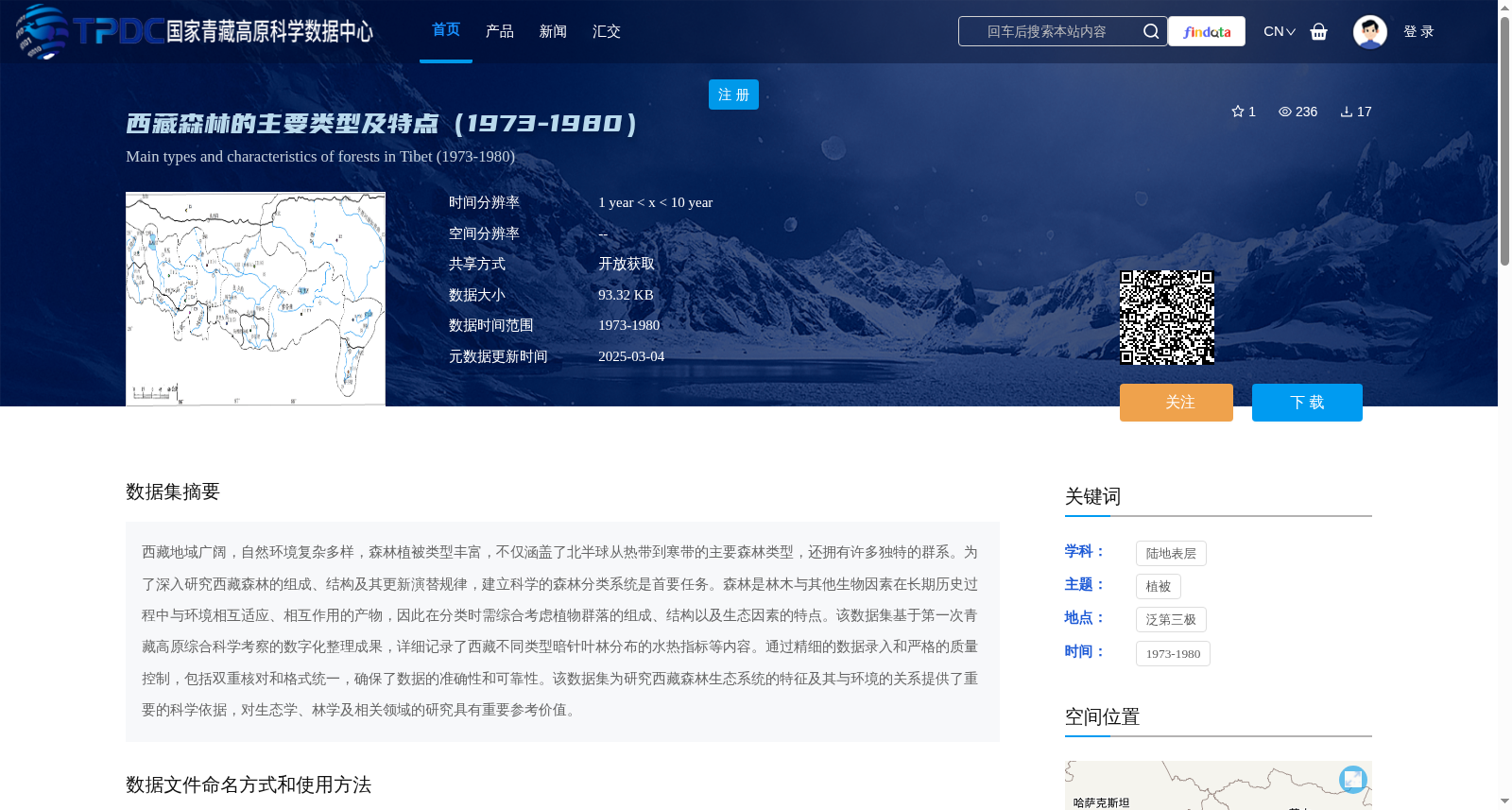
西藏森林的主要类型及特点(1973-1980)
收藏资源简介:
西藏地域广阔,自然环境复杂多样,森林植被类型丰富,不仅涵盖了北半球从热带到寒带的主要森林类型,还拥有许多独特的群系。为了深入研究西藏森林的组成、结构及其更新演替规律,建立科学的森林分类系统是首要任务。森林是林木与其他生物因素在长期历史过程中与环境相互适应、相互作用的产物,因此在分类时需综合考虑植物群落的组成、结构以及生态因素的特点。该数据集基于第一次青藏高原综合科学考察的数字化整理成果,详细记录了西藏不同类型暗针叶林分布的水热指标等内容。通过精细的数据录入和严格的质量控制,包括双重核对和格式统一,确保了数据的准确性和可靠性。该数据集为研究西藏森林生态系统的特征及其与环境的关系提供了重要的科学依据,对生态学、林学及相关领域的研究具有重要参考价值。
Covering a vast territory with complex and diverse natural environments and rich forest vegetation types, Tibet encompasses not only the major forest types across the Northern Hemisphere from tropical to cold zones but also many unique forest formations. To conduct in-depth research on the composition, structure, and regeneration and succession patterns of Tibet's forests, establishing a scientific forest classification system is a top priority. Forests are the products of long-term historical co-adaptation and interaction between trees, other biological factors, and the environment; therefore, their classification needs to comprehensively consider the composition, structure of plant communities, and the characteristics of ecological factors. This dataset is based on the digitized collation results of the First Comprehensive Scientific Expedition to the Qinghai-Tibet Plateau, and it comprehensively records hydrothermal indicators and other relevant information for the distribution of different types of dark coniferous forests in Tibet. Through meticulous data entry and strict quality control measures including double verification and uniform formatting, the accuracy and reliability of the dataset have been ensured. This dataset provides important scientific evidence for studying the characteristics of Tibet's forest ecosystems and their relationships with the environment, and holds significant reference value for research in the fields of ecology, forestry, and related disciplines.