车辆装载效率评估数据
收藏资源简介:
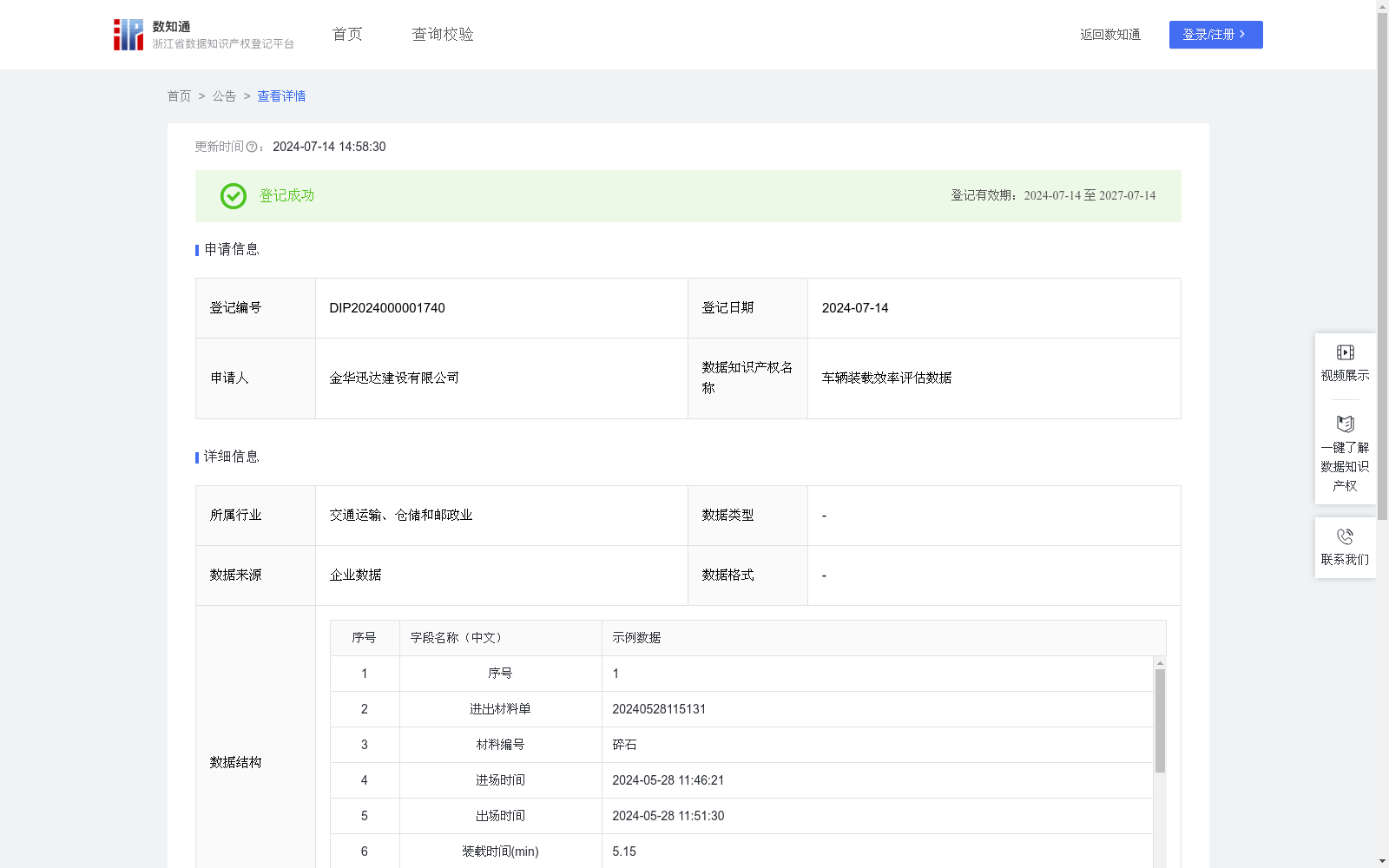
在建筑施工和生产制造领域,材料的进出场管理至关重要,通过分析车辆的装载效率,可以识别装载过程中的瓶颈,优化调度和人车资源,提高运输效率。1、数据采集:从“金华交投生产基地交通工程数字生命服务平台”系统中实时采集材料的材料编号、进出场时间、重量等数据。2、数据处理:对采集的数据进行清洗和预处理,包括去除异常数据、处理缺失值,形成可加工的数据集合。3、数据加工:每条记录的净重是进场时的毛重与出场时的皮重之差,净重=毛重-皮重;以分钟为单位,计算每辆车从进场到出厂所花费的时间,装载时间=出场时间-进场时间;装载效率=净重/装载时间;4、数据应用:按月为单位制作可视化报表,通过SUMIF函数计算出每种材料的装载重量以及每辆车的装载重量,并对其进行排名,实现对车辆装载效率的全面评估和持续监控。
In the fields of construction and manufacturing, the management of materials entering and leaving sites is critically important. By analyzing vehicle loading efficiency, bottlenecks in the loading process can be identified, scheduling and human-vehicle resources optimized, and transportation efficiency improved. 1. Data Collection: Real-time data including material number, entry and exit time, and weight of materials is collected from the Jinhua Jiaotou Production Base Transportation Engineering Digital Life Service Platform system. 2. Data Processing: The collected data is cleaned and preprocessed, including removing abnormal data and handling missing values to form a processable dataset. 3. Data Calculation & Processing: For each record, the net weight is calculated as the difference between the gross weight upon entry and the tare weight upon exit, i.e., Net Weight = Gross Weight - Tare Weight; taking minutes as the unit, the time each vehicle spends from entry to exit is calculated as Loading Time = Exit Time - Entry Time; and loading efficiency is calculated as Loading Efficiency = Net Weight / Loading Time. 4. Data Application: Monthly visualized reports are produced. The SUMIF function is used to calculate the total loading weight of each material and each vehicle, and rankings are conducted to achieve comprehensive evaluation and continuous monitoring of vehicle loading efficiency.