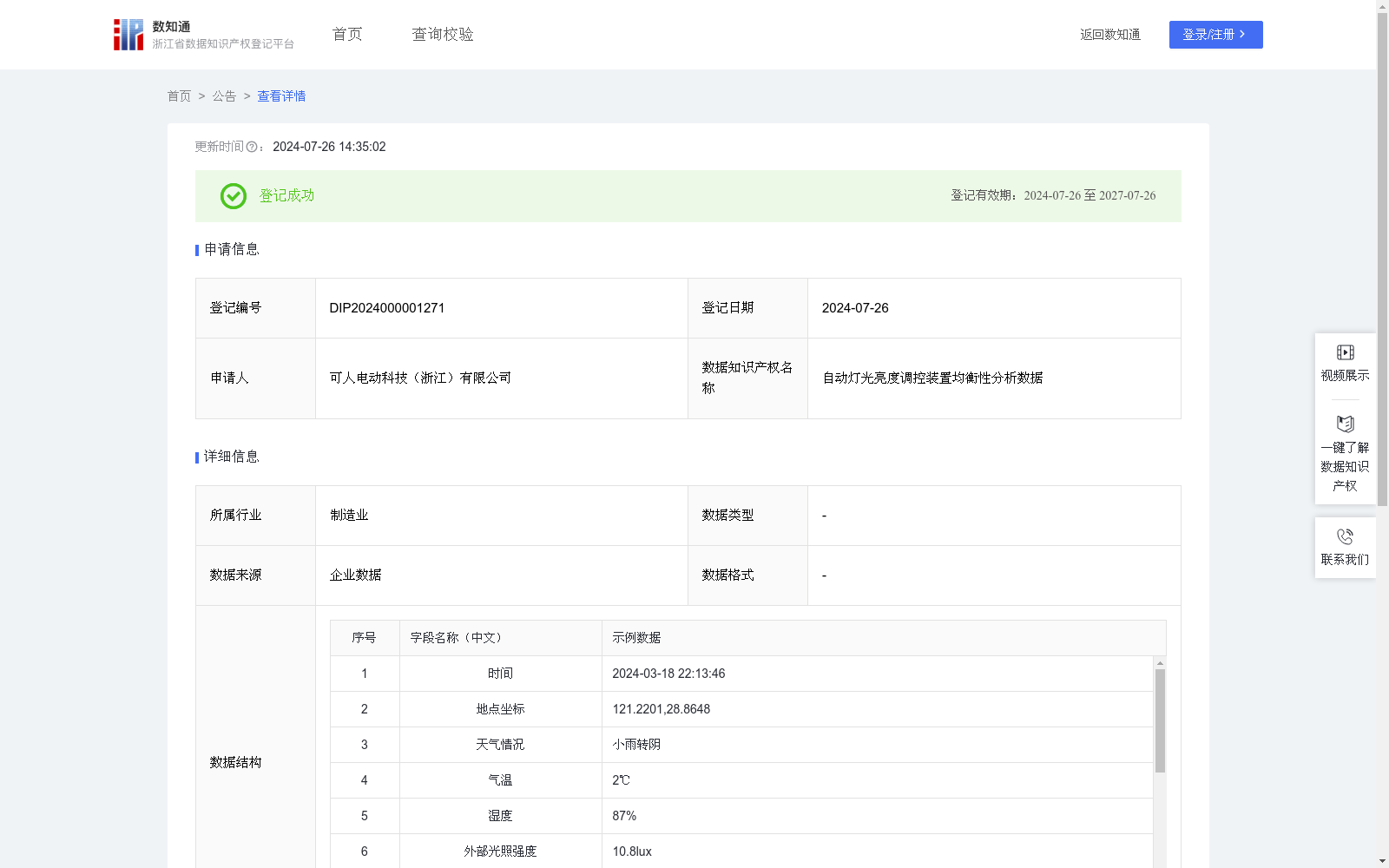
自动灯光亮度调控装置均衡性分析数据
收藏资源简介:
自动灯光亮度调控装置作为智能驾驶的重要组成部分,需要通过大量数据分析提供最佳算法方案。灯光亮度均衡性能够反映灯光照射的稳定程度,均衡性越稳定的灯光越不容易发生散射。对于夜间行驶的电动车而言,在同样的光照强度之下,不同的亮度均衡性会带来不同的影响:若灯光亮度均衡性偏低,则光线过于分散,驾驶员容易看不清夜间道路,影响驾驶安全;若灯光亮度均衡性偏高,则对向的行人和车辆驾驶员容易被闪到眼睛,也存在很大的安全隐患。因此,行业内亟需相关的数据分析,辅助自动灯光亮度调控装置筛选出不同环境下最佳的灯光亮度均衡性,既能保证驾驶员的驾驶安全,也能减少对其他行人和驾驶员的影响。1.数据收集:运用系统平台,进行不同驾驶场景下的数据统计、收集及分析。收集的数据内容有不同环境下灯光亮度均衡性值E、观察到障碍物的距离L、刹车距离S、行人遭爆闪眩晕时间T1、对向驾驶员遭爆闪眩晕时间T2等。 其中:灯光亮度均衡性值能反映驾驶员使用的灯光亮度均衡性,观察到障碍物的距离能反映驾驶员对于路面环境的可视程度,刹车距离能反映危险预警反应速度,行人遭爆闪眩晕时间能反映当前灯光对行人的影响,对向驾驶员遭爆闪眩晕时间能反映当前灯光对对向车辆驾驶员的影响。在收集数据时始终坚持真实场景测试的原则。 2.算法分析:灯光均衡性评分X=λ1×E+λ2×L+λ3×S+λ4×T1+λ5×T2,其中λ1、λ2、λ3、λ4、λ5分别是根据相应评分标准对各项进行评价的系数,由系统根据当下的规定自动生成。当X>80时符合道路驾驶安全要求。
As a critical component of intelligent driving systems, automatic headlight brightness control devices require large-scale data analysis to deliver optimal algorithmic solutions. Headlight brightness uniformity reflects the stability of light illumination; the more stable the uniformity, the less likely the light is to scatter. For electric vehicles traveling at night, different brightness uniformity levels yield varying impacts under the same light intensity: if the headlight brightness uniformity is too low, the light will be overly dispersed, making it difficult for drivers to perceive the nighttime road and compromising driving safety; if the headlight brightness uniformity is too high, oncoming pedestrians and drivers will be easily dazzled, also posing considerable safety hazards. Therefore, the industry urgently demands relevant data analysis to assist automatic headlight brightness control devices in screening the optimal headlight brightness uniformity for different environments, which can both ensure drivers' driving safety and mitigate impacts on other pedestrians and drivers. 1. Data Collection: Utilize the system platform to perform statistics, collection and analysis of data across various driving scenarios. The collected data includes headlight brightness uniformity value E under different environments, distance L to observed obstacles, braking distance S, glare-induced dizziness time T1 of pedestrians, and glare-induced dizziness time T2 of oncoming drivers. Specifically: the headlight brightness uniformity value reflects the headlight brightness uniformity utilized by the driver; the distance to observed obstacles reflects the driver's visibility of the road environment; the braking distance reflects the response speed of danger warning; the glare-induced dizziness time of pedestrians reflects the impact of current lighting on pedestrians; the glare-induced dizziness time of oncoming drivers reflects the impact of current lighting on oncoming vehicle drivers. The principle of real-world scenario testing is consistently adhered to during data collection. 2. Algorithm Analysis: The headlight uniformity score is defined as X=λ₁×E+λ₂×L+λ₃×S+λ₄×T1+λ₅×T2, where λ₁, λ₂, λ₃, λ₄, λ₅ are coefficients for evaluating each item in accordance with corresponding scoring criteria, and are automatically generated by the system based on current regulations. When X>80, the lighting setup meets road driving safety requirements.